Are you looking for a creative and budget-friendly way to add extra sleeping space to your home? Building a bunk bed with pallets might be exactly what you need.
Not only can you save money, but you’ll also create a unique piece of furniture that fits your style perfectly. In this guide, you’ll discover simple steps and clever tips to turn ordinary pallets into a sturdy, stylish bunk bed.
Ready to transform your space and impress your family or guests? Keep reading, because this project is easier than you think!
Choosing The Right Pallets
Choosing the right pallets is the first step in building a strong, safe bunk bed. Not all pallets are the same. Some work better for furniture than others. Picking the right type and checking their quality helps avoid problems later.
Types Of Pallets To Use
Wood pallets are the best choice for bunk beds. They are strong and easy to work with. Avoid plastic or metal pallets because they can be hard to cut and join. Look for pallets made from hardwood or softwood. Hardwood pallets last longer and hold weight better. Softwood pallets are lighter and easier to handle but may not be as strong.
Standard size pallets, like 48 by 40 inches, fit well in most rooms. Smaller or broken pallets may cause stability issues. Choose pallets with flat, smooth surfaces. This makes sanding and finishing easier.
Checking Pallet Quality And Safety
Check pallets for cracks, splinters, or loose nails. These can make the bed unsafe. Make sure the wood is dry and not rotting. Damp wood can weaken over time. Avoid pallets with chemical stains or strong smells. These might be treated with harmful substances.
Look for stamps on the pallets. Pallets marked with “HT” mean they are heat-treated and safer. Avoid pallets marked with “MB,” which means they contain chemicals. Always clean the pallets before starting your project. Remove dirt, dust, and any residue carefully.
Gathering Materials And Tools
Building a bunk bed with pallets is a fun and cost-effective project. Before starting, gathering the right materials and tools is important. This step sets the foundation for a smooth building process. Having everything ready saves time and avoids interruptions.
Essential Tools For The Project
Start with a power drill for making holes and driving screws. A saw is necessary to cut pallets to the right size. Sandpaper or an electric sander smooths rough edges. A tape measure helps ensure accurate measurements. Clamps hold pieces together during assembly. A screwdriver and hammer are useful for small adjustments. Safety gear like gloves and goggles protects your hands and eyes.
Additional Supplies Needed
Pallets are the main material. Choose sturdy ones without cracks or rot. Wood screws hold the pallets firmly. Wood glue adds extra strength. Paint or wood finish protects the wood and improves appearance. Sanding blocks help smooth tight spots. Optional items include brackets for extra support and cushions for comfort.
Preparing The Pallets
Preparing the pallets is an important step before building a bunk bed. This process ensures the wood is safe, smooth, and the right size. Proper preparation helps create a sturdy and comfortable bunk bed. It also makes the building process easier and faster.
Cleaning And Sanding
Start by cleaning the pallets to remove dirt and dust. Use a brush or cloth to wipe off loose debris. For tough stains, use soapy water and a scrub brush. Let the pallets dry completely before moving on.
Sanding is key to smooth the wood surface. Use medium-grit sandpaper to remove rough spots and splinters. Sand all sides of the pallets carefully. This step protects against injuries and prepares the wood for painting or staining.
Cutting To Size
Measure the pallets to fit your bunk bed design. Mark cutting lines clearly with a pencil. Use a saw to cut the pallets according to your measurements. Make straight, clean cuts for better stability.
Remove any leftover nails or screws after cutting. Check each piece for rough edges and sand them smooth. Correctly sized pallets make assembly quicker and improve the bed’s safety.

Credit: www.youtube.com
Designing Your Bunk Bed
Designing your bunk bed is the first important step in building with pallets. Good design makes the bed safe, strong, and comfortable. Planning carefully saves time and materials. Think about size, shape, and style before starting. This section helps you create a solid plan for your bunk bed.
Measuring Dimensions
Start by measuring the space where the bunk bed will go. Check the room height to avoid a low top bunk. Measure the length and width to fit your mattress size. Standard pallets are about 48 by 40 inches, so match pallet size to mattress.
Write down all measurements clearly. Leave extra space for guardrails and steps. Keep in mind the height between the top and bottom bunk. About 30 to 36 inches is comfortable for sitting up.
Planning The Structure
Think about how many pallets you need for each part. Pallets make the base, sides, and ladder. Decide if you want a solid or open frame. Open frames use fewer pallets and feel lighter.
Plan strong support under each mattress. Add guardrails for safety on the top bunk. Choose a ladder style that fits your design. A simple vertical ladder or angled steps both work well.
Sketch your bunk bed design on paper. Mark the pallet placement and joints clearly. This plan guides your cutting and assembly later.
Building The Frame
Building the frame is the first step in creating a sturdy bunk bed from pallets. The frame holds everything together and must be strong. Take your time to make sure each part fits well. A solid frame keeps the bed safe and stable.
Assembling The Base
Start by selecting four strong pallets for the base. Clean them well and remove any nails or splinters. Place two pallets side by side on the floor. Use screws to join them tightly. Repeat with the other two pallets to form a rectangle. Check the corners to make sure they are square. This base will support the lower bunk mattress.
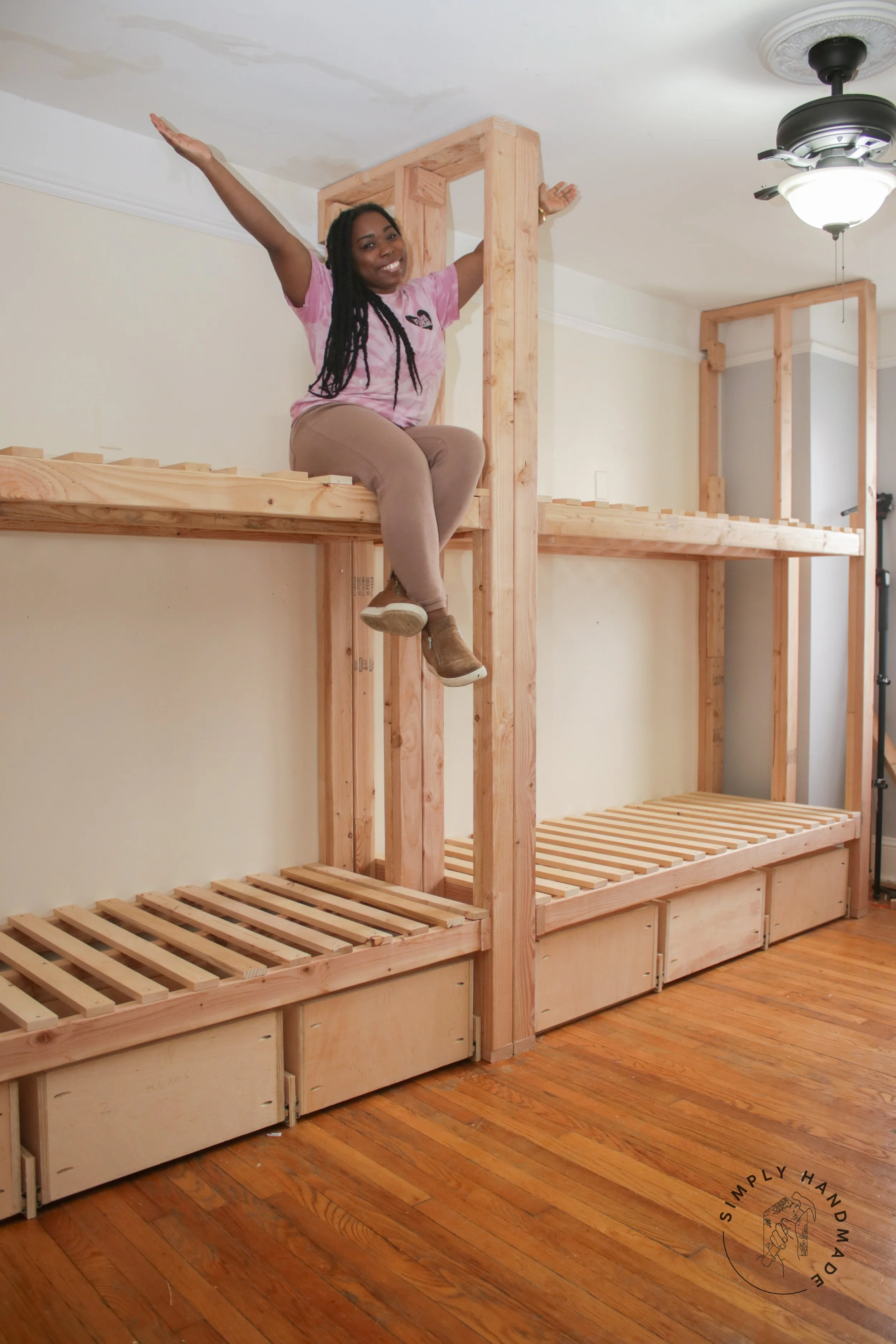
Constructing The Upper Bunk
Use four pallet boards to build the upper bunk frame. Cut the boards to the right length. Attach the boards with screws to make a rectangle. Sand the edges to avoid splinters. Next, attach strong vertical supports at each corner of the base. These supports hold the upper bunk safely. Place the upper bunk frame on top. Secure it with screws to the supports. Double-check the stability before adding the mattress.
Credit: www.simplyhandmadestudios.com
Adding Safety Features
Adding safety features to your pallet bunk bed is important. It protects children from falls and injuries. Safety makes the bed more stable and comfortable. Follow simple steps to add strong safety parts.
Installing Guardrails
Guardrails stop sleepers from falling off the bed. Use smooth, strong wood pieces from pallets. Attach rails on both sides of the top bunk. Make sure rails cover most of the bed length. Leave a small gap at the foot for air and light. Secure rails with screws and brackets. Check tightness often to keep rails firm.
Securing The Ladder
The ladder must be steady and safe to climb. Fix the ladder firmly to the bed frame. Use screws or metal brackets for strong support. Test the ladder by climbing carefully. Ensure steps are wide and smooth to avoid slips. Add non-slip tape on each step for extra grip. Place the ladder at a comfortable angle for easy climbing.
Finishing Touches
Finishing touches give your pallet bunk bed a polished look. They also protect the wood and make the bed more comfortable. These final steps help your project last longer and look great in any room.
Painting Or Staining
Choose paint or stain to match your room’s style. Paint adds color and hides wood imperfections. Stain shows the wood’s natural grain and adds warmth.
Apply a primer before painting for better results. Use a brush or roller for even coats. Let each layer dry fully before adding another.
For staining, apply with a cloth or brush in wood grain direction. Wipe off excess stain to avoid sticky spots. Seal the wood with a clear finish for protection.
Adding Mattresses And Bedding
Select mattresses that fit your bunk bed size exactly. Thin mattresses work best for safety on the top bunk. Use firm mattresses to support the body well.
Choose soft, washable bedding for easy cleaning. Bright colors or fun patterns make the bed inviting. Add pillows and blankets to increase comfort and coziness.
Check that bedding fits well without hanging over edges. This keeps the bed safe and neat. Regularly wash and air out bedding to keep it fresh.

Credit: www.instructables.com
Maintenance Tips
Maintaining your pallet bunk bed keeps it safe and durable. Simple care routines extend its life and keep it sturdy for years. Follow these maintenance tips to protect your investment and ensure comfort.
Regular Inspections
Check the bunk bed often for loose nails or screws. Look for cracks or splinters in the wood. Tighten any loose parts to keep the bed stable. Early spotting of damage prevents bigger problems later. Make inspections a habit every few weeks.
Cleaning And Repairs
Dust and dirt can weaken the wood over time. Clean the bed with a soft brush or cloth regularly. Avoid using harsh chemicals that damage the wood finish. Sand rough spots gently to prevent splinters. Replace broken or damaged pallets immediately. Small repairs maintain safety and appearance.
Frequently Asked Questions
What Materials Are Needed To Build A Pallet Bunk Bed?
You need sturdy wooden pallets, screws, a drill, sandpaper, measuring tape, and wood sealant. Quality pallets ensure safety and durability. Always check pallets for damage or pests before use.
How Long Does It Take To Build A Pallet Bunk Bed?
Building a pallet bunk bed typically takes 6 to 10 hours. Time varies based on skill level and tools available. Proper planning and preparation can speed up the process.
Is Building A Pallet Bunk Bed Safe For Kids?
Yes, if built correctly using strong pallets and secure fastenings. Sand all surfaces to avoid splinters. Add guardrails on the top bunk for extra safety.
Can I Customize The Size Of A Pallet Bunk Bed?
Absolutely, pallet sizes vary and can be adjusted to fit your space. Measure your room and pallets carefully. Customization allows for unique designs and better fit.
Conclusion
Building a bunk bed with pallets is a smart and fun project. It saves money and uses recycled materials. You only need basic tools and some patience. The steps are simple and easy to follow. This bed can fit well in small rooms.
Plus, it adds a unique, rustic charm to your space. Take your time and work safely. Soon, you will have a sturdy, cozy bunk bed. A great way to create more space and style. Give it a try and enjoy the results!