Are you wondering when your little one is ready to move from a crib to a toddler bed? It’s a big step for both you and your baby, filled with excitement and a bit of uncertainty.
Knowing the right age to make this change can make bedtime smoother and safer for your child. You’ll discover the signs to watch for, the ideal age range, and practical tips to help your baby transition comfortably. Keep reading to find out how to make this important milestone a positive experience for your family.
Signs Your Baby Is Ready
Knowing when your baby is ready to sleep in a toddler bed helps keep them safe. It also makes bedtime easier for both of you. Watch for clear signs that your baby is ready to move out of the crib. These signs show their growth and readiness for a new sleeping space.
Climbing Out Of Crib
One of the first signs is climbing out of the crib. This can be dangerous. It shows your baby is ready for a bed that lets them get up safely. If your baby tries to climb out often, it may be time to switch.
Physical Development
Your baby’s body also tells you when to change. They should be able to sit up and climb stairs. Strong legs and balance help them use a toddler bed safely. This growth means they can move around without help.
Emotional Readiness
Emotions play a big role too. Your baby may want more independence. They might show interest in the toddler bed or feel upset in the crib. Feeling ready to sleep alone is a good sign for the change.

Credit: www.whattoexpect.com
Ideal Age Range
Choosing the right time for a baby to sleep in a toddler bed matters. The ideal age range helps keep your child safe and comfortable. Transitioning too early or too late can cause problems. This section explains typical ages and how each child can be different.
Typical Transition Ages
Most children move to a toddler bed between 18 months and 3 years. Many switch around their second birthday. This age range fits well with their growing size and mobility. Parents often notice their child climbing out of a crib before moving them. The toddler bed offers more space and easier access for active kids.
Variations By Child
Every child grows at their own pace. Some may be ready earlier or later than others. Factors include height, weight, and motor skills. A child who climbs out early needs a safer bed soon. Others feel secure in a crib longer. Parents should watch for signs of readiness, like asking to get out or showing curiosity about the bed.
Safety Considerations
Safety is the top priority when moving a baby to a toddler bed. Toddlers are curious and active. This means the bed and room must be safe to prevent accidents. Careful planning can help create a secure sleep space. Parents should check the room and bed for hazards. This keeps the toddler safe and helps them sleep well.
Bed Placement Tips
Place the toddler bed away from windows and cords. Avoid spots near heaters or sharp corners. Keep the bed close to the wall to stop gaps. Clear the floor around the bed of toys and objects. This reduces the risk of tripping or falling.
Childproofing The Room
Cover electrical outlets with safety plugs. Use door locks or gates to block stairs or unsafe rooms. Secure heavy furniture to the wall to stop tipping. Remove small items that can cause choking. Keep cords and blinds out of reach to avoid strangulation.
Choosing The Right Bed
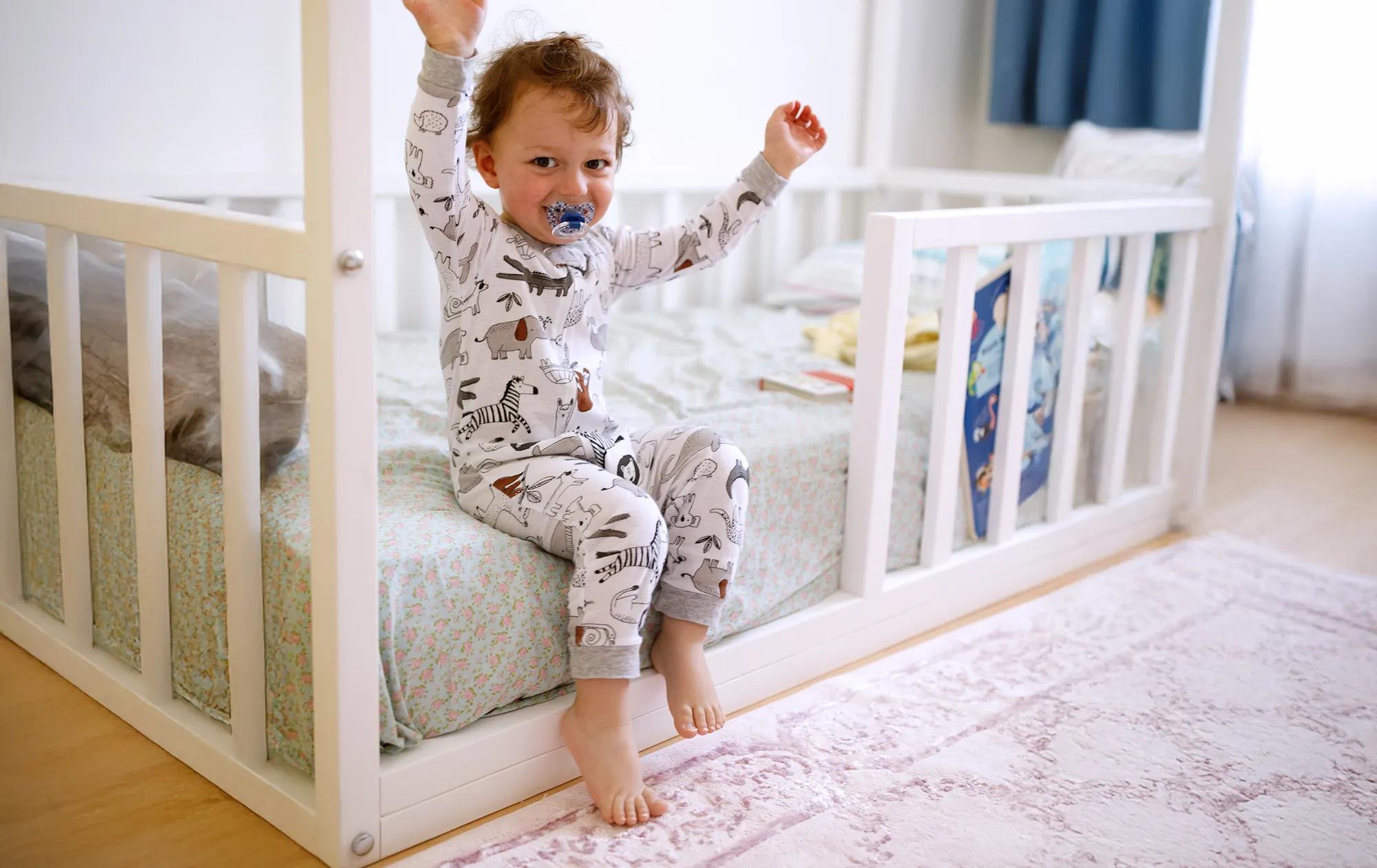
Pick a toddler bed with sturdy rails on both sides. Look for beds with low height for easy access. Avoid beds with sharp edges or loose parts. Choose a mattress that fits snugly to prevent gaps. Check for non-toxic paint and safe materials.
Credit: health.clevelandclinic.org
Making The Transition Smooth
Moving your baby from a crib to a toddler bed can be a big change. It may feel strange for your child at first. A smooth transition helps your little one feel safe and happy. Small steps and care make this change easier for both of you.
Establishing A Routine
Start by keeping bedtime times the same. A simple routine calms your child’s mind. Bath, story, and cuddles signal sleep is near. Consistency helps your toddler know what to expect. This reduces fear and restlessness at night.
Comfort Items
Let your child bring a favorite blanket or toy. These items give a sense of security. Familiar smells and textures make the new bed feel cozy. Comfort items can reduce anxiety during bedtime. Keep them close until your toddler feels confident.
Positive Reinforcement
Praise your child for sleeping in the new bed. Small rewards and kind words build confidence. Celebrate every night your toddler stays in bed. Positive support encourages good sleeping habits. Patience and encouragement go a long way.
Common Challenges
Moving a baby to a toddler bed can be exciting but also brings challenges. Parents often face common issues that require patience and care. Understanding these challenges helps make the transition smoother for both child and parent.
Night Wakings
Night wakings often increase after the move. Toddlers may feel unsure in their new bed. They might call for parents more often. Comfort and reassurance help them settle down. Keep a calm routine to ease these wakings.
Resistance To Change
Many toddlers resist leaving their crib. They see the crib as a safe space. New beds can feel strange or scary. Some may refuse to sleep in the toddler bed at first. Consistency and gentle encouragement work best here.
Managing Falls
Falls from the bed can happen during the night. Toddlers are still learning to stay in bed. Use guardrails to protect them. Place a soft rug beside the bed for safety. Check the bed height to reduce risk.
Expert Recommendations
Experts give clear advice on when a baby should switch to a toddler bed. Their recommendations help parents choose the right time for this big change. This move affects your child’s safety and sleep quality.
Pediatrician Advice
Pediatricians say most children move to a toddler bed between 18 months and 3 years. They suggest waiting until your child can climb out of a crib. This helps prevent falls and injuries.
Doctors also advise watching your child’s behavior. If your child tries to climb out or seems too big for the crib, it might be time. Safety is the top concern for pediatricians.
Sleep Specialist Tips
Sleep specialists focus on your child’s sleep patterns and comfort. They recommend a toddler bed when your child starts waking up during the night. This can happen if the crib feels confining.
They advise choosing a bed that feels safe and cozy. A familiar bedtime routine should stay the same to help your child adjust. Specialists stress patience during this transition.

Credit: casakids.com
Frequently Asked Questions
At What Age Is A Toddler Bed Appropriate?
A toddler bed is ideal between 18 months and 3 years. This transition suits when a child climbs out of a crib or grows too big. It provides more freedom while maintaining safety with low rails.
How Do I Know When To Switch Beds?
Switch when your baby shows signs of climbing out or outgrows the crib. Also, consider readiness for independence and safety. This helps prevent falls and encourages self-soothing in a toddler bed.
What Safety Features Should A Toddler Bed Have?
Look for beds with low height, sturdy guardrails, and smooth edges. These features prevent falls and injuries. Ensure the mattress fits snugly and the bed frame is stable for toddler safety.
Can Toddlers Sleep In A Regular Bed?
Toddlers can sleep in a regular bed if it’s low and safe. Use bed rails to prevent falls. A toddler bed is usually safer and better suited for their size and developmental needs.
Conclusion
Choosing the right age for a toddler bed depends on your child’s growth. Most kids switch between 18 months and 3 years old. Watch for signs like climbing out of the crib or needing more space. Safety and comfort matter most during this change.
Trust your instincts and your child’s needs. This helps make bedtime smooth and safe for everyone. Every child is different, so there’s no strict rule. Take your time and enjoy this new stage together.