Are you looking for a stylish and affordable way to organize your books and add a unique touch to your space? Making a bookshelf with copper pipes is easier than you think, and it can transform any room with its modern, industrial look.
In this guide, you’ll discover simple steps to build your own copper pipe bookshelf—no special skills needed. Ready to create a piece that’s both functional and eye-catching? Let’s get started!
Materials Needed
Gathering the right materials is the first step to build a sturdy copper pipe bookshelf. Each material plays a key role in the structure and look of your shelf. Use quality items for a lasting result. Below are the main materials you will need.
Copper Pipes And Fittings
Copper pipes form the frame of your bookshelf. Choose pipes with a diameter of 1/2 inch or 3/4 inch. Select the right length based on your shelf size. Use copper fittings like elbows, tees, and flanges. These connect pipes and create corners or support points.
Wooden Shelves
Wooden planks serve as the shelves. Pick wood that fits your style and space. Pine, oak, or plywood are popular choices. Cut the wood to the exact shelf size you want. Sand the edges smooth for a neat finish.
Tools Required
Prepare basic tools to assemble the bookshelf. A pipe cutter or hacksaw cuts copper pipes. A drill helps attach flanges to the wall or floor. A screwdriver tightens screws and fittings. Sandpaper smooths wooden shelves. A measuring tape ensures accurate cuts.
Safety Gear
Protect yourself during the build. Wear gloves to avoid cuts from pipes or wood. Use safety glasses to guard your eyes from dust or metal shards. A dust mask stops you from breathing wood or metal particles. Safety gear keeps your project safe and comfortable.
Planning Your Bookshelf
Planning your bookshelf is the first step to a successful project. It helps you avoid mistakes and saves time. Good planning makes building easier and the final product stronger. Start by thinking about your space, needs, and style. Then move on to detailed measurements and design choices.
Choosing The Right Dimensions
Decide how big your bookshelf should be. Think about the wall space where it will go. Measure the height, width, and depth carefully. Remember, shelves should hold your books without bending. Leave enough space between shelves for tall books or decorations. A common depth is 10 to 12 inches, but adjust based on your items.
Design Ideas
Pick a design that fits your room and taste. Simple straight shelves look clean and modern. Pipe and wood shelves add an industrial feel. You can add extra features like hooks or small cabinets. Think about how many shelves you need. More shelves mean more storage but less space between each shelf.
Measuring And Marking
Use a tape measure and pencil for accuracy. Mark your wood and pipe sections clearly before cutting. Double-check all measurements to avoid errors. Mark the spots for pipe joints and shelf supports. Precise markings make assembly smoother and the bookshelf stable.
Cutting And Preparing Copper Pipes
Cutting and preparing copper pipes is a key step in building a sturdy bookshelf. Proper cutting ensures the pipes fit well and look neat. Preparing the pipes by cleaning and smoothing edges makes assembly easier and safer.
Take your time with each step for the best results. Careful work now saves problems later in your project.
Measuring And Cutting Pipes
Start by measuring the length you need for each pipe. Use a tape measure and mark the pipe with a pencil. Double-check your measurements before cutting. Use a pipe cutter for straight, clean cuts. Turn the cutter slowly around the pipe. Tighten the cutter a little with each turn. Avoid using a saw, as it can leave rough edges.
Cleaning And Smoothing Edges
After cutting, the pipe edges can be sharp and rough. Use a metal file or sandpaper to smooth the edges. Run the file or sandpaper around the pipe end. Remove any burrs or sharp bits carefully. Clean the pipe surface with a cloth to remove dust and oil. Smooth edges help pipes fit into connectors well. They also prevent injuries when handling the pipes.

Credit: www.reddit.com
Assembling The Frame
Assembling the frame is the most important step in making a copper pipe bookshelf. This step sets the shape and strength of your shelf. A well-built frame holds your books safely and looks great.
Start by understanding how the pipes and fittings come together. Take your time to fit each piece properly. This process needs focus and care for the best results.
Connecting Pipes With Fittings
Use copper pipe fittings to join the pipes. These fittings include elbows, tees, and couplings. Slide the pipes into the fittings firmly. Make sure all connections fit tightly without gaps. A secure connection keeps the frame strong and straight.
Ensuring Stability
Check the frame’s balance before tightening all fittings. The frame should stand without wobbling. Adjust pipe lengths to keep the frame even. A stable frame prevents your shelf from tipping over.
Securing Joints
Use pipe thread sealant or adhesive to lock joints. This stops pipes from loosening over time. Apply sealant inside fittings before connecting pipes. Tighten all joints by hand, then use a wrench for a firm hold. Secure joints keep your frame safe and durable.
Attaching Wooden Shelves
Attaching wooden shelves to a copper pipe frame is a key step in building a sturdy bookshelf. This process requires careful choice of wood, smoothing the surface, and securely fixing shelves to the frame. Each step ensures the final product looks good and holds weight well.
Selecting Wood Type
Choose wood that is strong and fits your style. Pine and oak are popular choices. Pine is lighter and easier to work with. Oak is tougher and lasts longer. Consider the color and grain of the wood. Make sure it matches your room decor.
Sanding And Finishing
Sand the wood to create a smooth surface. Start with coarse sandpaper, then use finer grit. Remove dust with a clean cloth. Apply a finish like varnish or paint. This protects the wood and enhances its look. Let the finish dry completely before mounting.
Mounting Shelves To Frame
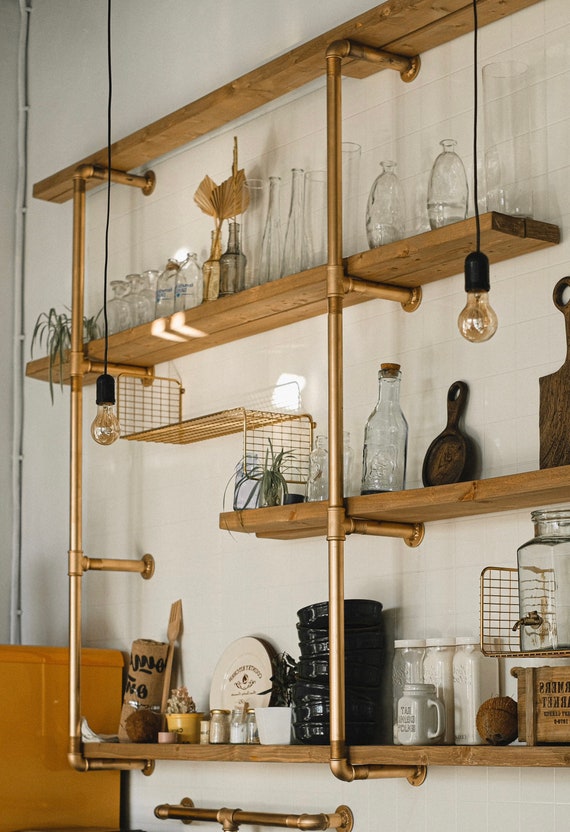
Place the wooden shelves on the copper pipe frame. Use brackets or screws to attach them firmly. Ensure shelves are level and evenly spaced. Check stability by pressing gently on each shelf. Tighten all screws to keep the shelves secure.
Credit: www.etsy.com
Finishing Touches
Finishing touches bring your copper pipe bookshelf to life. These final steps protect and enhance its look. Small details make a big difference in appearance and durability.
Focus on protecting the pipes, adding style, and placing the shelf well. Each step adds value and charm to your creation.
Applying Protective Coatings
Protect the copper pipes from tarnish and damage. Use a clear lacquer or polyurethane spray. Apply thin, even coats for the best finish. Let each layer dry fully before the next. This keeps the copper shiny and lasting longer.
Adding Decorative Elements
Decorate with simple touches to match your room style. Wrap rope or leather around pipe joints for texture. Add small metal or wood accents to shelves. Paint or stain the wood for extra color. These details make your shelf unique and attractive.
Positioning Your Bookshelf
Place the bookshelf in a spot with good light and space. Avoid damp or very sunny areas that may harm the pipes or wood. Keep it near seating for easy book access. A well-positioned shelf improves both function and style.
Maintenance Tips
Maintaining your bookshelf made of copper pipes keeps it looking great and working well. Regular care helps avoid damage and extends its life. Simple steps can prevent problems and keep the shelf sturdy.
Cleaning Copper Pipes
Use a soft cloth to wipe the copper pipes regularly. Avoid harsh chemicals that can damage the metal. A mix of lemon juice and baking soda works well to remove tarnish. Gently rub the pipes, then rinse with water and dry fully. Clean pipes keep the copper shiny and bright.
Protecting Wood Surfaces
Apply a wood sealant or varnish to protect the shelves from moisture. Wipe spills immediately to prevent stains or warping. Use coasters or mats under heavy or wet items. Keep the wood dry and clean to maintain its strength and look.
Checking For Loose Fittings
Check all joints and fittings often to ensure they are tight. Loose connections can make the shelf unstable and unsafe. Use a wrench to tighten any loose pipes or screws. Regular checks keep the bookshelf solid and reliable for your books.

Credit: osmphotovoice.wordpress.com
Frequently Asked Questions
How Do I Start Making A Copper Pipe Bookshelf?
Begin by measuring your space and planning the design. Cut copper pipes to size and assemble using connectors. Secure pipes tightly and attach wooden shelves for stability.
What Tools Are Needed To Build A Copper Pipe Bookshelf?
You need a pipe cutter, measuring tape, connectors, a drill, screws, and wooden shelves. Safety gear like gloves and goggles is also essential.
Can I Customize The Size Of My Copper Pipe Bookshelf?
Yes, copper pipes are easy to cut and adjust. Customize shelf height and width to fit your space and needs perfectly.
Is Copper Pipe Bookshelf Durable And Sturdy?
Copper pipes are strong and long-lasting. Proper assembly with secure fittings ensures your bookshelf can hold books safely.
Conclusion
Creating a bookshelf with copper pipes is simple and fun. You only need a few tools and materials. This project adds style and function to any room. Copper pipes give a modern and sturdy look. You can customize the size to fit your space.
Building it yourself saves money and feels rewarding. Try this easy DIY for a unique home touch. Enjoy your new bookshelf and the pride it brings.