Are you looking to maximize space in your kids’ room while adding a fun and practical sleeping solution? Building a twin triple L-shaped bunk bed might be exactly what you need.
Imagine having three beds stacked and arranged in an L-shape, giving each child their own cozy spot without taking up too much floor space. In this guide, you’ll discover simple, step-by-step instructions to create this smart, space-saving bed. Whether you’re a beginner or have some DIY experience, you’ll find tips to make the process easier and the final result sturdy and stylish.
Keep reading, and by the end, you’ll have everything you need to build a bunk bed that your kids will love—and you’ll love the extra room it frees up.
Materials And Tools
Building a twin triple L-shaped bunk bed needs the right materials and tools. Choosing good wood and strong hardware keeps the bed safe and sturdy. Using the correct tools makes the work easier and faster. This section explains what wood, hardware, and tools you need.
Wood Selection
Select wood that is strong and smooth. Pine, oak, or maple are good choices. Avoid soft or weak wood that can break easily. Use wood boards that are straight and free of knots. This helps the bed last longer and stay stable. Sand the wood to remove rough spots and splinters.
Hardware And Fasteners
Use screws and bolts made for furniture. Choose stainless steel or coated fasteners to prevent rust. Get corner brackets and metal plates for extra support. Wood glue adds strength at joints. Avoid nails alone; screws hold better over time. Make sure all hardware fits the wood thickness.
Essential Tools
A drill is needed for making holes and driving screws. Use a saw to cut wood to the right size. A tape measure helps with accurate cuts and spacing. A screwdriver, level, and square keep the bed even and balanced. Sandpaper or an electric sander smooths the wood surface. Safety gear like gloves and goggles protects you.
Design And Measurements
Design and measurements are the first steps in making a twin triple L-shaped bunk bed. Careful planning helps create a safe and sturdy bed. Accurate measurements ensure the bed fits well in the room. This section guides you through planning, measuring, and safety tips.
Planning The Layout
Start by choosing the best corner for the L-shaped bunk bed. Measure the room’s length and width near that corner. Think about space for movement and other furniture. Decide how the beds will stack and align. Sketch a simple floor plan to visualize the layout. This makes building easier and avoids mistakes.
Determining Dimensions
Measure the size of the twin mattresses you will use. Standard twin mattresses are usually 39 inches wide and 75 inches long. Add extra space for bed frames and safety rails. Check the total height to fit under the ceiling. Leave some clearance so the top bunk is comfortable to use. Write down all these numbers clearly.
Safety Considerations
Safety is key in bunk bed design. Make sure the top bunk has sturdy guardrails on all sides. Check that the ladder is strong and easy to climb. Keep enough space between the top and bottom bunk. Use smooth materials to avoid splinters. Secure the bed firmly to the wall if possible. These steps keep the bed safe for children.
Cutting The Wood
Cutting the wood is a key step in building a twin triple L-shaped bunk bed. It shapes the pieces that form the frame and structure. Precise cuts ensure the bed fits together well and stays strong. Careful work here saves time and effort later.
Measuring And Marking
Start by measuring the wood pieces carefully. Use a tape measure for accuracy. Mark the wood with a pencil at the exact spots to cut. Double-check each measurement before marking. Clear, straight lines help guide your saw. Mark all pieces before cutting to avoid mistakes.
Cutting Tips
Use a saw that fits your skill and project size. A circular saw works well for straight cuts. Cut slowly to keep lines straight and smooth. Keep your hands steady and away from the blade. Cut on a stable surface to avoid slips. Follow the marked lines precisely for perfect pieces.
Sanding Edges
After cutting, sand all edges smoothly. Use medium-grit sandpaper to remove rough spots. Sand corners gently to prevent splinters. Smooth edges make the bed safer for kids. Wipe dust off before assembling to ensure clean joins. Proper sanding improves the bed’s look and feel.

Credit: www.amazon.com
Building The Frame
Building the frame is the first and most important step. It creates the strong base for your twin triple L-shaped bunk bed. A well-built frame keeps the bed safe and sturdy. Follow each step carefully to avoid mistakes. Use good quality wood and tools for best results.
Assembling The Base
Start by cutting the wood pieces for the base. Make sure the lengths match your bed design. Lay the pieces flat on the floor. Join the longer side rails with the shorter end rails using screws. Check that the corners form perfect right angles. This base supports the entire bed structure.
Constructing The L-shape
Build two rectangular frames for the twin and triple beds. Position one frame at a right angle to the other. Attach the frames securely using wood screws and brackets. This forms the L-shape of the bunk bed. Double-check the alignment before tightening all screws.
Securing The Structure
Add vertical support beams at the corners and where the frames meet. These supports prevent wobbling and add strength. Use heavy-duty brackets and screws for extra security. Sand all edges smooth to avoid splinters. Test the frame for stability before adding the mattress supports.
Adding Support And Slats
Adding support and slats is a key step in building a sturdy twin triple L-shaped bunk bed. Proper support keeps the bed strong and safe. It also helps to hold the mattress evenly. This section explains how to install support beams, place bed slats, and reinforce connections.
Installing Support Beams
Start by measuring the inside width of the bed frame. Cut wooden beams to fit snugly across the frame. Place the beams evenly spaced for balanced support. Secure each beam with screws or brackets. Make sure the beams are level and tight. These beams carry the mattress weight and prevent sagging.
Placing Bed Slats
Lay the slats across the support beams. Space them about 2 to 3 inches apart. Use strong wood slats to hold the mattress firmly. Attach each slat with screws or nails to the beams. This stops the slats from moving or sliding out. Slats help air flow under the mattress and add comfort.
Reinforcing Connections
Check all joints and connections for tightness. Use wood glue at the joints for extra strength. Add corner brackets to key connection points. Tighten all screws and bolts again. This keeps the bed frame solid and safe over time. Reinforcement stops wobbling and extends the bed’s life.
Crafting The Ladder And Guardrails
Crafting the ladder and guardrails is a key step in building a twin triple L-shaped bunk bed. These parts provide safety and easy access to the upper beds. Careful design and strong construction keep the bed secure and comfortable for kids.
Designing The Ladder
Start by choosing the right materials for the ladder. Use sturdy wood like pine or oak for strength. Decide the ladder’s width to fit comfortably between the bed frames. Plan the step spacing to match children’s foot size. Make sure the ladder angle is safe and easy to climb. Mark and cut the wood pieces accurately to ensure a good fit.
Building And Attaching Guardrails
Measure the length of the bed sides that need guardrails. Cut long wooden planks to cover these edges fully. Sand the planks to avoid splinters and rough spots. Attach vertical supports between the planks for extra strength. Secure the guardrails to the bed frame using screws and brackets. Double-check that no sharp edges or gaps remain.
Ensuring Stability
Test the ladder by applying pressure to each step. Tighten all screws and bolts until firm. Check the guardrails for any movement or wobble. Add corner braces if needed to improve stability. Confirm the ladder and guardrails hold steady under weight. Safety first—this keeps children safe during use.
Finishing Touches
Finishing touches make your twin triple L-shaped bunk bed look great and last longer. These final steps protect the wood and keep the bed safe for use. Taking time on these details improves the bed’s quality and appearance.
Sanding And Smoothing
Use fine-grit sandpaper to smooth all surfaces. Sand corners and edges carefully to avoid rough spots. Smooth wood feels better and prevents splinters. Wipe away dust with a clean cloth before moving on.
Painting Or Staining
Choose paint or stain that fits your room’s style. Apply thin, even coats for a neat finish. Allow each coat to dry fully before the next. Paint protects wood, while stain highlights its natural grain. Seal with a clear finish for extra durability.
Final Safety Checks
Check all screws and bolts are tight and secure. Make sure guardrails and ladders are firmly attached. Test the bed’s stability by gently shaking it. Remove any sharp edges or loose parts. Safety keeps your children safe and comfortable.
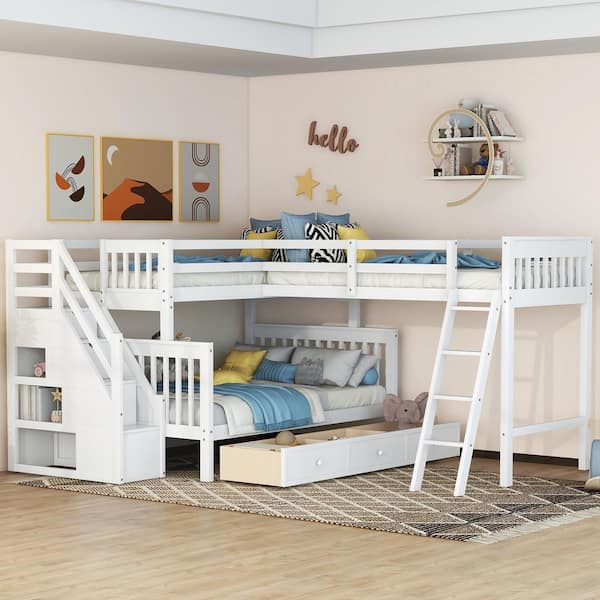
Credit: www.homedepot.com
Tips For Maintenance
Maintaining your twin triple L-shaped bunk bed keeps it safe and looking good. Simple care helps the bed last longer. It also protects your children from accidents.
Follow these easy tips to keep your bunk bed in top shape. Regular checks, tightening parts, and cleaning are key.
Regular Inspections
Check the bed every week for any damage. Look for cracks in the wood or metal. Watch for loose screws or broken slats. Early spotting of problems prevents big repairs. Make sure the guardrails stay firm and safe. Keep an eye on the ladder for stability.
Tightening Hardware
Use a screwdriver to tighten all bolts and screws often. Loose parts can cause the bed to wobble. Tighten nuts and bolts at least once a month. Check the brackets that hold the bed together. Secure all fasteners to avoid accidents. Replace any worn or missing hardware right away.
Cleaning Advice
Dust the bed weekly with a soft cloth. Use a mild soap and water solution for stains. Avoid harsh chemicals that can damage the finish. Clean the mattress and bedding regularly to keep freshness. Dry the bed well after cleaning to stop mold. Keep the area around the bed tidy and free from clutter.
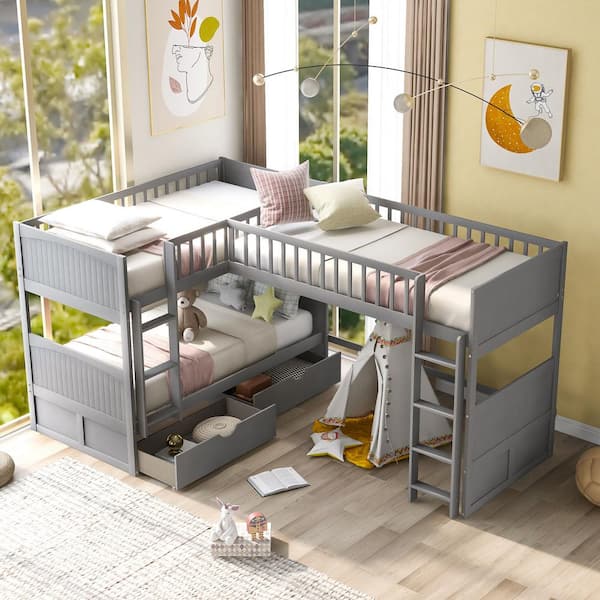
Credit: www.homedepot.com
Frequently Asked Questions
What Materials Are Needed For A Twin Triple L-shaped Bunk Bed?
You need quality plywood, screws, wood glue, brackets, paint, and safety rails. Choose durable materials for safety and longevity.
How Much Space Is Required For An L-shaped Bunk Bed?
Ensure at least 8 by 8 feet area. This allows enough room for the bed and safe movement around it.
Is Building A Twin Triple Bunk Bed Safe For Kids?
Yes, if you follow safety guidelines. Use sturdy materials, secure rails, and smooth finishes to prevent injuries.
How Long Does It Take To Build This Bunk Bed?
Typically, it takes 2 to 3 days. Time varies based on skill level and available tools.
Conclusion
Building a twin triple L-shaped bunk bed saves space and adds style. Follow clear steps to create a sturdy and safe bed. Use good materials and measure carefully for best results. This project fits well in shared or small rooms.
Enjoy the extra sleeping spots and the clever design. Making your own bunk bed brings pride and comfort. Try it yourself and see how fun woodworking can be.