Are you ready to create a sturdy and stylish wooden bunk bed that fits perfectly in your space? Building your own bunk bed might sound challenging, but with the right steps, you can do it yourself—and save money while adding a personal touch to your home.
Imagine the pride you’ll feel knowing you crafted something both practical and beautiful for your family or guests. Keep reading, and you’ll discover easy-to-follow tips and tricks that make the process simple and enjoyable from start to finish. Your perfect bunk bed is closer than you think!

Credit: joinerydesignco.com
Materials And Tools Needed
Choosing the right wood is a key step in building a sturdy wooden bunk bed. The type of wood affects strength, look, and cost. Picking wood that fits your needs helps make a safe and lasting bed.
Wood comes in many kinds. Some woods are hard and strong. Others are soft and easy to work with. Knowing the differences can guide your choice.
Hardwood Vs Softwood
Hardwood is strong and lasts long. Common hardwoods include oak, maple, and cherry. These woods resist dents and scratches well.
Softwood comes from pine, cedar, or fir trees. It is lighter and easier to cut. Softwood may be less durable but costs less.
Durability And Strength
Durability is vital for bunk beds. The wood must hold weight safely. Hardwood is best for heavy use and children.
Softwood can work if you add extra support. Check wood for cracks or knots that weaken it.
Appearance And Finish
Wood color and grain affect the bed’s look. Oak has a rich, warm tone. Pine offers a lighter, rustic feel.
Choose wood that fits your room style. Sand wood smooth before painting or staining.
Cost And Availability
Prices vary by wood type and location. Softwood is usually cheaper and easy to find. Hardwood costs more but lasts longer.
Buy quality wood within your budget. Avoid very cheap wood that may break fast.
Choosing The Right Wood
Designing your wooden bunk bed is the first step to a successful build. A good design keeps the bed strong, safe, and fits your space well. Planning carefully saves time and materials. Think about who will use the bed and where it will go.
Start with clear ideas about size and safety. This helps you avoid common mistakes. A well-designed bunk bed looks great and lasts for years.
Dimensions And Measurements
Measure the room where the bunk bed will stand. Allow space for walking and other furniture. Standard bunk beds are about 6 feet long and 3 feet wide. Adjust sizes based on mattress dimensions.
Height matters too. The top bunk should have enough headroom. Usually, 33 to 36 inches between bunks works well. Check ceiling height to avoid a cramped space.
Plan ladder placement for easy access. Make sure it fits safely without blocking doors or windows.
Safety Considerations
Safety is the top priority in bunk bed design. Strong guardrails on the top bunk prevent falls. The rails should be at least 5 inches above the mattress.
Secure the ladder firmly to avoid slips. Use solid wood and sturdy joints for the frame. Avoid sharp edges and rough surfaces.
Test the bed for stability. It should not wobble or creak. Proper design protects users and ensures lasting use.
Designing Your Bunk Bed
Cutting the wood pieces is the first step in building your wooden bunk bed. Accurate cuts ensure the bed is strong and fits together well. Take your time measuring and cutting each piece. Use sharp tools and follow safety rules closely.
Each wood piece has a specific size and shape. Cutting them correctly helps the assembly process go smoothly. Prepare all the pieces before starting to build.
Choosing The Right Wood Type
Select sturdy wood like pine or oak for durability. Softwoods cut easier but hardwoods last longer. Choose wood that is smooth and free of knots.
Measuring And Marking The Wood
Use a tape measure and pencil for accurate marks. Double-check each measurement before cutting. Mark lines clearly on the wood surface.
Using The Saw Safely
Use a handsaw or circular saw for straight cuts. Wear safety glasses and gloves to protect yourself. Keep your hands clear of the blade at all times.
Cutting Each Piece To Size
Cut the bed frame parts first: side rails, headboards, and footboards. Then cut the slats and ladder pieces. Cut slowly and follow the marked lines carefully.
Sanding The Cut Edges
Sand each cut edge smooth to avoid splinters. Use fine-grit sandpaper for a clean finish. Smooth edges also help the paint or stain stick better.
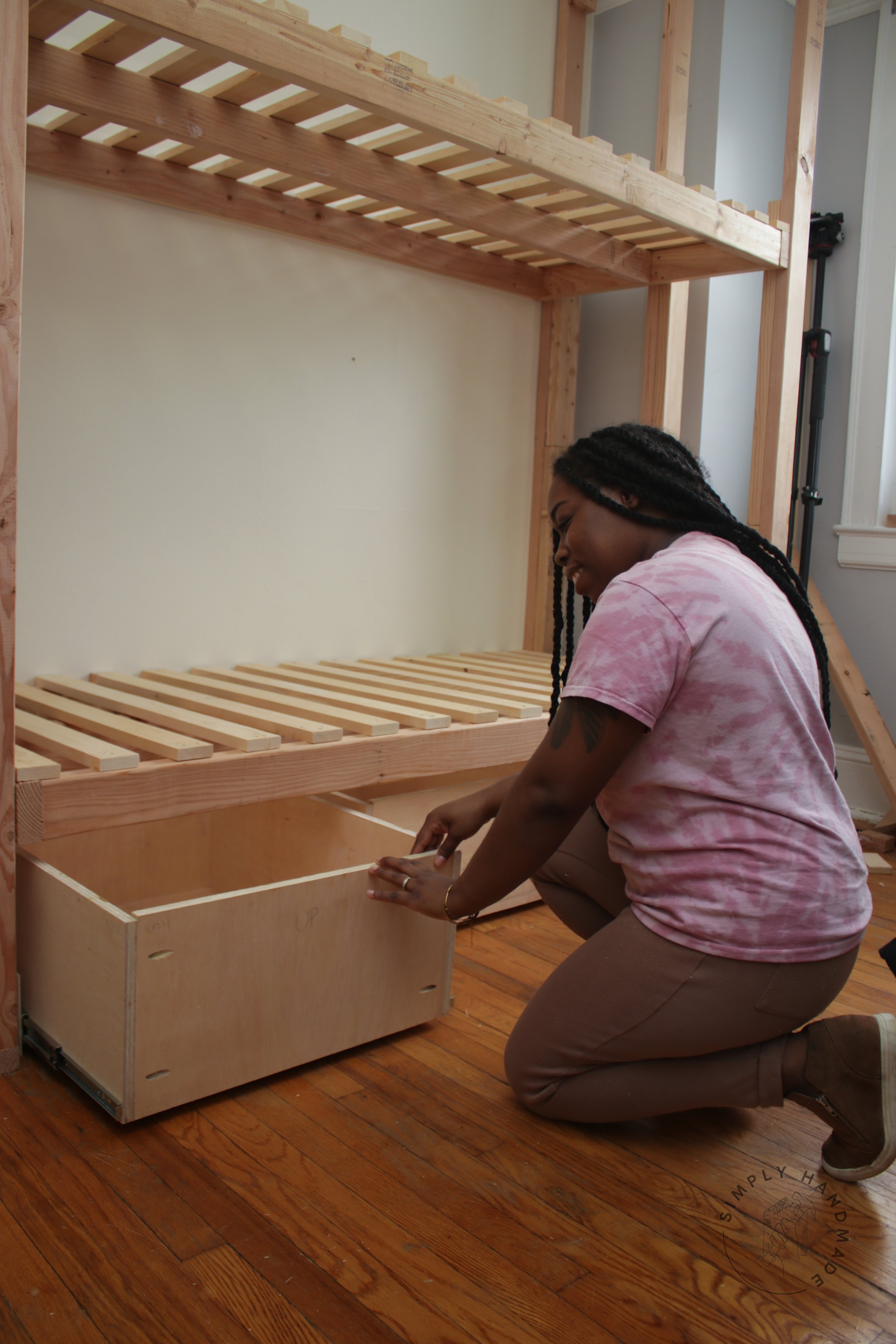
Credit: www.simplyhandmadestudios.com
Cutting The Wood Pieces
Assembling the frame is the key step in making a wooden bunk bed. It gives the bed its shape and strength. You need to work carefully to ensure the frame is sturdy and safe. Follow each step to build a solid base for the bed.
Building The Bed Rails
Start with the bed rails. These long pieces connect the headboard and footboard. Use strong wood like pine or oak. Cut the rails to the correct length. Sand the edges to avoid splinters.
Attach the rails to the headboard and footboard using wood screws. Drill pilot holes first to prevent the wood from splitting. Check that the rails are level and straight before tightening the screws. This will keep the bed stable.
Constructing The Support Slats
Support slats hold the mattress and distribute weight evenly. Cut several slats to fit inside the frame. Space the slats evenly, about 3 to 4 inches apart.
Secure the slats by screwing them into the bed rails. Make sure each slat is firmly attached. Double-check the spacing and alignment. Proper support prevents mattress sagging and improves comfort.
Assembling The Frame
Adding the ladder and guardrails is a key step in building a wooden bunk bed. These parts make the bed safe and easy to use. The ladder helps climb to the top bunk. Guardrails protect from falling during sleep. Both must be strong and steady.
Choosing The Right Ladder Design
Pick a ladder design that fits your bunk bed style. Straight ladders are common and simple to build. They attach to the bed frame securely. Another option is a slanted ladder, which is easier to climb. Make sure the ladder steps are wide and spaced well.
Securing The Ladder To The Frame
Use screws and brackets to fix the ladder firmly. Measure twice before drilling holes. Attach the ladder to the side of the bed frame. Check that it does not wobble or move. Tighten all screws for safety.
Building Strong Guardrails
Guardrails prevent falls from the top bunk. Use thick wooden boards for strength. The rail height should be at least five inches above the mattress. Attach the guardrails on both sides of the bed. Make sure they are flush with the bed frame.
Installing Guardrails Safely
Fix guardrails using screws and corner brackets. Drill pilot holes to avoid splitting the wood. Check that rails hold firmly and do not move. Test by pressing and shaking gently. Adjust if needed for stability.
Adding The Ladder And Guardrails
Sanding and finishing are key steps in making a wooden bunk bed. They smooth the wood and protect it from damage. Good sanding removes rough spots and splinters. Finishing adds color and seals the wood. This process makes your bunk bed safe and beautiful.
Sanding Techniques
Start sanding with coarse sandpaper to remove big bumps. Use 80-grit sandpaper for the first pass. Then switch to medium grit, like 120, to smooth the surface. Finish with fine sandpaper, around 220 grit, for a soft feel. Sand along the wood grain to avoid scratches. Use a sanding block or electric sander for even pressure. Clean off dust with a damp cloth before finishing.
Applying Paint Or Stain
Choose paint or stain based on your desired look. Stain shows the wood’s natural grain. Paint adds solid color and hides the grain. Apply with a brush or cloth. Use thin, even coats to avoid drips. Let each coat dry fully before adding the next. Seal with clear varnish or polyurethane for protection. This layer guards against water and wear. Allow the finish to cure before using the bunk bed.
Sanding And Finishing
The final assembly and inspection of your wooden bunk bed are crucial steps. This phase ensures the bed is safe, strong, and ready to use. Taking time here prevents problems later.
Follow each step carefully. Check every joint and screw. Make sure all parts fit well and hold tightly.
Assemble The Main Frame
Start by joining the bed’s main frame parts. Use screws or bolts as planned. Tighten each fastener firmly but avoid over-tightening. The frame must be stable and square.
Align the side rails with the headboard and footboard. Check the corners with a carpenter’s square. Adjust if needed to keep the frame even.
Attach The Guardrails And Ladder
Secure the guardrails to the top bunk. These rails prevent falls and must be strong. Use the correct screws and check for any loose spots.
Fix the ladder firmly to the bed frame. It should not wobble or move. Test it by applying pressure to ensure safety.
Inspect For Safety And Stability
Look over the entire bed for loose screws or rough edges. Sand any sharp spots to avoid splinters. Tighten any hardware that feels weak.
Apply pressure on different parts to test stability. The bed should not shake or creak. A solid bed means safe sleep for kids.
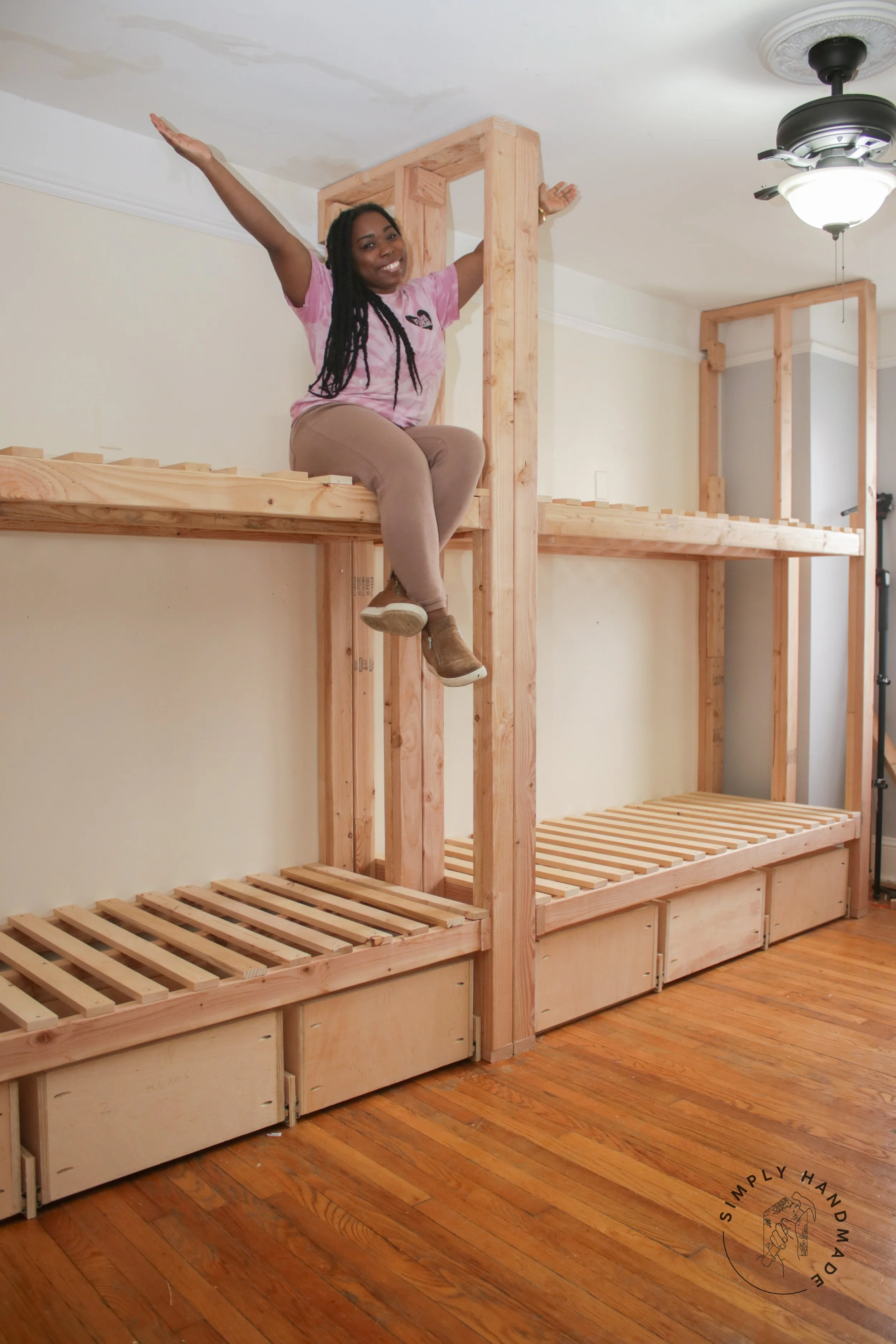
Credit: www.simplyhandmadestudios.com
Frequently Asked Questions
What Materials Are Needed To Build A Wooden Bunk Bed?
To build a wooden bunk bed, you need quality wood, screws, wood glue, sandpaper, and paint or varnish. Essential tools include a saw, drill, measuring tape, and clamps for assembly and finishing.
How Long Does It Take To Make A Wooden Bunk Bed?
Building a wooden bunk bed typically takes 1 to 3 days. The time varies based on skill level, design complexity, and drying time for paint or finish.
What Safety Features Should A Wooden Bunk Bed Have?
A wooden bunk bed should have guardrails, sturdy ladders, and secure joints. Smooth edges and non-toxic finishes enhance safety for children and adults alike.
Can I Customize The Size Of My Wooden Bunk Bed?
Yes, you can customize the size of your wooden bunk bed. Adjust dimensions based on mattress size and room space for a perfect fit.
Conclusion
Building a wooden bunk bed can be fun and rewarding. You save money by making it yourself. It also lets you customize the bed to fit your space. Take your time and follow each step carefully. Safety matters most, so use strong wood and secure screws.
Soon, you will have a sturdy bed that lasts for years. Give it a try and enjoy the comfort and style it brings to your home. Simple tools and effort make a big difference. What will your bunk bed look like?