
Struggling to fit all your furniture comfortably in a small living room? You’re not alone.
Finding the right layout can feel like a puzzle, but getting it right makes your space feel bigger, cozier, and more inviting. Imagine walking into your living room and instantly feeling relaxed because everything has its perfect place. You’ll discover simple, smart ways to arrange your furniture that maximize space and style.
Ready to transform your small living room into a functional and beautiful haven? Let’s dive in!
Maximize Space With Smart Furniture Choices
Maximizing space in a small living room starts with smart furniture choices. Picking the right pieces creates room to move and helps the space feel larger. The right furniture can serve more than one purpose and fit neatly into tight spots. This approach keeps your living room practical and cozy without feeling crowded.
Opt For Multi-functional Pieces
Choose furniture that serves more than one role. Sofas with storage underneath or ottomans that open up as containers save space. A coffee table with shelves can hold books and remote controls. This reduces the need for extra furniture and keeps the room tidy.
Choose Compact And Scaled Furniture
Pick smaller furniture that fits your room’s size. Avoid oversized sofas or bulky chairs. Slimmer arms and legs on chairs make the space look open. Choose pieces that allow easy movement and do not block pathways.
Use Transparent And Light Materials
Furniture made of glass, acrylic, or light wood feels less heavy. Transparent tables or chairs let light pass through, creating an airy look. Light-colored materials also make the room appear bigger and brighter.
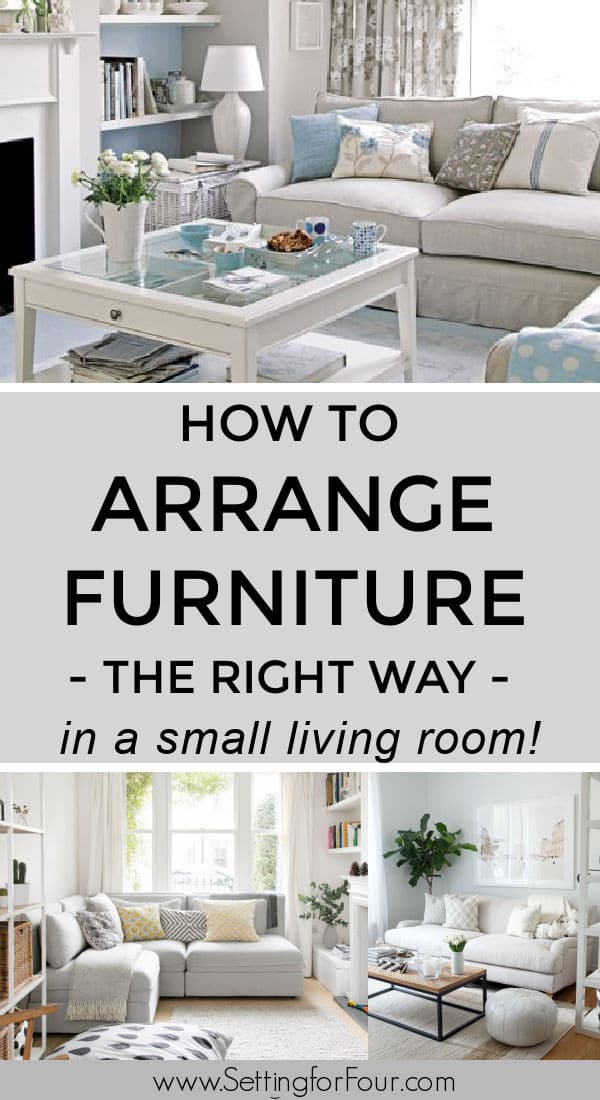
Credit: www.settingforfour.com
Create Zones For Different Activities
Creating zones in a small living room helps organize space clearly. Each zone serves a different purpose. This method makes the room feel larger and more functional. Dividing areas helps people move freely and enjoy each activity without distractions.
Define Seating And Entertainment Areas
Start by placing your main seating where it fits best. Arrange chairs and sofas to face the TV or a focal point. Keep pathways open for easy movement. Choose compact furniture that fits the space well. This setup creates a cozy spot for relaxing and watching shows.
Incorporate Work Or Reading Nooks
Find a quiet corner for work or reading. A small desk or a comfy chair works well here. Use shelves or a small table for books and supplies. This nook offers a calm place to focus or unwind. It makes the living room multi-purpose without crowding.
Use Rugs And Lighting To Separate Spaces
Rugs help mark different zones visually. Place a rug under the seating to anchor that area. Use another rug in the work or reading nook. Lighting also defines spaces. Use lamps or spotlights to brighten each zone separately. This separation adds warmth and clarity to the layout.
Arrange Furniture For Flow And Function
Arranging furniture in a small living room needs careful planning. The goal is to make the room feel open and useful. Good flow lets people move freely without bumping into things. Function means each piece of furniture serves a clear purpose. Balance these two to create a comfortable space that works well.
Keep Pathways Clear
Clear pathways help people walk around easily. Avoid placing furniture in main walking routes. Leave at least two feet of space for walking. This keeps the room from feeling crowded. Clear paths also make the room look bigger and neater.
Anchor Seating Around A Focal Point
Choose one spot as the room’s focus. It could be a window, TV, or fireplace. Arrange chairs and sofas facing this point. This creates a cozy area for talking or relaxing. Grouping seats around one spot makes the room feel organized.
Avoid Overcrowding With Minimalist Layouts
Less furniture means more space to move. Choose only essential pieces that fit well. Use simple designs without extra bulk. Minimalist layouts help small rooms breathe. Open spaces make the living room look larger and calm.
:strip_icc()/209004050_487395819189118_1558427548898429030_n-e37296d51106441d92ab3c405c0d9f6f.jpg)
Credit: www.mydomaine.com
Use Vertical Space Effectively
Using vertical space is a smart way to make a small living room feel bigger. It frees up floor space and keeps the room tidy. You can store items, display decor, and add style without crowding the room.
Install Wall-mounted Shelves
Wall-mounted shelves hold books, plants, and small items. They keep things off the floor and create more room. Choose shelves that match your style and paint color. Place them at eye level for easy reach. Open shelves add a light, airy feel.
Hang Art And Mirrors Strategically
Art and mirrors draw the eye upward. Hang a large mirror to reflect light and make space look larger. Group smaller art pieces vertically to create height. Use simple frames to avoid clutter. This method adds personality without taking floor space.
Incorporate Tall Storage Units
Tall storage units use height, not width, to store items. They fit in narrow spaces and hold many things. Choose slim designs to avoid crowding. Use them to store books, decor, or media. Tall units make the ceiling seem higher, opening up the room.
Enhance Light And Openness
Enhancing light and openness in a small living room makes the space feel larger and more inviting. Bright spaces create a fresh atmosphere and reduce any sense of crowding. Thoughtful furniture placement and color choices help maximize natural light. Using reflective surfaces can also expand the visual area.
Position Furniture Near Windows
Place sofas and chairs close to windows to allow sunlight to flow freely. Avoid blocking windows with bulky furniture. This arrangement brings in natural light and connects the indoor space with the outside view. It also makes the room feel airier and less cramped.
Select Light Colors And Reflective Surfaces
Choose furniture in soft, light shades such as white, beige, or pastel tones. Light colors reflect light better and brighten the room. Use materials with glossy or shiny finishes to bounce light around. This strategy helps open up the room visually and creates a cheerful mood.
Use Mirrors To Create Depth
Mirrors reflect light and make a room appear bigger. Hang a large mirror opposite a window to double the incoming light. Position mirrors near seating areas to enhance openness. This simple trick adds depth and prevents the room from feeling tight or closed in.
Personalize Without Clutter
Personalizing a small living room makes it feel like home. It shows your style and makes the space cozy. But clutter can quickly make the room feel crowded and messy. The key is to choose items that reflect you without filling every surface. Balance is important. Let your personality shine through a few well-chosen pieces.
Display Selected Decor Items
Pick a few favorite decor items to show off. Choose pieces that have meaning or brighten the room. Group them together on shelves or a small table. Avoid spreading many small items all around. Too many things can make the room look busy. One or two statement pieces work better. They add charm without cluttering the space.
Incorporate Hidden Storage Solutions
Use furniture with hidden storage to keep things tidy. Sofas with storage under the seat or ottomans that open up are great. They hide blankets, books, or toys out of sight. This keeps the room clean and organized. Hidden storage helps you personalize the room without visible mess. It also frees up floor and surface space.
Keep Surfaces Clean And Organized
Clear surfaces help a small room feel bigger and neater. Limit what you place on tables and shelves. Use trays or small boxes to group items together. This makes the area look organized, not cluttered. Regularly remove things you don’t need. Clean surfaces allow your decor and furniture to stand out clearly.
:strip_icc()/living-room-large-area-rug-bcf9729c-14f549116b444f129b52258baf998392.jpg)
Credit: www.bhg.com
Frequently Asked Questions
How To Arrange Furniture In A Small Living Room?
Start by measuring the space carefully. Place larger pieces against walls to open the room. Use multi-functional furniture to save space. Keep pathways clear for easy movement. Balance the layout to avoid overcrowding and maintain comfort.
What Furniture Is Best For Small Living Rooms?
Opt for compact, multi-purpose furniture like sofa beds or nesting tables. Choose pieces with exposed legs to create a sense of openness. Avoid bulky or oversized items that overwhelm the space. Lightweight, modular furniture offers flexibility and easy rearrangement.
How To Maximize Space In A Small Living Room?
Use vertical storage like shelves and wall-mounted units. Choose furniture with built-in storage to reduce clutter. Keep décor minimal and light colors to enhance brightness. Arrange seating to encourage conversation without blocking pathways or windows.
Should I Use Rugs In A Small Living Room?
Yes, rugs define zones and add warmth. Choose light-colored, low-pile rugs to avoid visual heaviness. Ensure the rug size fits the seating area to create cohesion. Avoid overly large rugs that can shrink the room visually.
Conclusion
Small living rooms can feel cozy and stylish. Choose furniture that fits the space well. Keep pathways clear for easy movement. Use light colors to make the room look bigger. Mirrors can add depth and brightness. Multi-functional pieces save space and add comfort.
Arrange furniture to create a warm, inviting area. With simple steps, your small living room feels open and welcoming. Enjoy making your space both useful and beautiful.