
When winter arrives, your outdoor furniture faces harsh weather that can cause damage. You want to keep your investment safe and looking great for years to come.
But how do you store your outdoor furniture the right way? If you’ve ever worried about cracked wood, rust, or fading cushions, this guide is for you. By following simple, effective steps, you can protect your furniture from the cold and be ready to enjoy it again when spring comes.
Keep reading to discover easy tips that will save you time, money, and frustration. Your outdoor space deserves the best care—even in winter.
Credit: www.compassselfstorage.com
Preparing Furniture For Storage
Preparing outdoor furniture for winter storage helps protect it from damage. Proper steps keep your furniture in good shape for the next season. Taking time now saves money and effort later.
Cleaning And Drying
Start by removing dirt, leaves, and dust from your furniture. Use mild soap and water to clean all surfaces. Avoid harsh chemicals that can damage materials.
After washing, dry furniture completely. Moisture left on furniture can cause mold or rust. Use a soft cloth to wipe down all parts.
Inspecting For Damage
Look closely for cracks, rust, or loose screws. Small issues can get worse if not fixed before storage. Repair or replace damaged parts before storing.
Check cushions and fabrics for tears or stains. Clean or store them separately to avoid mildew.
Disassembling Parts
Take apart removable pieces like legs, cushions, or tabletops. This makes storage easier and protects fragile parts.
Keep screws and small parts in labeled bags. Store these bags with the furniture to avoid losing them.

Credit: www.thewickery.com
Choosing The Right Storage Location
Choosing the right storage location is important to keep outdoor furniture safe during winter. The right spot protects furniture from cold, moisture, and dirt. It also helps furniture last longer and stay in good shape. Picking a good place depends on the type of furniture and space available.
Indoor Vs Outdoor Storage
Indoor storage offers better protection against rain, snow, and wind. It stops furniture from getting wet or frozen. Indoor places like basements or spare rooms keep furniture dry and safe. Outdoor storage is easier but exposes furniture to weather changes. Covering furniture with waterproof covers is a must outdoors. Indoor storage is better for delicate or wooden pieces.
Temperature And Humidity Considerations
Temperature changes can damage furniture materials. Cold can make wood crack or metal rust. High humidity causes mold and mildew growth. Choose a storage spot with stable temperature. Avoid damp basements or places with high moisture. Well-ventilated areas help keep humidity low. Use moisture absorbers if needed to protect furniture.
Using Storage Sheds And Garages
Storage sheds and garages are popular choices. They protect furniture from rain and snow. Make sure the space is dry and clean. Avoid leaks or standing water inside. Use pallets or shelves to keep furniture off the floor. This prevents moisture damage. Proper ventilation in sheds and garages reduces mold risk.
Protecting Furniture Materials
Protecting outdoor furniture materials during winter is key to keeping them in good shape. Each type of material needs special care to avoid damage from cold, moisture, and dirt. Proper protection helps furniture last longer and stay attractive.
Covering Wood Furniture
Wood furniture can crack and warp if exposed to wet and freezing weather. Clean the wood with a soft brush to remove dirt. Use a breathable cover to stop moisture buildup. Avoid plastic covers that trap water and cause mold. Apply wood oil or sealant before covering to protect the surface.
Safeguarding Metal Pieces
Metal furniture may rust from snow and rain. Clean all rust spots with sandpaper before storing. Use a rust-resistant spray or paint for extra protection. Cover metal items with waterproof but breathable fabric. Store indoors if possible, to avoid direct exposure to moisture.
Caring For Plastic And Resin
Plastic and resin furniture is weather-resistant but still needs care. Wash off dirt and debris with soap and water. Store pieces in a dry place to avoid cracking from cold. Cover with a light cloth or tarp to block dust and leaves. Avoid placing heavy objects on them during storage.
Maintaining Cushions And Fabrics
Outdoor cushions and fabrics can get moldy or stained in winter. Remove cushions and clean them thoroughly. Let cushions dry completely before storing to prevent mildew. Store cushions in sealed plastic bags or storage bins. Use fabric protectors to shield against moisture and dirt before storing.
Using Covers And Wraps
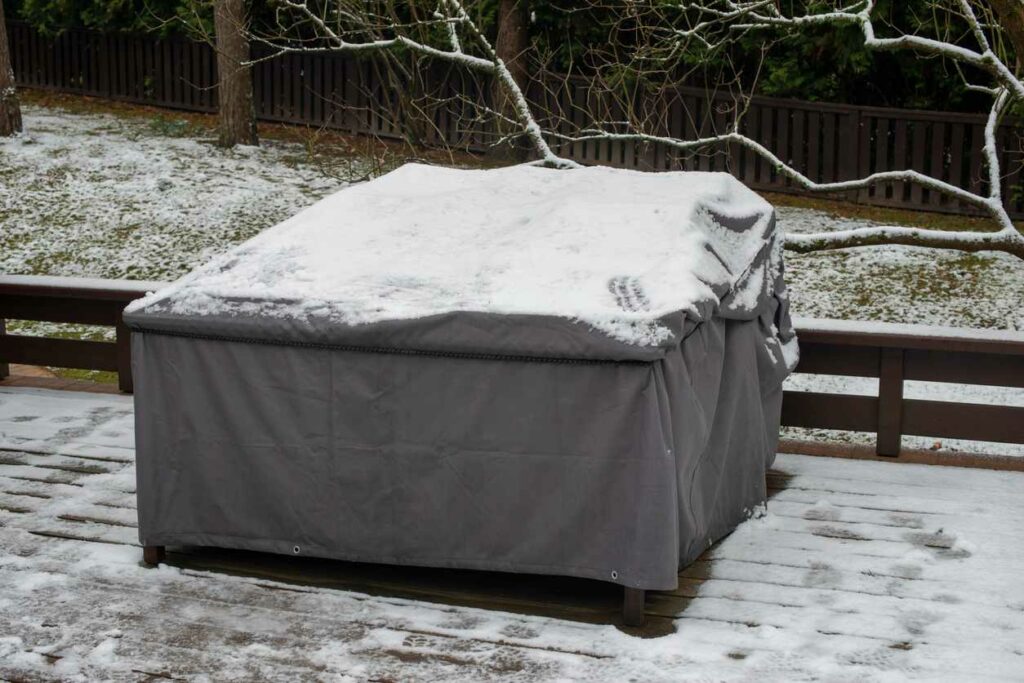
Using covers and wraps protects outdoor furniture from harsh winter weather. These tools shield your furniture from rain, snow, and dust. Proper use extends the life of your pieces. It keeps them clean and ready for spring.
Selecting Weatherproof Covers
Choose covers made of strong, waterproof material. Look for fabrics like polyester or vinyl. These keep moisture out and resist tears. Pick covers that fit your furniture well. Loose covers allow wind and rain inside. Snug fits offer better protection.
Proper Wrapping Techniques
Wrap furniture tightly but gently. Avoid folding covers sharply to prevent damage. Secure covers with straps or bungee cords. Do not tie too tight; allow some movement. Make sure the entire piece is covered. Check for gaps at the bottom and sides.
Ventilation To Prevent Mold
Good airflow stops mold and mildew growth. Do not seal covers completely airtight. Leave small openings for air to pass through. Use breathable fabrics or vents in covers. Store furniture in a dry, shaded place. This helps keep moisture levels low.
Additional Tips For Long-term Storage
Storing outdoor furniture for the winter takes more than just covering it. Proper long-term storage helps keep your furniture safe and looking good. Follow these extra tips to protect your pieces through cold months. These steps prevent damage and reduce repair needs in spring.
Elevating Furniture Off The Ground
Keep furniture off the floor. Use wooden blocks or pallets to lift it. This stops moisture from soaking in. Raised furniture dries faster after rain or snow. It also avoids rust and mold buildup. Elevation helps air flow under and around the pieces.
Avoiding Pest Infestations
Check furniture for bugs before storing. Clean all dirt and food crumbs. Use natural repellents like cedar chips or lavender sachets. Seal small holes or cracks to block pests. Avoid storing near compost or trash areas. Pest-free storage keeps your furniture safe and clean.
Regular Checkups During Winter
Look at your stored furniture every few weeks. Check for moisture, mold, or pest signs. Remove any snow or water pooling on covers. Air out furniture on dry days to reduce dampness. Regular checks catch problems early and save repair costs.

Credit: www.mtlakepool.com
Frequently Asked Questions
How Do I Prepare Outdoor Furniture For Winter Storage?
Clean all furniture thoroughly to remove dirt and debris. Dry completely to prevent mold. Apply protective coatings if needed. Cover or store in a dry, sheltered area to avoid damage from moisture and cold.
What Is The Best Place To Store Outdoor Furniture In Winter?
Store furniture in a dry, cool, and well-ventilated space like a garage or shed. Avoid damp basements or direct ground contact to prevent rust and mold growth.
Should I Disassemble Outdoor Furniture Before Storing?
Yes, disassembling helps save space and reduces the risk of damage. Keep screws and small parts in labeled bags for easy reassembly.
How Can I Protect Cushions During Winter Storage?
Remove cushions and store them in waterproof containers or bags. Ensure they are clean and completely dry to avoid mildew and odors.
Conclusion
Storing outdoor furniture properly saves it from damage. Clean each piece well before storing. Cover furniture to protect from dust and moisture. Choose a dry, cool place for storage. Check items occasionally during winter months. These steps keep your furniture safe and ready.
Enjoy your outdoor space longer next season. Simple care now means less repair later. Easy to follow and worth the effort. Your furniture will thank you when spring arrives.


