Choosing the right material for your outdoor furniture can feel overwhelming. You want something that looks great, lasts long, and stands up to the weather.
Should you go with steel or aluminum? Each has its own strengths, but which one truly fits your needs? By the end of this article, you’ll know exactly which material will keep your outdoor space stylish and sturdy for years to come.
Keep reading to discover the key differences that matter most to you.

Credit: www.youtube.com
Material Strength
Material strength plays a big role in choosing outdoor furniture. It affects how long the furniture lasts and how well it handles weather. Both steel and aluminum offer strong support. Each has unique qualities that suit different needs.
Durability Of Steel
Steel is known for its toughness and heavy weight. It can hold a lot of weight without bending or breaking. Steel furniture resists dents and scratches better than many other materials. This makes it ideal for rough use or crowded spaces.
Steel can rust if left unprotected. Coatings like paint or powder help prevent this. When cared for properly, steel furniture can last for many years outdoors. It handles cold and hot weather well but may need some upkeep.
Durability Of Aluminum
Aluminum is lighter than steel but still very strong. It does not rust, which makes it great for wet or humid climates. Aluminum furniture is easier to move because of its light weight.
Though softer than steel, aluminum resists dents and corrosion. It needs less maintenance and stays looking good longer without extra care. Aluminum can bend under heavy pressure but usually returns to shape quickly.
Weight And Portability
Weight and portability are key factors in choosing outdoor furniture. They affect how easy it is to move and store your pieces. The material plays a big role in this. Steel and aluminum offer very different experiences.
Steel’s Heaviness
Steel is much heavier than aluminum. This weight gives steel furniture a strong, sturdy feel. It stays put on windy days and does not tip over easily.
Moving steel furniture can be hard for one person. It may require two people to lift and carry it. Steel pieces are less convenient to store or rearrange often.
Lightness Of Aluminum
Aluminum is very light compared to steel. This makes aluminum furniture easy to move around your yard or patio. You can lift it with one hand or carry it alone.
Its light weight helps with storage during bad weather. You can stack or store aluminum furniture without much effort. Portability makes aluminum great for versatile outdoor spaces.
Corrosion Resistance
Corrosion resistance is key for outdoor furniture. It keeps furniture strong and looking good for years. Rust and corrosion damage metal over time. Choosing the right material helps avoid costly repairs or replacements. Steel and aluminum handle corrosion in different ways. Understanding these can guide your choice.
How Steel Handles Rust
Steel is strong but prone to rust. Rust forms when steel meets water and oxygen. This weakens the metal and causes rough spots. Steel furniture often needs protective coatings. Paint, powder coating, or galvanizing stop rust. Without these layers, steel can quickly degrade outdoors. Regular maintenance helps keep steel safe from rust. Cleaning and touching up coatings extends its life.
Aluminum’s Natural Resistance
Aluminum resists corrosion better than steel. It forms a thin oxide layer naturally. This layer protects the metal underneath. Water and air do not harm aluminum easily. It rarely needs extra coatings. Aluminum’s light weight and resistance make it popular outside. Its surface stays smooth and clean longer. Minimal care is needed to keep aluminum furniture looking new.
Credit: pbzmfg.com
Maintenance Needs
Maintenance needs play a big role in choosing between steel and aluminum for outdoor furniture. Keeping furniture in good shape extends its life. It also keeps it looking nice year after year. Both metals need care but differ in how much and what kind.
Understanding these needs helps in making the right choice for your space and lifestyle.
Upkeep For Steel Furniture
Steel furniture is strong but can rust without proper care. Clean it regularly with mild soap and water. Dry it well to stop moisture buildup. Apply a rust-resistant paint or sealant once a year. Check for scratches and fix them quickly to prevent rust spots. Cover steel furniture during rain or snow to protect it. Proper upkeep keeps steel furniture looking fresh and sturdy.
Aluminum Maintenance Tips
Aluminum furniture resists rust and is lighter than steel. Clean it often with water and a soft cloth. Avoid harsh cleaners that can damage the finish. Inspect for dents or chips and repair when needed. Use furniture covers to guard against dirt and weather. Aluminum needs less work but still benefits from regular care. This helps keep it bright and in good condition.
Cost Considerations
Cost plays a big role in choosing outdoor furniture. It affects your budget and the style you can afford. Both steel and aluminum have different price points. Knowing their costs helps you make a smart choice. Let’s explore the cost details for each material.
Price Range Of Steel
Steel furniture usually costs less at the start. You can find sets from budget to mid-range prices. Steel is heavier, so shipping can add extra cost. The weight also means more durability, which can save money later. Steel may need paint or coating to stop rust. That adds some maintenance cost over time. Still, steel offers strong furniture for less money upfront.
Cost Of Aluminum Furniture
Aluminum furniture tends to have a higher price tag. The metal is light and resists rust naturally. This means less maintenance and longer life. Aluminum sets often fall in the mid to high price range. The cost can be higher because aluminum is harder to produce. You pay more initially but may save on repairs and upkeep. Aluminum is a smart investment for long-lasting outdoor use.
Design And Style Options
Choosing the right material affects the look and feel of outdoor furniture. Design and style options vary between steel and aluminum. Each metal offers unique benefits for your space. Consider how each fits your style and outdoor setting.
Steel Furniture Aesthetics
Steel furniture often has a strong, bold look. It suits traditional and industrial styles well. The material can be shaped into sharp lines or decorative curves. Steel pieces usually have a heavier, solid feel. They often feature dark or natural metal finishes. This gives steel furniture a classic, timeless appeal.
Aluminum Design Flexibility
Aluminum offers more freedom in design. It is lightweight and easy to mold into many shapes. This allows for modern and sleek styles. Aluminum furniture can have smooth or intricate patterns. It comes in various colors and finishes. These options make aluminum ideal for bright, airy outdoor spaces.
Environmental Impact
Choosing outdoor furniture affects the environment. The materials used have different impacts. Steel and aluminum each come with environmental costs and benefits. Understanding these helps make better choices for nature.
Steel Production Effects
Steel production uses a lot of energy. It often relies on coal, which causes pollution. Mining iron ore harms land and water. Steel plants release greenhouse gases that warm the planet. Recycling steel lowers energy use and pollution. Recycled steel reduces the need for new mining. It saves natural resources and cuts emissions.
Sustainability Of Aluminum
Aluminum production also needs much energy. It starts with bauxite mining, which impacts forests and soil. The refining process produces toxic waste. Yet, aluminum is very light and lasts long. It resists rust and needs less maintenance. Recycling aluminum uses only a fraction of energy. It can be recycled many times without loss. This makes aluminum a more sustainable choice over time.
Suitability For Different Climates
Choosing the right material for outdoor furniture depends on the climate where it will be used. Different metals react differently to weather conditions. This affects how long the furniture lasts and how well it looks over time. Understanding the strengths of steel and aluminum in various climates helps make a smart choice.
Steel In Humid Areas
Steel is strong and sturdy, but it can rust in humid places. Moisture in the air speeds up rusting. To prevent damage, steel furniture needs a protective coating. Powder coating or paint helps keep water from reaching the metal. Regular care and cleaning can also extend the life of steel furniture. In humid areas, steel works best if well maintained and protected.
Aluminum In Coastal Regions
Aluminum resists rust and corrosion better than steel. Salt air near the coast can damage many metals, but aluminum holds up well. It does not need as much maintenance as steel. Aluminum furniture stays looking good longer in salty, wet air. This makes it a smart choice for coastal areas. Lightweight and easy to move, aluminum fits many outdoor spaces near the ocean.
Safety And Comfort
Safety and comfort are key when choosing outdoor furniture. The materials affect how hot or cold the furniture feels. They also affect how safe it is to touch. Both steel and aluminum have different features in these areas. Understanding these can help you pick the right option for your outdoor space.
Heat Retention In Steel
Steel holds heat more than aluminum. On sunny days, steel furniture can become very hot. This can make it uncomfortable to sit on or touch. It may also cause burns if touched for too long. Steel cools down slowly, so the heat stays longer after the sun sets. This can reduce comfort during warm evenings.
Aluminum’s Temperature Control
Aluminum does not keep heat as much as steel. It heats up quickly but also cools down fast. This makes aluminum furniture feel cooler and safer to touch. It is better for hot climates or sunny spots. Aluminum’s temperature control adds to overall comfort. It helps avoid burns and keeps the seating pleasant.
Making The Right Choice
Choosing between steel and aluminum for outdoor furniture depends on what matters most to you. Each material has its strengths and fits different needs. Understanding these can help you pick the best option for your space and lifestyle.
Matching Material To Needs
Steel is strong and durable. It holds up well against heavy use and windy conditions. Steel furniture often has a classic look that suits many styles. It can feel heavier and harder to move.
Aluminum is lightweight and resists rust. It works well in humid or coastal areas. Aluminum furniture is easy to rearrange and store. It usually has a modern and sleek design.
Budget Vs. Longevity
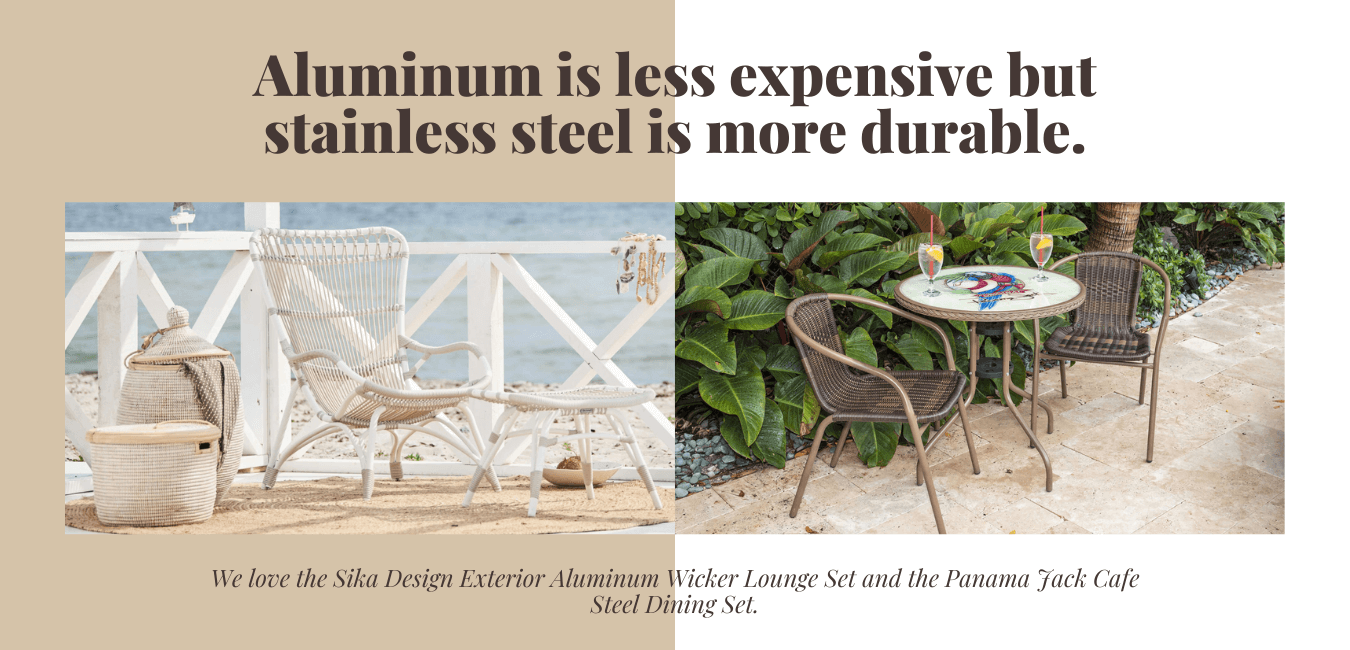
Steel furniture tends to cost more upfront. It lasts longer with proper care. You might spend less on repairs over time.
Aluminum furniture is often cheaper at first. It needs less maintenance but may not be as strong. It can fade or dent more easily.
Consider how long you want your furniture to last. Think about how much time and effort you can spend on upkeep.
Credit: www.patioliving.com
Frequently Asked Questions
Is Steel Furniture More Durable Than Aluminum?
Steel furniture is generally more durable and stronger than aluminum. It can withstand heavy use and harsh weather. However, steel may rust if not properly coated, while aluminum resists corrosion better, making it ideal for humid or coastal areas.
Which Material Is Lighter, Steel Or Aluminum?
Aluminum is significantly lighter than steel. This makes aluminum furniture easier to move and rearrange outdoors. Steel is heavier and more stable but less portable. Choose aluminum if weight and mobility are priorities for your outdoor furniture.
Does Aluminum Rust Like Steel Outdoors?
No, aluminum does not rust like steel. Aluminum naturally forms a protective oxide layer that prevents corrosion. Steel can rust if exposed to moisture without protective coating. Aluminum is better for outdoor furniture in wet or coastal environments.
Which Material Requires Less Maintenance, Steel Or Aluminum?
Aluminum requires less maintenance than steel. It resists rust and corrosion naturally, needing only occasional cleaning. Steel furniture needs regular coating or painting to prevent rust. For low-maintenance outdoor furniture, aluminum is often preferred.
Conclusion
Choosing between steel and aluminum depends on your needs and space. Steel offers strong support and a classic look. Aluminum is lighter and resists rust well. Both materials can last long with simple care. Think about weight, weather, and style before buying.
Your outdoor furniture should fit your lifestyle and climate. Either choice can make your space comfortable and stylish. The best option matches your daily use and budget. Steel or aluminum—both have clear benefits for outdoor living.