Are you looking for a simple, affordable way to organize your books? Making a cardboard box bookshelf yourself is easier than you think.
You don’t need expensive tools or materials, just some creativity and a few basic supplies. Imagine having a custom bookshelf that fits perfectly in your space and shows off your style. Keep reading, and you’ll discover step-by-step how to turn ordinary cardboard boxes into a sturdy, stylish bookshelf you’ll be proud of.
This project is perfect for anyone who wants to save money and add a personal touch to their home. Ready to get started? Let’s dive in!
Materials Needed
Building a cardboard box bookshelf starts with gathering the right materials. Choosing good supplies makes the project easier and the shelf stronger. Prepare everything before you begin. This saves time and helps you work smoothly.
Choosing The Right Cardboard
Select thick, sturdy cardboard for your bookshelf. Double-walled or triple-walled boxes work best. They hold weight better and last longer. Avoid thin or soft cardboard. It bends and breaks easily. Look for clean, dry boxes without tears or dents. Good cardboard makes your shelf safe and durable.
Additional Supplies
Besides cardboard, you need a few more tools. A sharp box cutter or utility knife helps cut clean shapes. A metal ruler or straight edge keeps lines straight. Use strong glue like hot glue or wood glue to hold pieces together. Tape adds extra support during assembly. Sandpaper smooths rough edges. Marking tools like pencils help with measurements. Gather these before starting your build.

Credit: sonshinemumma.blogspot.com
Planning Your Bookshelf
Planning your cardboard box bookshelf is the first step to success. It saves time and materials. Careful planning helps create a sturdy and useful shelf.
Think about where you want to place the bookshelf. Measure the space and decide how big or small it should be. Then, design the layout to fit your needs and style.
Measuring Space And Dimensions
Use a tape measure to find the height, width, and depth available. Write down these numbers. Allow some extra space for easy access and air flow.
Measure the size of your cardboard boxes too. Match the box size with the space you have. This step ensures the shelf fits perfectly in your room.
Designing The Layout
Sketch your bookshelf on paper. Decide how many shelves and compartments you want. Think about the height of each shelf based on the books you own.
Arrange the boxes so they balance well and look neat. Consider adding small shelves or dividers for better organization. Planning the layout helps build a strong shelf that suits your needs.
Cutting The Cardboard
Cutting the cardboard is a key step in making your DIY bookshelf. This part shapes the pieces that will form the shelves and sides. Precise cuts ensure the bookshelf fits together well and looks neat. Take your time and prepare your tools carefully. Safety is also important to avoid injuries while cutting.
Marking The Pieces
Start by measuring the size of each shelf and side panel. Use a ruler and pencil for clear, straight lines. Mark each piece directly on the cardboard. Double-check measurements before cutting. Mark all pieces clearly to avoid confusion later. Label each piece if needed, such as “side” or “shelf.” This helps keep your work organized and smooth.
Safe Cutting Techniques
Use a sharp utility knife or box cutter for clean cuts. Cut on a flat, stable surface to prevent slips. Hold the cardboard firmly with one hand, away from the cutting line. Cut slowly and steadily, applying even pressure. Make multiple light passes instead of one deep cut. This reduces mistakes and keeps edges neat. Always cut away from your body and fingers. Use a cutting mat to protect your work surface and blade.
Assembling The Frame
Assembling the frame is the first big step in making your cardboard box bookshelf. This step builds the basic shape that holds all your books. Take your time to put the pieces together carefully. A strong frame means a sturdy bookshelf.
Joining The Pieces
Start by lining up the cardboard pieces. Make sure edges fit well. Use strong tape or glue to join them. Press the pieces firmly for a few seconds. Check that corners are straight and tight. Use extra tape on joints for better hold. Good joining stops the frame from wobbling.
Reinforcing The Structure
Add extra cardboard strips inside the frame. Place them where the shelves will rest. Tape or glue these strips firmly. This support stops bending or sagging. Reinforce corners with small cardboard triangles. These help keep the shape steady. A strong frame holds books safely without falling.
Creating Shelves
Creating shelves for your cardboard box bookshelf is a key step. Shelves hold your books and keep the structure strong. Careful planning and simple tools make this task easy and fun. Follow clear steps to measure and attach shelves securely.
Measuring Shelf Spacing
Start by deciding how tall each shelf should be. Think about the size of your books and items. Use a ruler or tape measure for accuracy. Mark equal spaces inside the box for each shelf. Keep enough room so books fit without bending.
Measure twice to avoid mistakes. Draw light pencil lines on the cardboard. These marks guide where you will place the shelves. Good spacing makes your bookshelf practical and neat.
Attaching Shelves Securely
Cut pieces of cardboard for shelves using your measurements. Make sure edges are straight and smooth. Use strong glue or tape to fix shelves inside the box. Hold each shelf firmly until it sticks well.
Reinforce shelves with extra strips of cardboard under them. This adds strength and helps hold weight better. Check all shelves to be sure they are stable. A firm attachment keeps your bookshelf safe and durable.
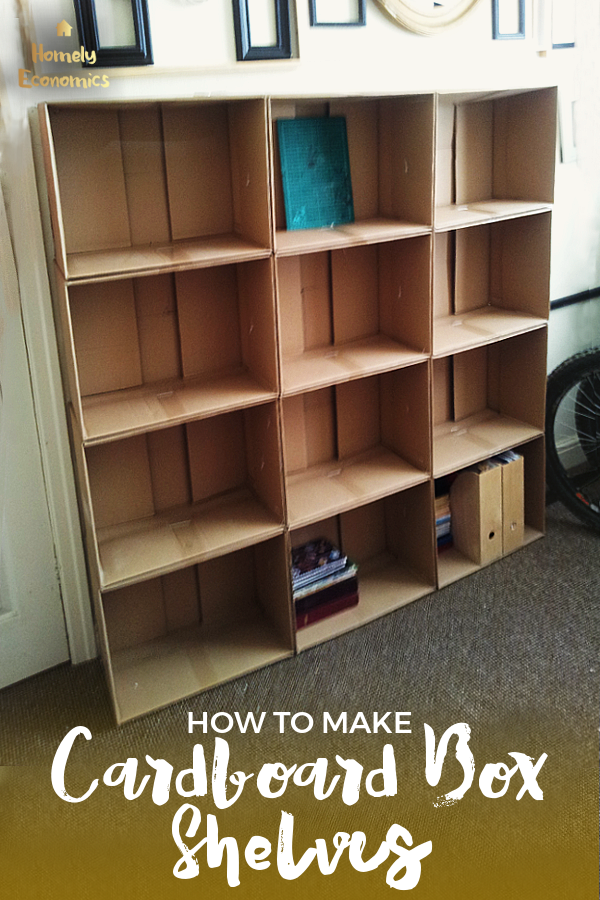
Credit: homelyeconomics.com
Finishing Touches
Finishing touches make your cardboard bookshelf look neat and strong. They protect the edges and give it a nice style. These final steps help your project last longer and match your room’s look. Take time to smooth and decorate carefully. It changes the whole feel of your DIY shelf.
Sanding Edges
Start by sanding all the edges of the cardboard. Use fine sandpaper for a smooth finish. This removes rough parts and small bumps. Sand gently to avoid tearing the cardboard. Smooth edges prevent cuts and make the shelf safer. Take your time for the best results.
Painting And Decorating
Choose paint that sticks well to cardboard. Acrylic paint works best and dries fast. Apply thin coats to avoid warping. Let each coat dry before adding another. Use colors that match your room or style. Add patterns or stickers for a personal touch. Decorating makes your shelf unique and fun.
Maintaining Your Bookshelf
Maintaining your cardboard box bookshelf helps it last longer and stay sturdy. Simple care keeps it safe from damage and looking neat. Follow easy steps to protect your DIY bookshelf every day.
Weight Limit Tips
Cardboard shelves hold less weight than wood. Do not place heavy books or items on it. Spread weight evenly across shelves. Avoid piling too many books in one spot. Check shelf strength often to prevent bending or breaking.
Cleaning And Care
Dust shelves regularly with a soft cloth. Avoid using water or wet cleaners to stop damage. Keep the bookshelf away from moisture and direct sunlight. Use a dry brush to clean corners. Fix small tears with tape to keep shelves strong.

Credit: www.youtube.com
Frequently Asked Questions
How Do I Start Making A Cardboard Box Bookshelf?
Begin by selecting sturdy cardboard boxes. Measure and cut panels to your desired bookshelf size. Assemble using strong glue or tape. Reinforce edges for durability.
What Tools Do I Need For This Diy Project?
You’ll need a utility knife, ruler, pencil, strong glue or tape, and optional paint for decoration. These tools ensure precise cuts and sturdy assembly.
How Can I Make The Bookshelf More Durable?
Use double layers of cardboard for shelves. Reinforce corners with extra tape or glue. Avoid overloading with heavy books to maintain stability.
Can I Customize The Design And Size Easily?
Yes, cardboard is flexible. Adjust dimensions to fit your space. Decorate with paint or paper for a personalized look. Customization is simple and cost-effective.
Conclusion
Building a cardboard box bookshelf is simple and fun. You only need a few materials and some patience. This project saves money and helps reduce waste. You can customize the size and shape to fit your space. It also gives a unique, personal touch to your room.
Start small and add more shelves as you go. Enjoy your new, handmade bookshelf and organize your books with pride. Give this DIY a try today!