Are you ready to create a sturdy and safe bunk bed base that will last for years? Building your own bunk bed base might seem tricky, but with the right steps, you can do it confidently and easily.
Imagine having a strong foundation that keeps your bunk bed steady, giving you peace of mind every night. In this guide, you’ll discover simple tips and clear instructions that make the process straightforward. Keep reading, and by the end, you’ll have everything you need to build a reliable bunk bed base yourself.
Credit: www.jennasuedesign.com
Materials And Tools Needed
Building a strong bunk bed base starts with having the right materials and tools. Choosing good wood and using proper tools helps create a safe and durable bed. Safety gear protects you during the building process. This section covers everything you need to get ready.
Choosing The Right Wood
Select wood that is sturdy and strong. Pine and oak are popular choices. Pine is affordable and easy to work with. Oak is harder but lasts longer. Avoid softwood that can bend or break easily. Make sure the wood is smooth and free of cracks. Use wood that is thick enough to hold weight safely.
Essential Tools List
Prepare these tools to build your bunk bed base. A saw for cutting wood to size. A drill to make holes and drive screws. A screwdriver set for tightening screws. A measuring tape for accurate measurements. Sandpaper to smooth rough edges. A square tool to check angles. Clamps to hold pieces in place while working. A pencil to mark cuts and holes.
Safety Gear
Wear safety glasses to protect your eyes. Use gloves to keep your hands safe. Wear a dust mask to avoid breathing sawdust. Use ear protection if using loud power tools. Keep a first aid kit nearby. Safety is important for a smooth building experience.
Credit: www.simplyhandmadestudios.com
Planning Your Bunk Bed Base
Planning your bunk bed base is the first step to a safe and sturdy bed. Careful planning saves time and prevents mistakes. You need to think about the mattress size, the frame design, and the structure’s strength. This stage sets the foundation for your project. Take your time and plan well.
Measuring Mattress Dimensions
Start by measuring the mattress you will use. Note the length, width, and thickness. Measure twice to avoid errors. These numbers guide the size of your base. The base should fit the mattress snugly. Leave a small gap for easy mattress placement.
Designing A Strong Frame
Next, design a frame that can hold weight safely. Use strong wood or metal materials. Think about the weight of two people on the top bunk. Add extra support beams for strength. Plan for guardrails and ladders to ensure safety. The frame must be stable and steady.
Sketching The Blueprint
Draw a simple blueprint of your bunk bed base. Include all measurements and parts. Show where the supports and slats will go. Use clear labels for each piece. This drawing helps you visualize the build. It also guides you during construction. Keep it handy while working.
Cutting And Preparing Wood
Cutting and preparing wood is an important step in building a sturdy bunk bed base. Precise cuts ensure the pieces fit well together. Preparing the wood properly makes the assembly smoother. Taking time here saves effort later.
Marking Cut Lines
Start by measuring the wood carefully. Use a pencil and a ruler to mark straight lines. Double-check each measurement before cutting. Clear marks guide your saw and keep cuts accurate. Mark all pieces before moving to the next step.
Using Power Tools Safely
Wear safety glasses and gloves to protect yourself. Keep your fingers away from the blade. Use clamps to hold the wood steady. Follow the tool’s instructions for safe use. Work slowly to avoid mistakes and accidents.
Sanding And Smoothing
After cutting, sand the edges to remove splinters. Use medium-grit sandpaper first, then fine grit for smoothness. Smooth edges prevent injuries and help paint stick. Check every piece and sand until all surfaces feel smooth.
Credit: www.simplifiedbuilding.com
Assembling The Frame
Assembling the frame is the first important step in building a bunk bed base. This step sets the foundation for a strong and safe bed. The frame holds everything together and supports the mattress and sleepers. Taking time to assemble it correctly ensures durability and safety.
Building The Outer Frame
Start by arranging the long side rails and short end rails. Connect them to form a rectangle. Use wood screws or bolts for a tight fit. Check that all corners are square. This keeps the frame even and stable. Use a carpenter’s square or measure diagonally to confirm right angles.
Adding Support Slats
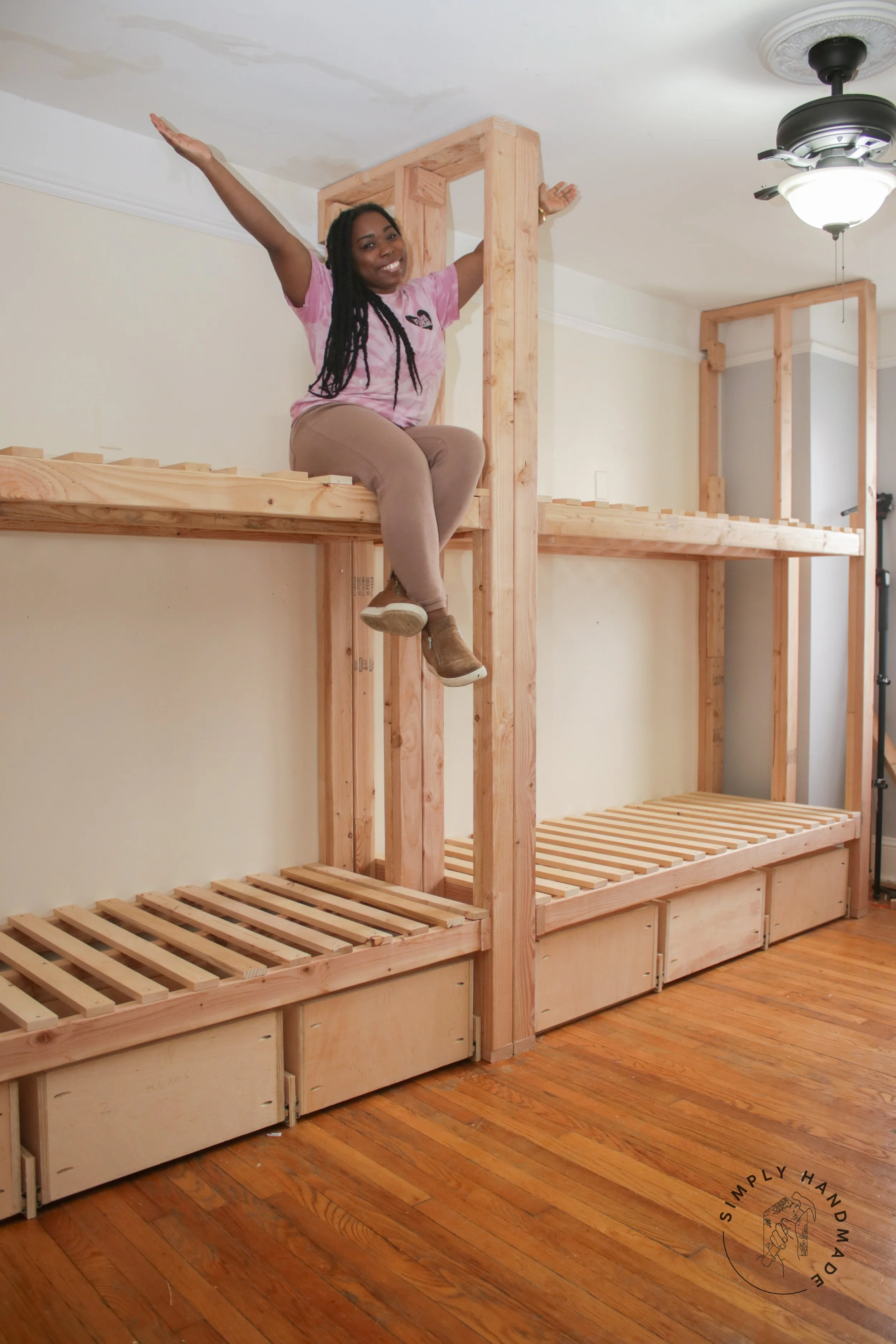
Place support slats evenly inside the outer frame. These slats hold the mattress and prevent sagging. Space them about 3 to 4 inches apart. Secure each slat with screws to the side rails. This adds strength and keeps the mattress firm. Use solid wood slats for better support and longevity.
Securing Joints And Corners
Double-check all joints and corners for tightness. Use corner brackets or metal plates for extra strength. Tighten all screws and bolts firmly. Loose joints can cause wobbling or noise. Reinforcing corners keeps the frame solid under weight. This step ensures safety and long-lasting use.
Reinforcing For Durability
Reinforcing your bunk bed base ensures it stays strong and safe for years. This step prevents wobbling and supports weight better. A solid base makes the bunk bed reliable for daily use. Follow these tips to add strength and durability.
Installing Cross Braces
Cross braces add extra support between the bed frame’s legs. Attach wooden or metal braces diagonally from corner to corner. This stops side-to-side movement and strengthens the frame. Secure them tightly with screws for a firm hold.
Using Metal Brackets
Metal brackets connect joints and corners for added stability. Place brackets where the bed frame parts meet. Use screws to fix brackets firmly in place. Metal brackets reduce shaking and increase the bed’s lifespan.
Double Checking Stability
Test the bed frame by gently pushing and shaking it. Look for any loose parts or movement. Tighten screws or add more braces if needed. A stable bunk bed base ensures safety and comfort.
Finishing Touches
Finishing touches make your bunk bed base safe and long-lasting. They protect the wood and improve stability. Taking time here ensures the bed stays strong and looks good.
Applying Protective Coating
Start by sanding the wood smooth. This removes rough spots and splinters. Choose a clear wood sealant or paint. Apply with a brush for even coverage. Let each coat dry fully before adding another. This shields the wood from moisture and wear. It also helps prevent cracks and damage.
Adding Non-slip Features
Non-slip pads keep the mattress from sliding off. Attach rubber or foam pads to the bed frame edges. You can also use grip tape on the base surface. These small steps boost safety and comfort. They stop sudden movements and reduce noise.
Final Inspection
Check every joint and screw for tightness. Look for any rough edges or splinters left behind. Test the bed’s stability by applying pressure gently. Make sure the mattress fits securely. Fix any loose parts before use. This final check keeps the bunk bed safe for kids.
Frequently Asked Questions
What Materials Are Needed To Build A Bunk Bed Base?
You need wood planks, screws, a drill, measuring tape, sandpaper, and wood glue. Choose sturdy, quality wood for safety and durability.
How Do I Ensure The Bunk Bed Base Is Strong?
Use thick wood planks and secure joints tightly with screws. Reinforce corners with brackets for extra support and stability.
What Are The Best Dimensions For A Bunk Bed Base?
Measure your mattress size accurately. Typically, the base should be slightly smaller than the mattress to ensure a snug fit.
How To Prevent The Bunk Bed Base From Creaking?
Tighten all screws firmly and use wood glue on joints. Regularly check and maintain the structure to avoid looseness and noise.
Conclusion
Building a bunk bed base can be simple and rewarding. Follow each step carefully to ensure safety and strength. Use the right tools and materials for a solid frame. Take your time to measure and fit parts correctly. A strong base supports the mattress and keeps the bed steady.
Enjoy the satisfaction of creating a practical piece of furniture. Your effort will save money and add a personal touch to the room. Ready to start? Your bunk bed base is within reach.