Have you ever wanted your bunk bed drawing to jump off the page and look like it’s real? Making your bunk bed sketch appear 3D can transform a simple idea into something impressive and eye-catching.
Whether you’re designing for a project, sharing with friends, or just having fun, getting that realistic depth can make all the difference. In this post, you’ll discover easy steps and clever tricks that will help your drawing stand out with striking 3D effects.
Ready to make your bunk bed come alive? Let’s dive in!
Choose The Right Perspective
Choosing the right perspective is key to making a bunk bed drawing look 3D. Perspective adds depth and realism to your sketch. It helps viewers see the bed as a solid object in space. Picking the proper perspective guides how you draw lines and shapes.
Different perspectives create different effects. Some make the bed look straight on, while others show angles and corners. Understanding basic perspectives lets you create a strong 3D look. Focus on clear, simple techniques to improve your drawing.
One-point Perspective
One-point perspective uses a single vanishing point on the horizon line. All lines that move away from the viewer go toward this point. It is useful for drawing the bunk bed from the front or back.
This method makes the bed look like it is facing you directly. The sides shrink toward the center point. It is easy to control and gives a neat 3D effect. One-point perspective suits simple and clean bunk bed designs.
Two-point Perspective
Two-point perspective uses two vanishing points on the horizon line. Lines go toward either point, showing the bed’s width and depth. It works well for drawing the bunk bed at an angle.
This style reveals more sides of the bed. The corners look sharper and more realistic. Two-point perspective adds complexity but shows the bed’s shape clearly. It is good for dynamic and detailed sketches.
Selecting The Best Angle
Choosing the right angle helps emphasize the bunk bed’s features. Try angles that show the height and structure well. Angles from above or below create interesting views.
Think about which parts of the bed you want to highlight. Adjust your perspective to make those parts stand out. Experiment with different angles to find the most natural look. This step gives your drawing a strong 3D presence.
Sketch Basic Shapes
Sketching basic shapes is the first step to make a bunk bed drawing look 3D. It helps to build a strong foundation. Start by breaking down the bunk bed into simple forms. These shapes guide the entire drawing and add depth.
Using basic shapes makes it easier to see the bed’s structure. It also helps keep the proportions right. This stage focuses on the main parts without details. It sets the stage for a realistic 3D effect.
Outline The Bed Frame
Begin with a rectangle to form the main bed frame. Draw a box shape to represent the mattress area. Use straight lines to show the edges clearly. This box gives the bed its 3D volume. Keep the lines light to adjust later.
Next, add vertical and horizontal lines to show the bed’s length and height. These lines create a sense of space. The frame should look like a solid object, not flat. Simple shapes like rectangles and squares help achieve this.
Mark Key Structural Elements
Identify important parts like the ladder, guardrails, and support beams. Mark these with smaller rectangles and cylinders. Place them carefully around the frame to keep balance. These shapes add realism to the drawing.
Use light lines to sketch these elements. This allows easy corrections. Show their position in 3D space by adding depth with parallel lines. This step gives the bunk bed a sturdy and complete look.
Add Depth With Lines
Lines create the illusion of depth in your bunk bed drawing. They guide the eye and shape the form. Using lines cleverly can make your flat sketch appear three-dimensional.
Start by thinking about how the bed sits in space. Lines that converge or run parallel help show different angles. This technique makes your drawing look more real and interesting.
Use Vanishing Points
Vanishing points are spots where lines meet far away. They help show perspective. Place one or two vanishing points on your paper. Draw lines from the edges of the bunk bed to these points.
These lines shrink as they reach the vanishing points. This shrinking makes the bed appear smaller in the distance. It tricks the eye into seeing depth on a flat page.
Draw Guidelines For Proportions
Guidelines keep your drawing balanced and accurate. Draw light lines to mark the height and width of the bunk bed. These help keep parts of the bed in correct size.
Use these lines to measure where each part fits. This stops the bed from looking flat or weird. Clear proportions help the 3D effect stand out more.
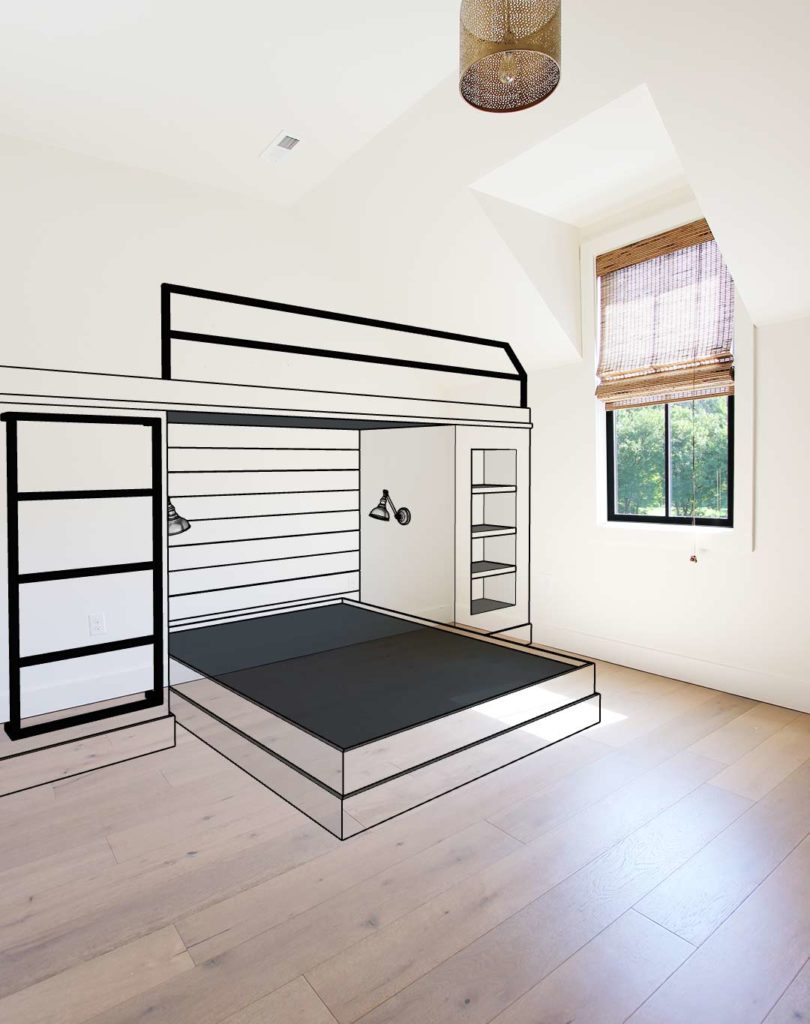
Credit: plankandpillow.com
Incorporate Shadows And Highlights
Incorporating shadows and highlights gives your bunk bed drawing a 3D effect. It makes the bed look real and solid. Shadows add depth, while highlights bring out edges and surfaces. Together, they create a sense of volume and space.
Start by understanding how light interacts with objects. This helps you place shadows and highlights correctly. Careful shading transforms a flat drawing into a lifelike image.
Identify Light Source
Decide where the light comes from in your drawing. It could be from the top, side, or front. This direction affects where shadows and highlights appear. A clear light source guides your shading choices.
Mark the light source softly on your sketch. This helps keep shadows consistent. Objects closer to light get brighter highlights. Areas away from light stay darker.
Shade For Volume
Use shading to show the bunk bed’s shape and form. Darken parts that are far from the light source. Use lighter shades on surfaces facing the light. Gradual shading gives the bed a round, 3D look.
Apply soft shadows under the bed frame and between slats. This adds depth and realism. Avoid harsh lines; smooth shading looks natural and soft.
Highlight Edges
Add highlights on the edges where light hits directly. Use a white pencil or erase small areas gently. These bright spots make edges pop and look sharp.
Focus on corners and raised parts of the bunk bed. Highlights create contrast with shadows. This contrast makes your drawing stand out and appear three-dimensional.
Detail Textures And Features
Adding detail textures and features brings your bunk bed drawing to life. These small touches create depth and make the design look real. Focus on the materials, shapes, and patterns. Each element adds to the 3D feel.
Wood Grain And Material
Show the wood grain clearly on the frame. Use fine, short lines following the natural flow of the wood. Vary the shading to give texture and volume. Darker spots suggest knots or rough patches. This makes the wood look solid and natural.
Railing And Ladder Details
Draw the railings with clear edges and shadows underneath. Add small screws or bolts for realism. For the ladder, show each rung with slight shading on the sides. This helps highlight the shape and distance between parts. These details build a sturdy, three-dimensional look.
Mattress And Bedding
Sketch the mattress with soft curves and slight wrinkles. Add gentle shadows under folds to show texture. Use lines to suggest fabric patterns or quilt stitching. These touches make the bedding appear cozy and real. It also contrasts nicely with the hard wood frame.
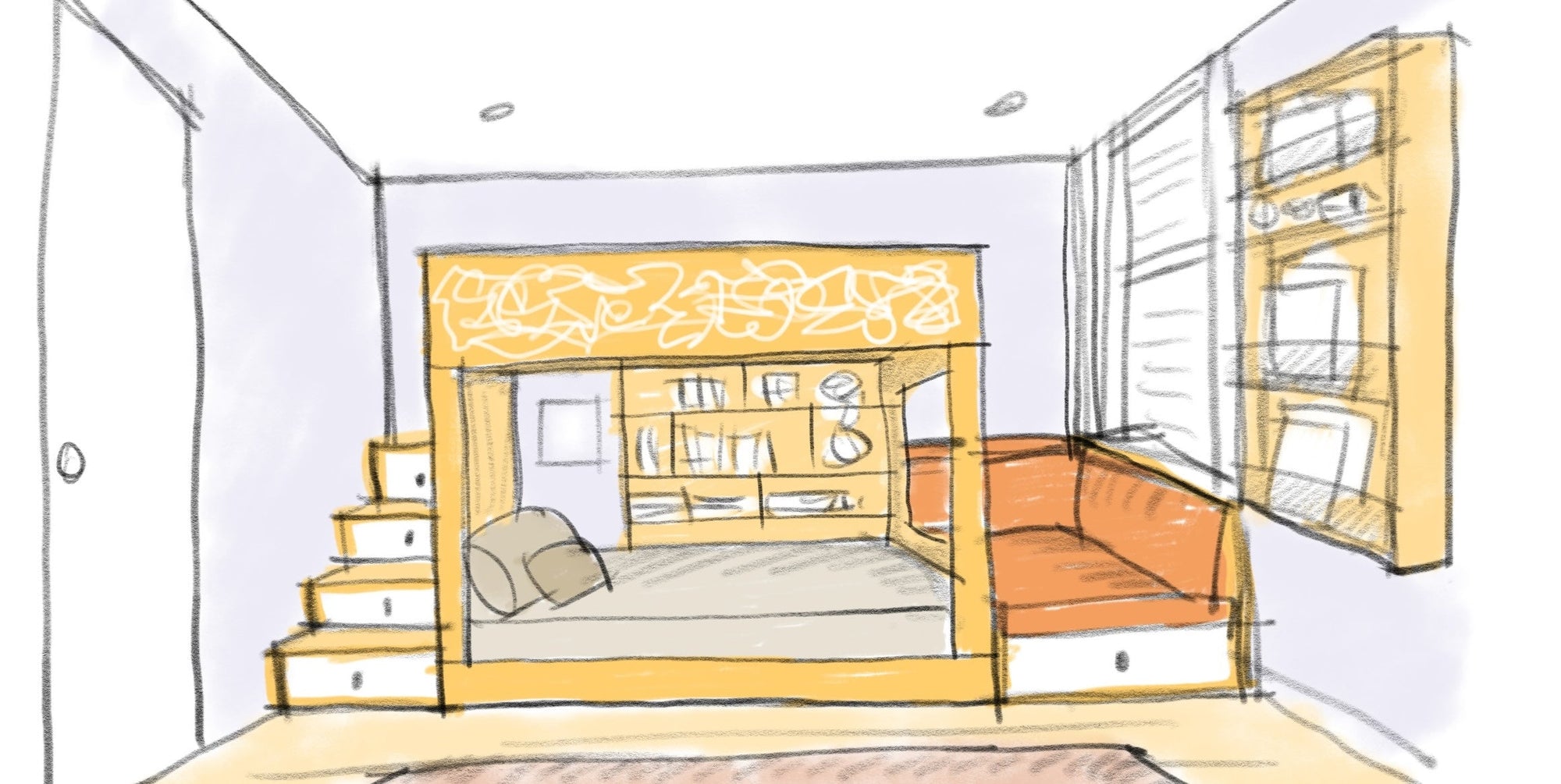
Credit: casakids.com
Refine And Clean The Drawing
Refining and cleaning your bunk bed drawing helps it look neat and realistic. This step removes extra lines and sharpens details. A clear drawing makes the 3D effect stronger and easier to see.
Focus on making the lines crisp and the shadows clear. This gives depth and shape to the bunk bed. Follow the simple steps below to improve your drawing.
Erase Construction Lines
Start by removing all light guide lines. These lines are useful during sketching but can clutter the drawing. Use a soft eraser to gently clear them without smudging your main lines. This creates a clean base for the next steps.
Enhance Contrast
Darken the main outlines of the bunk bed. This helps important parts stand out. Use a sharper pencil or pen for bold edges. Add shadows in the right places to create depth. Contrast between light and dark makes the drawing appear three-dimensional.
Add Final Touches
Look closely for small details like wood grain or screws. Draw them lightly to add realism. Clean up any smudges around the drawing. Make sure the edges are sharp and tidy. These final touches bring your bunk bed drawing to life.

Credit: www.dimensions.com
Frequently Asked Questions
How Do I Start A 3d Bunk Bed Drawing?
Begin by sketching the basic bunk bed frame using simple shapes. Use perspective lines to add depth and dimension to the drawing.
What Tools Enhance A Bunk Bed Drawing’s 3d Effect?
Use pencils with varying hardness, rulers for straight lines, and shading tools. Digital software with layers and 3D modeling helps too.
How To Add Shadows For A Realistic 3d Bunk Bed?
Identify a light source, then shade opposite sides of the bed frame. Use gradients to create smooth shadow transitions for realism.
Can Color Improve The 3d Look Of Bunk Bed Drawings?
Yes, using contrasting colors and highlights enhances depth. Apply lighter tones on surfaces facing light and darker shades on shaded areas.
Conclusion
Creating a 3D bunk bed drawing takes practice and patience. Use clear lines and shading to add depth. Focus on angles that show height and space well. Small details make your drawing look real and strong. Keep trying different views to see what works best.
Soon, your bunk bed drawings will stand out with a lifelike feel. Enjoy the process and watch your skills grow each time.