Have you ever wondered how thin you can make a hidden bookshelf door without sacrificing strength or functionality? If you’re thinking about adding a secret door to your home, knowing the limits can save you time and money.
You want it to blend seamlessly with your walls, yet still be sturdy enough to open and close smoothly. You’ll discover practical tips and expert advice on crafting the perfect slim hidden bookshelf door. By the end, you’ll feel confident to design a door that’s both sleek and reliable—ready to impress anyone who steps into your space.
Keep reading to unlock the secrets behind making your hidden door as thin as possible.
Choosing The Right Materials
Choosing the right materials is key to making a thin hidden bookshelf door. The material affects strength, appearance, and ease of installation. It also controls how slim the door can be without losing durability. Picking suitable materials helps create a door that fits your space and style.
Wood Types For Slim Profiles
Wood is a popular choice for hidden bookshelf doors. Some wood types are thinner yet strong. Baltic birch plywood is one option. It is stable and resists bending. Another choice is MDF, which is smooth and easy to paint. Hardwoods like maple or oak offer strength but need more thickness. Choosing the right wood balances slimness and durability.
Metal And Composite Options
Metal doors can be very thin and strong. Steel or aluminum frames support the door well. Composites mix materials to add strength with less thickness. These options often weigh less than wood. They also resist warping in humid areas. Metal and composites suit modern designs and tight spaces.
Durability Vs. Thickness
Thin doors must not sacrifice durability. The material should handle daily use without damage. Thinner materials need extra support or reinforcement. Sometimes a thicker edge or frame helps. The goal is a door slim enough to hide but strong enough to last. Balance thickness and durability for the best result.

Credit: murphydoor.com
Designing Slim Hidden Doors
Creating a thin hidden bookshelf door requires careful design. It must blend with the wall yet hold books. Slim doors save space and look sleek. The challenge is to keep strength without bulk.
Designers focus on clever techniques to reduce door thickness. Every detail counts. Doors must open smoothly and support weight. Balancing these needs is key to a smart hidden door.
Minimal Frame Techniques
Using slim frames cuts down door thickness. Thin metal or wood edges replace bulky trims. This approach keeps the door light and neat. Strong materials maintain durability even with less frame.
Careful joinery helps avoid gaps and wobbling. Frames fit tightly around the door panel. This gives a clean look and solid feel. Minimal frames also hide hinges better.
Integrating Bookshelf Functionality
The door must hold books without bending. Shelves attach directly to the door panel. Using strong supports keeps shelves steady. Books add weight, so reinforcement is important.
Choosing the right shelf material helps reduce thickness. Lightweight but strong boards work best. Shelves should not stick out too far. This keeps the door slim and easy to open.
Optimizing Shelf Depth
Shelf depth affects door thickness and usability. Shallow shelves reduce door size but limit book space. Deeper shelves hold more but make the door bulkier.
Finding the right balance is crucial. Measure your book sizes and plan shelves accordingly. Thin hidden doors need careful depth choices to stay practical and slim.
Hinges And Hardware For Thin Doors
Choosing the right hinges and hardware is key for thin hidden bookshelf doors. These parts must be small yet strong. They help the door open smoothly and stay hidden. Proper hardware keeps the door aligned and supports its weight. Thin doors need special types of hinges and latches. These options save space and keep the door flush with the wall.
Concealed Hinge Options
Concealed hinges hide inside the door frame. They do not stick out, keeping the door sleek. These hinges are small and fit well on thin doors. They allow the door to open wide without gaps. Some models have adjustable settings for perfect alignment. These hinges also reduce wear on the door edges.
Magnetic And Push Latches
Magnetic latches hold the door closed without visible hardware. They use strong magnets to keep the door shut tight. Push latches let you open the door by pressing it gently. Both options avoid handles and keep the look clean. These latches work well with thin, lightweight doors. They also make opening and closing quiet and easy.
Weight Support Considerations
Thin doors need hardware that supports their weight safely. Choose hinges rated for the door’s size and material. Heavy books or thick wood need stronger supports. Some hinges include built-in springs to help lift the door. Proper weight support prevents sagging and damage over time. Balancing weight and thinness improves door function and longevity.
Installation Tips For Narrow Doors
Creating a thin hidden bookshelf door comes with unique challenges. These issues affect both function and look. Understanding common problems helps you find practical fixes. This section covers key challenges and solutions for a slim hidden door.
Warping And Stability Issues
Thin doors often face warping over time. Wood or materials may bend due to moisture or weight. Warping causes gaps and affects door function. Use quality, stable materials to reduce bending. Adding a strong frame inside the door improves stability. Regularly check for moisture and keep the area dry.
Maintaining Seamless Appearance
A hidden door must blend perfectly with the wall. Even small misalignments ruin the look. Use precise measurements and install flush hinges. Paint or wallpaper matching the wall helps hide edges. Test the door’s fit multiple times before final installation. Small adjustments make a big difference.
Adjusting For Floor And Wall Irregularities
Floors and walls are rarely perfectly even. This creates gaps or uneven door movement. Use adjustable hinges or shims to fix uneven spots. Sand edges lightly for a smooth fit. Measure all surfaces carefully before cutting the door. Proper adjustment ensures smooth opening and closing.
Common Challenges And Fixes
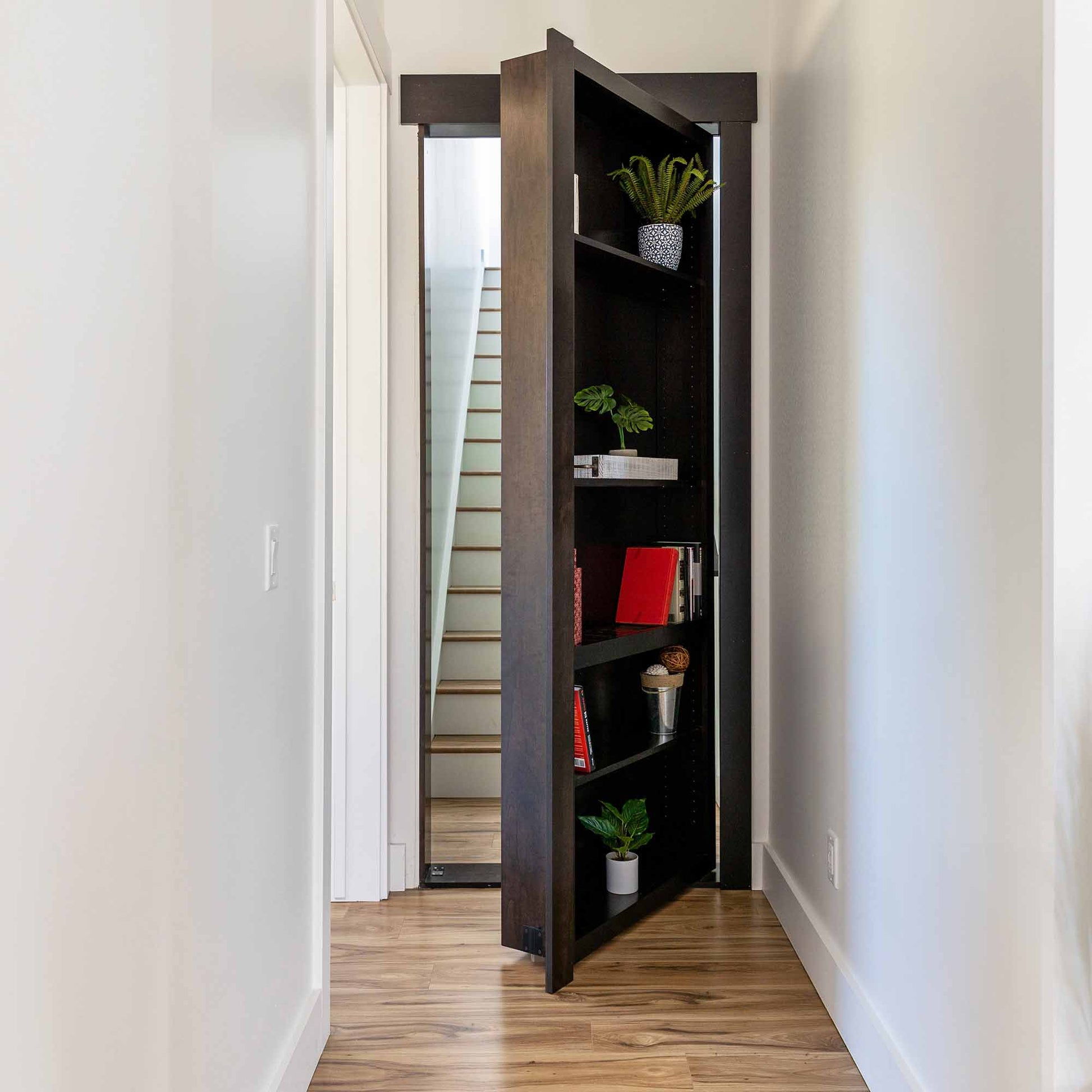
Exploring case studies of ultra-thin hidden bookshelf doors shows how thin these doors can be. Designers and builders push the limits to create doors that blend seamlessly with walls. Each project reveals unique techniques and materials to make doors as slim as possible.
Residential Projects
In homes, ultra-thin hidden doors save space and add style. Some doors measure just one inch thick, fitting flush with wall panels. Builders use strong, lightweight materials like MDF and plywood to keep doors thin yet durable. These doors often hide small rooms or closets without disrupting the room’s flow.
Commercial Applications
Offices and stores use ultra-thin hidden doors for security and design. Doors less than two inches thick blend into walls or bookshelves. Metal frames and special hinges support the thin door’s weight. These doors create secret entries or storage areas without bulky frames.
Innovative Custom Builds
Custom projects show extreme thinness through creative design. Some doors are made as thin as ¾ inch using carbon fiber or aluminum. Builders combine thin panels with magnetic locks and invisible hinges. These doors offer a sleek, modern look while remaining strong and functional.

Credit: www.diyinprogress.com
Credit: murphydoor.com
Frequently Asked Questions
How Thin Can A Hidden Bookshelf Door Be?
A hidden bookshelf door can be as thin as 1 to 2 inches. This depends on the door material and structural support. Thin doors require strong hinges and precise craftsmanship to ensure durability and smooth operation.
What Materials Work Best For Thin Hidden Bookshelf Doors?
Lightweight materials like plywood, MDF, or hollow-core wood work best. These materials maintain strength while allowing thin profiles. Using high-quality finishes enhances durability and aesthetics without adding bulk.
Does Making A Bookshelf Door Thinner Affect Its Strength?
Yes, thinner doors are less sturdy and more prone to damage. Reinforcements like metal frames or thicker edges help maintain strength without increasing overall thickness.
Can Thin Hidden Bookshelf Doors Support Heavy Books?
Thin doors alone usually can’t support heavy books. The shelving inside must be reinforced separately. The door acts as a facade, while internal shelves hold the book weight.
Conclusion
A hidden bookshelf door can be very thin and still strong. It depends on the materials and design you choose. Thin doors save space and keep the secret well. Careful planning helps balance thinness with durability. Simple tools and ideas make building easier.
Always check measurements twice before cutting. Thin does not mean weak if done right. This project adds charm and function to any room. Try it yourself and enjoy a clever, slim hidden door.