Have you ever looked at the empty space under your staircase and wondered how to make the most of it? Building a bookshelf there is a smart way to add storage and style to your home without taking up extra room.
Imagine turning that unused corner into a beautiful, organized spot for your favorite books, decorations, or even hidden storage. In this guide, you’ll discover simple steps to create your own custom bookshelf under the stairs—no expert skills needed. Ready to transform your space and impress everyone who visits?
Let’s dive in and make your home more functional and inviting.
Planning Your Bookshelf
Planning your bookshelf under the staircase is the first step to a great project. It helps you use the space well and avoid mistakes. Careful planning saves time and money. It also ensures your bookshelf fits perfectly and looks good.
Start by knowing the space you have. Next, choose materials that match your style and budget. Finally, design the shelves to hold your books and items safely and neatly.
Measuring The Staircase Space
Measure the height, length, and depth of the space under the stairs. Use a tape measure for accuracy. Write down the numbers clearly. Note any odd shapes or angles. These affect your shelf design. Check for pipes or wires inside the wall. Avoid these areas to keep safe.
Choosing The Right Materials
Pick materials that suit your style and budget. Wood is strong and looks warm. Plywood is cheaper and easy to cut. MDF is smooth and good for painting. Use screws and brackets for sturdy shelves. Choose finishes that protect wood from damage. Think about moisture and weight your shelf will hold.
Designing The Shelf Layout
Decide how many shelves you need. Think about the size of your books and items. Plan for taller shelves for big books. Add smaller shelves for decorations or small items. Leave space for lighting if you want. Use a simple design to make building easier. Draw your design on paper or use a computer tool. Check your plan twice before starting.
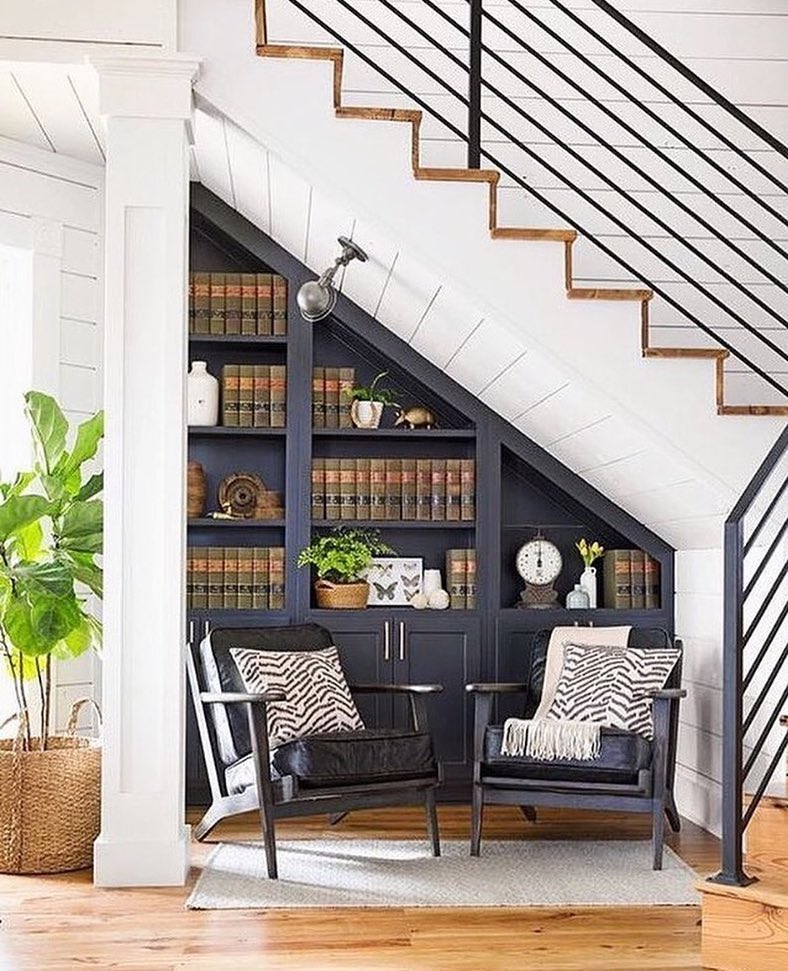
:strip_icc()/triangle-storage-area-in-wall-c60badd4-c843e591c3464104b1d4616bbc2248ec.jpg)
Credit: www.bhg.com
Gathering Tools And Supplies
Gathering the right tools and supplies is the first step in building a bookshelf under your staircase. Having everything ready saves time and makes the project easier. You will need a mix of basic tools and quality materials. Choosing the right wood and fasteners will ensure your bookshelf is strong and lasts long.
Essential Tools For The Project
Start with a tape measure for accurate dimensions. A pencil helps mark cutting lines clearly. A saw is necessary to cut wood pieces to size. A drill is useful for making holes and driving screws. Sandpaper smooths rough edges on wood. A level keeps shelves straight and balanced. Clamps hold pieces in place while you work.
Selecting Wood And Fasteners
Choose wood that matches your room’s style and your budget. Pine is affordable and easy to work with. Oak or maple offers more strength and durability. Select screws or nails that fit the wood thickness. Use wood glue for extra hold between joints. Pick fasteners that resist rust for long-lasting shelves. Match the finish to your staircase for a neat look.
Preparing The Staircase Area
Preparing the staircase area is the first step in building a bookshelf under the stairs. This stage sets the foundation for a safe and sturdy shelf. Careful preparation helps avoid mistakes and saves time during construction.
Start by making sure the space is clear and clean. A tidy area gives you room to work and reduces risks. Next, mark where each shelf will go. Precise markings guide your cuts and placements. This planning ensures the shelves fit perfectly in the space.
Clearing And Cleaning The Space
Remove all items stored under the staircase. Clear dust, dirt, and cobwebs using a broom or vacuum. Clean surfaces with a damp cloth to remove grime. A clean area helps you see the space clearly and work better. Check for any damage or uneven spots on the walls and floor. Fix small problems before starting the build.
Marking The Shelf Positions
Measure the height and depth of the space carefully. Use a pencil and a level to draw horizontal lines where shelves will sit. Space shelves evenly for a balanced look and easy access. Mark the positions of supports and brackets too. Double-check all measurements for accuracy. Clear markings make assembly faster and keep shelves straight.
Cutting And Assembling The Shelves
Cutting and assembling the shelves is a key step in building a bookshelf under your staircase. This part shapes the shelves to fit perfectly in the space. Precise measuring and careful assembly ensure a strong and neat bookshelf. Follow each step to create shelves that hold your books well and look great.
Measuring And Cutting Wood Pieces
Start by measuring the height, width, and depth of your staircase space. Mark the wood pieces according to these measurements. Use a pencil and a ruler for accuracy. Cut the wood with a saw, following your marks carefully. Smooth the edges with sandpaper to avoid splinters and rough spots.
Assembling The Frame
Build the frame first to support the shelves. Join the cut wood pieces using screws or nails. Use a drill for cleaner holes and stronger joints. Check the frame with a level to keep it straight. Tighten all connections to make the frame sturdy and safe.
Installing Shelf Boards
Place the shelf boards on the assembled frame. Align each board evenly and secure it with screws. Leave small gaps between shelves for air circulation. Double-check the shelves are level and strong. Sand any rough surfaces to finish the installation smoothly.
Installing The Bookshelf
Installing the bookshelf under your staircase is a key step to make it strong and safe. This part involves fixing the frame, adding supports, and checking stability. Do these carefully for a lasting result.
Securing The Frame To The Wall
Start by placing the bookshelf frame against the wall under the stairs. Use a level to keep it straight. Mark the spots on the wall where the frame will be fixed. Drill holes at the marks. Use screws and wall anchors to attach the frame tightly. This keeps the frame steady and prevents it from moving.
Adding Support Brackets
Support brackets help hold the shelves and stop sagging. Attach brackets under each shelf, especially the longer ones. Use screws to fix brackets to the frame and the wall. Make sure brackets fit well and are evenly spaced. This adds strength and holds heavy books safely.
Checking For Stability
After installation, test the bookshelf’s stability. Push gently on different parts to see if it wobbles. Tighten any loose screws or brackets. Make sure the bookshelf feels solid and secure. A stable bookshelf is safe and lasts longer.
Credit: www.extraspace.com
Finishing Touches
Finishing touches give your bookshelf a polished, complete look. These final steps improve both appearance and durability. Take time with each task. Careful work makes your project stand out.
Sanding And Smoothing Edges
Start by sanding all surfaces and edges. Use medium-grit sandpaper to remove rough spots. Follow with fine-grit for a smooth finish. Sand corners gently to avoid sharp edges. Smooth wood feels better and prevents splinters. Clean dust off with a damp cloth after sanding.
Painting Or Staining
Choose paint or stain to match your room’s style. Paint hides wood grain and offers many colors. Stain shows wood texture and adds warmth. Apply a primer before painting for better adhesion. Use thin, even coats for a smooth look. Let each coat dry fully before the next. Seal with a clear finish to protect the surface.
Adding Decorative Elements
Decorative touches make your bookshelf unique. Try simple knobs or handles on doors or drawers. Add trim or molding for a classic style. Use wallpaper or fabric on the back panel for color. Small plants or lights create a cozy feel. These elements highlight your bookshelf’s design and personality.
Maintaining Your Bookshelf
Maintaining your bookshelf under the staircase keeps it looking good and lasting long. Regular care stops dust and dirt from building up. It also helps spot small damages early. This way, you can fix issues before they get worse. A well-kept bookshelf stays strong and safe for your books and items.
Regular Cleaning Tips
Dust your bookshelf every week with a soft cloth. Use a dry or slightly damp cloth to wipe surfaces. Avoid harsh cleaners that can damage the wood or paint. Clean corners and hard-to-reach spots carefully. Keep the area around the bookshelf free from dust too. This stops dirt from settling back on the shelves.
Inspecting For Wear And Tear
Check your bookshelf every month for signs of damage. Look for cracks, loose screws, or wobbly shelves. Tighten any screws or nails that have come loose. Watch for water stains or mold, especially if near damp areas. Fix small problems fast to keep the bookshelf strong. Regular checks prevent bigger repairs later.

Credit: ikeahackers.net
Frequently Asked Questions
How Do I Measure Space Under Stairs For A Bookshelf?
Measure the height, depth, and width of the space under your stairs. Note any irregular angles or supports. Accurate measurements ensure your bookshelf fits perfectly and maximizes available space.
What Materials Are Best For Building Under-stair Bookshelves?
Use sturdy materials like plywood, MDF, or solid wood. These provide durability and support for books. Choose finishes that match your interior for a cohesive look.
How Can I Maximize Storage In A Small Under-stair Area?
Use adjustable shelves and vertical dividers to optimize space. Incorporate drawers or cabinets for hidden storage. Custom designs help utilize every inch efficiently.
Do I Need Special Tools To Build An Under-stair Bookshelf?
Basic woodworking tools like a saw, drill, screwdriver, and level are essential. For complex cuts, a jigsaw or circular saw is helpful. Safety gear is also important during construction.
Conclusion
Building a bookshelf under your staircase saves space and adds style. It makes good use of an often wasted area. You can store books, decorations, or everyday items there. The project is simple with basic tools and materials. Take your time to measure and fit shelves carefully.
Personalize your design to match your home’s look. Enjoy the extra storage and the neat appearance it brings. A well-built shelf makes your home feel more organized and cozy. Try this project to improve your living space easily.