Is your outdoor wood furniture looking dull or spotted with mold? Mold not only ruins the beauty of your favorite pieces but can also cause damage if left untreated.
You might feel unsure about how to clean it without harming the wood. Don’t worry—this guide will show you simple, effective steps to remove mold and restore your furniture’s natural charm. Keep reading to discover easy tips that will help you protect your outdoor wood and enjoy it for years to come.
Causes Of Mold On Wood Furniture
Mold grows on outdoor wood furniture when conditions favor its growth. Understanding these causes helps prevent mold and keeps furniture clean. Mold thrives in damp, dark, and dirty environments. Recognizing common causes can protect your wood furniture for years.
Moisture And Humidity
Moisture is the main cause of mold on wood furniture. Rain, dew, and watering plants add water to wood surfaces. High humidity keeps wood wet longer, creating a perfect mold environment. Wood absorbs moisture, making it soft and prone to mold growth.
Lack Of Sunlight
Sunlight helps dry wood and stops mold growth. Shady areas keep furniture damp and cool. Without sunlight, mold spores survive and multiply on wood surfaces. Placing furniture in bright spots reduces mold risk and keeps wood dry.
Organic Debris Accumulation
Leaves, dirt, and bird droppings hold moisture on wood. This organic debris feeds mold and helps it spread. Debris also blocks air, slowing drying and trapping moisture. Regular cleaning removes debris and lowers mold chances.
Safety Precautions Before Cleaning
Cleaning mold from outdoor wood furniture requires care and attention. Mold can cause health problems and damage the wood. Taking safety steps before you start helps protect you and your furniture. Follow these simple safety precautions to work safely and effectively.
Wear Protective Gear
Always wear gloves to protect your hands from mold and cleaning chemicals. Use a mask to avoid breathing in mold spores. Goggles keep your eyes safe from splashes. Dress in long sleeves and pants to avoid skin contact with mold.
Choose A Well-ventilated Area
Work outside or in an open space with good airflow. Fresh air helps reduce mold spores in the air. Avoid cleaning in small, closed rooms to prevent breathing difficulties. A breezy spot makes the cleaning process safer and easier.
Test Cleaning Solutions On Small Areas
Try your cleaning solution on a small, hidden part of the furniture first. This test shows if the solution harms the wood or changes its color. Wait a few minutes after applying to see the effect. Use only safe and gentle cleaners for wood surfaces.
Tools And Materials Needed
Cleaning mold from outdoor wood furniture needs the right tools and materials. Using proper items makes the job easier. It helps protect the wood and keeps it looking good. Gather all supplies before starting to save time and effort.
Cleaning Brushes And Cloths
Soft-bristle brushes work well to scrub mold gently. Avoid hard brushes that can damage the wood. Use microfiber cloths or old rags to wipe the furniture. These cloths trap mold and dirt without scratching surfaces. Have several cloths ready to switch when they get dirty.
Mild Detergents And Solutions
Choose mild detergents made for wood or outdoor use. Harsh chemicals may harm the wood or finish. A mix of water and white vinegar also helps kill mold safely. Avoid bleach, as it can discolor the wood. Use gentle cleaning solutions to keep furniture safe and clean.
Water And Spray Bottles
Clean water helps rinse away dirt and mold residue. Use a garden hose or buckets for rinsing. Spray bottles make applying cleaning solutions easy and even. They help control the amount of liquid used. Having water and spray bottles ready speeds up the cleaning process.

Credit: belleze.com
Step-by-step Cleaning Process
Cleaning mold from outdoor wood furniture is simple with the right steps. Follow this process carefully to protect your furniture and keep it looking fresh. Each step helps remove mold safely and thoroughly.
Remove Loose Debris
Start by brushing off loose dirt and debris. Use a soft brush or cloth. This clears the surface and makes cleaning easier. Avoid using wire brushes to prevent wood damage.
Apply Cleaning Solution
Mix a mild cleaning solution with water. Common options include diluted vinegar or a gentle soap. Apply the solution evenly on moldy areas. Let it sit for a few minutes to break down the mold.
Scrub Moldy Areas Gently
Use a soft brush or sponge to scrub the mold. Work gently to avoid scratching the wood. Focus on mold spots but cover the whole surface for best results. Repeat if mold persists.
Rinse And Dry Thoroughly
Rinse the furniture with clean water to remove all cleaning solution. Use a hose or buckets of water. Dry the wood completely with a towel or let it air dry in the sun. Drying prevents mold from returning.
Natural Remedies For Mold Removal
Removing mold from outdoor wood furniture can be done safely with natural remedies. These options avoid harsh chemicals and protect your wood’s surface. Natural solutions are easy to make and use with common household items. They work well to kill mold and freshen your furniture.
Vinegar Solutions
White vinegar is a natural mold killer. Pour undiluted vinegar into a spray bottle. Spray the moldy areas on your wood furniture. Let the vinegar sit for one hour. Then scrub gently with a soft brush. Rinse with water and dry the wood completely.
Baking Soda Paste
Baking soda helps remove mold and absorb moisture. Mix baking soda with water to form a thick paste. Apply the paste to moldy spots on the wood. Use a brush to scrub the area softly. Rinse off the paste with clean water. Dry the furniture well after cleaning.
Tea Tree Oil Spray
Tea tree oil is a strong natural antifungal. Mix one teaspoon of tea tree oil with one cup of water. Pour the mixture into a spray bottle. Spray the mold on the wood furniture. Let it sit without rinsing. This method prevents mold from returning quickly.
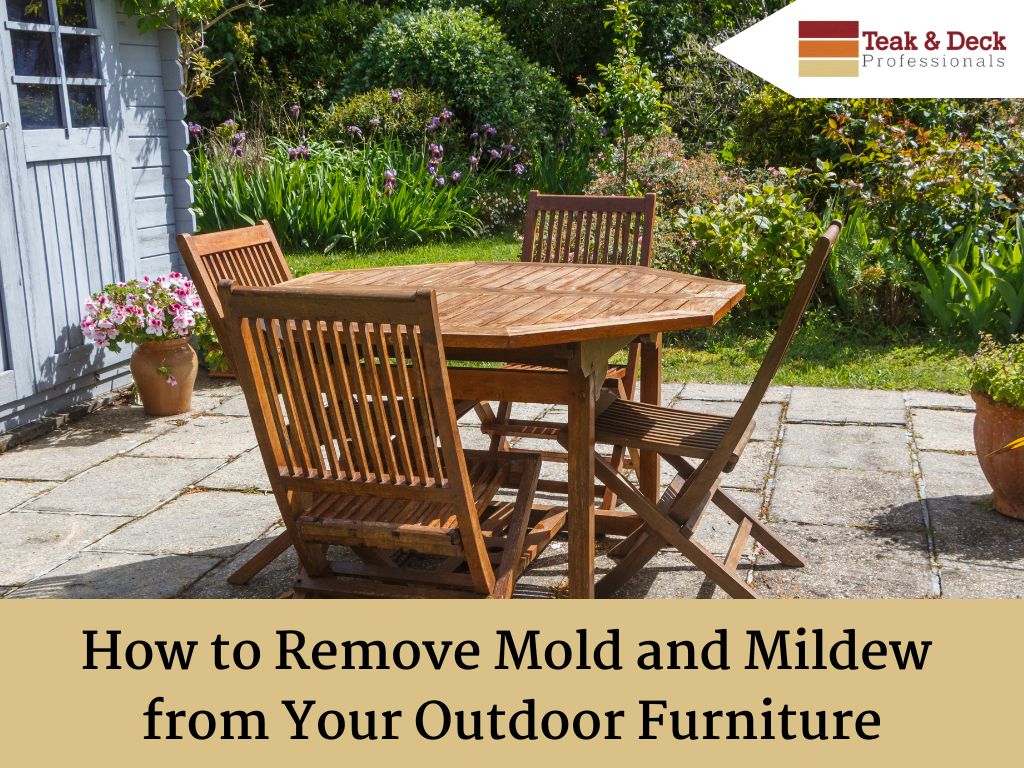
Credit: teakanddeck.com
Preventing Mold Growth On Wood Furniture
Mold growth on outdoor wood furniture can cause damage and make it unsafe. Preventing mold is easier than cleaning it later. Taking simple steps helps keep your furniture dry and mold-free. Small habits make a big difference over time.
Proper Placement And Storage
Place wood furniture in areas with good air flow. Avoid spots that stay damp or shaded all day. Keep furniture away from soil and mulch. These hold moisture and encourage mold growth. Store furniture indoors or cover it during wet seasons. Use breathable covers to stop moisture buildup.
Regular Cleaning And Maintenance
Clean your furniture often to remove dirt and mold spores. Use mild soap and water with a soft brush. Rinse well and let it dry completely. Check for mold spots regularly and clean them fast. Keeping furniture clean slows mold growth.
Applying Protective Finishes
Apply sealants or protective finishes to wood surfaces. These create a barrier against moisture and mold. Use products designed for outdoor wood furniture. Reapply finishes as recommended to keep protection strong. Proper sealing helps wood last longer and look better.
When To Seek Professional Help
Knowing when to get professional help is key for cleaning mold on outdoor wood furniture. Some mold problems need more than just home cleaning. Professionals have the right tools and knowledge to handle tough situations. They can protect your furniture and your health.
Extensive Mold Infestation
If mold covers a large area of your furniture, it may be too much to clean alone. Large mold infestations can spread quickly and hide in small cracks. Professionals can remove mold safely and thoroughly. They use special cleaners that are not available to the public.
Structural Damage Concerns
Mold can weaken wood and cause damage. If your furniture feels soft or looks cracked, mold might have caused structural problems. Professionals can check the wood’s strength. They know how to fix or replace damaged parts to keep your furniture safe and stable.
Persistent Mold Problems
Mold that keeps coming back after cleaning is a sign of a deeper issue. It could mean moisture is trapped inside the wood or nearby areas. Professionals can find the source of moisture. They offer solutions to stop mold from returning and keep your furniture clean longer.
:strip_icc()/Clean-Outdoor-Furniture-34bc286d99604bce93f968cc0e060c68.jpg)
Credit: www.bhg.com
Frequently Asked Questions
How Do I Remove Mold From Outdoor Wood Furniture?
Use a mixture of water and mild detergent to scrub the mold. Rinse with clean water and let it dry completely. For tough mold, use a solution of vinegar or a commercial mold remover.
What Causes Mold Growth On Outdoor Wood Furniture?
Mold grows due to moisture, shade, and poor air circulation. Outdoor wood furniture exposed to rain or humidity is prone to mold. Regular cleaning and sealing help prevent mold growth.
Can Vinegar Effectively Clean Mold On Wood Furniture?
Yes, vinegar is a natural and effective mold cleaner. Spray undiluted white vinegar on moldy areas, let it sit for an hour, then scrub and rinse. It kills mold spores without harsh chemicals.
How Often Should I Clean Mold From Outdoor Wood Furniture?
Clean mold as soon as you notice it to prevent damage. Regular cleaning every few months helps maintain wood and stops mold buildup. Inspect furniture after rainy or humid weather.
Conclusion
Cleaning mold from outdoor wood furniture keeps it safe and looking good. Use gentle cleaners and a soft brush for best results. Regular care stops mold from coming back quickly. Dry the furniture well after cleaning to avoid moisture. Taking these steps helps your wood last longer outside.
Simple habits protect your investment and create a pleasant space. Enjoy your fresh, mold-free outdoor furniture all season long.


