Are you looking to upgrade your bathroom without spending a fortune? Turning a cabinet into a bathroom vanity is a smart and creative way to refresh your space quickly.
Imagine having a unique vanity that fits perfectly in your bathroom while saving money and adding your personal touch. In this guide, you’ll discover simple steps to transform a regular cabinet into a stylish and functional vanity. Ready to make your bathroom stand out?
Keep reading to learn how easy and rewarding this project can be!

Credit: anoregoncottage.com
Choosing The Right Cabinet
Choosing the right cabinet is the first step to create a bathroom vanity. The cabinet sets the tone and function of the vanity. It affects the style, space, and how much you can store. Picking the best cabinet means thinking about size, style, material, and storage. Each of these factors helps you build a vanity that fits your bathroom perfectly.
Size And Style Considerations
Measure your bathroom space carefully before choosing a cabinet. The cabinet should fit well without crowding the room. Think about the style of your bathroom. A modern bathroom matches sleek, simple cabinets. A traditional bathroom suits cabinets with more details and curves. Match the cabinet style with your bathroom design for a nice look.
Material Durability
Bathroom vanities face moisture and water spills daily. Choose cabinet materials that resist water damage. Solid wood looks great but needs sealing to avoid warping. Plywood or MDF with waterproof finishes works well. Avoid particleboard, as it can swell with moisture. Durable materials last longer and keep the vanity looking good.
Storage Needs
Think about what you need to store in your vanity. Extra shelves help keep toiletries and towels organized. Drawers are great for smaller items like makeup or razors. Open shelves can hold decorative baskets for storage. Choose a cabinet with enough space to keep your bathroom tidy and neat.
Gathering Tools And Materials
Before starting to turn a cabinet into a bathroom vanity, gather all tools and materials. This step saves time and avoids interruptions. Having everything ready helps the project run smoothly. It also ensures safety and better results.
Essential Tools
Prepare basic tools for cutting, drilling, and measuring. A power drill with drill bits is crucial. A jigsaw or handsaw helps cut holes for plumbing. A tape measure ensures accurate dimensions. Screwdrivers are needed for assembling parts. A level keeps the vanity straight and balanced.
Necessary Supplies
Collect all supplies related to the cabinet and plumbing. A cabinet of suitable size works as the vanity base. A bathroom sink fits on or inside the cabinet. Plumbing pipes and fittings connect the sink to water lines. Wood screws and brackets secure parts together. Silicone sealant prevents water leaks around the sink.
Safety Gear
Use safety gear to protect yourself during work. Safety goggles shield your eyes from dust and debris. Gloves protect your hands from cuts and splinters. A dust mask keeps you from inhaling sawdust. Wear sturdy shoes to avoid injuries from dropped tools. Safety first for a smooth, injury-free project.
Preparing The Cabinet
Preparing the cabinet is the first step to transform it into a bathroom vanity. A clean and smooth surface ensures better paint or finish. Removing unnecessary parts makes room for new fixtures. Adjusting the cabinet for plumbing is essential for proper installation.
Cleaning And Sanding
Start by wiping the cabinet with a damp cloth. Remove all dust, dirt, and grease. Use mild soap if needed. Let it dry completely before sanding. Sand the entire surface with medium-grit sandpaper. Focus on rough spots and old finishes. Sanding helps paint or stain stick better. Wipe away dust with a clean cloth after sanding.
Removing Doors And Drawers
Take off the cabinet doors and drawers carefully. Unscrew hinges and handles using a screwdriver. Keep screws and hardware in a safe place. Removing these parts makes it easier to work. It also allows better access to the inside. You can repaint or replace doors later if desired.
Modifying For Plumbing
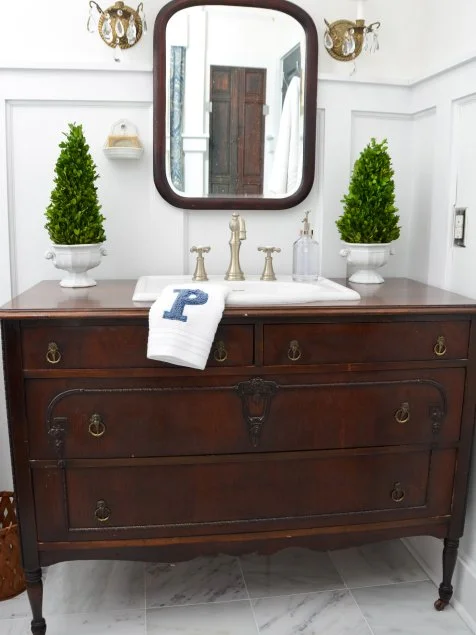
Measure the space needed for pipes and drains. Mark these areas on the cabinet back or bottom. Use a jigsaw or drill to cut holes for plumbing. Make sure holes are big enough but not too large. Smooth the edges of the cuts to avoid damage. Proper modifications ensure the vanity fits bathroom plumbing well.
Credit: www.hgtv.com
Installing The Sink And Faucet
Installing the sink and faucet is a key step in turning a cabinet into a bathroom vanity. This part shapes the look and function of your vanity. A well-installed sink and faucet ensure water flows properly and your space looks neat.
Selecting A Suitable Sink
Choose a sink that fits your cabinet size and style. Measure the cabinet top to find the right sink dimensions. Consider a sink with a flat bottom for easy installation. Materials like porcelain or stainless steel work well in bathrooms. Pick a sink with one or three holes, depending on your faucet type.
Cutting The Countertop
Mark the sink outline on the countertop carefully. Use a jigsaw to cut along the marked line. Wear safety goggles and gloves during cutting. Smooth the edges with sandpaper to avoid rough spots. Test the sink fits snugly into the cutout before moving on.
Fitting The Faucet
Insert the faucet into the sink or countertop holes. Secure it tightly with the mounting nuts underneath. Attach water supply lines to the faucet connections. Turn on water supply and check for leaks. Tighten connections if you see any drips.
Plumbing Setup
Setting up plumbing is key when turning a cabinet into a bathroom vanity. It ensures water flows smoothly and drains properly. A proper plumbing setup prevents leaks and water damage. This section covers three important steps: connecting water lines, installing drain pipes, and leak testing.
Connecting Water Lines
Start by turning off the main water supply. Attach flexible water supply lines to the cabinet’s faucet connections. Use plumber’s tape on threads to avoid leaks. Tighten connections with a wrench, but do not overtighten. Connect hot and cold water lines to their correct valves. Check that all fittings are secure and properly aligned.
Installing Drain Pipes
Install the drain pipe below the sink basin inside the cabinet. Use a P-trap to prevent sewer gases from entering the bathroom. Attach the drain pipe to the sink tailpiece and the wall drain. Ensure the pipe slopes slightly downward for good drainage. Use slip nuts and washers to secure pipe joints. Cut pipes to fit carefully and smooth rough edges.
Leak Testing
Turn the water supply back on slowly. Watch all connections for drips or moisture. Tighten any fittings showing leaks. Run water through the faucet to test the drain flow. Check under the cabinet for water puddles. Fix any leaks immediately to avoid damage. Leak testing confirms the plumbing setup is safe and reliable.
Finishing Touches
Finishing touches make your cabinet look like a real bathroom vanity. They add style and protect your work. Small details give your vanity a polished, clean look. Focus on painting, hardware, and sealing to complete the project well.
Painting Or Staining
Choose paint or stain to match your bathroom decor. Use smooth strokes for an even finish. Allow each coat to dry before applying the next. Paint hides imperfections and adds color. Stain shows natural wood grain and adds warmth. Pick a finish that resists moisture and wear.
Adding Hardware
Select handles or knobs that fit your style. Attach them carefully to avoid damage. Hardware changes the cabinet’s look quickly and easily. Choose materials that resist rust and water. Position handles where they feel comfortable to use. Proper hardware improves both function and appearance.
Sealing And Waterproofing
Seal your vanity to protect it from water damage. Use waterproof sealant on all surfaces. Pay special attention to edges and corners. Let the sealant dry completely before using the vanity. Proper sealing extends the life of your cabinet. It keeps moisture out and prevents warping.
Maintenance Tips
Maintaining a cabinet turned bathroom vanity keeps it looking fresh and lasting longer. Simple care routines prevent damage and costly repairs. Regular upkeep helps the vanity stay functional and attractive.
Cleaning Tips
Use a soft cloth and mild soap for daily cleaning. Avoid harsh chemicals that can damage the finish. Wipe spills immediately to stop stains and water marks. Clean corners and edges where dirt can build up. Dry the surface after cleaning to prevent moisture buildup.
Preventing Water Damage
Seal all edges with waterproof sealant to block water. Check the sealant often and reapply if it cracks. Use mats or trays under sinks to catch drips. Avoid letting water sit on the cabinet surface. Fix leaks in plumbing quickly to protect the wood.
Routine Checks
Inspect the vanity weekly for signs of wear or damage. Look for loose handles, hinges, or doors and tighten them. Check under the sink for leaks or water stains. Test the sealant around the sink and base for cracks. Early repairs keep small problems from growing.

Credit: www.youtube.com
Frequently Asked Questions
How Do I Choose The Right Cabinet For A Vanity?
Select a cabinet with sturdy construction and moisture resistance. Ensure it fits your bathroom size and style. Cabinets with drawers and doors offer practical storage. Measure space carefully before purchasing to avoid fitting issues.
What Tools Are Needed To Convert A Cabinet?
You’ll need a saw, drill, measuring tape, level, and screwdriver. Plumbers’ tools like a wrench and plumber’s putty are essential. Sandpaper and paint supplies help with finishing touches. Proper safety gear is recommended.
How To Install A Sink On A Cabinet Vanity?
Cut a hole in the cabinet top to fit the sink. Secure the sink using mounting clips or adhesive. Connect the plumbing, including drain and water supply lines. Check for leaks and ensure the sink is level.
Can I Add A Countertop To Any Cabinet?
Yes, most cabinets can support a countertop with proper reinforcement. Choose waterproof materials like granite, quartz, or laminate for durability. Measure accurately and secure the countertop firmly to the cabinet base.
Conclusion
Transforming a cabinet into a bathroom vanity is simple and cost-effective. Choose a cabinet that fits your space well. Add a sink and faucet carefully. Make sure plumbing works properly before finalizing. Paint or finish the cabinet to match your style.
This project saves money and adds a personal touch. Enjoy your new vanity that looks great and works well. Try this idea to refresh your bathroom today.