Struggling to figure out how much furniture to put in your small living room? You’re not alone.
When space is tight, it’s easy to either overcrowd the room or leave it feeling empty and uninviting. But what if you could strike the perfect balance—filling your living room just right so it feels cozy, functional, and stylish? You’ll discover simple, practical tips to help you choose and arrange furniture that fits your space perfectly.
Keep reading to unlock the secrets to making your small living room look bigger, work smarter, and feel like home.
Assessing Room Size
Understanding the size of your small living room is the first step to choosing the right amount of furniture. Assessing the room size helps avoid overcrowding and keeps the space comfortable. It also guides you in selecting pieces that fit well and serve your needs. Take time to evaluate all dimensions and features of the room before buying or arranging furniture.
Measure Dimensions Accurately
Use a tape measure to get the exact length and width of your living room. Write down these numbers to plan your furniture layout. Measure doorways and windows too, as they affect furniture placement. Accurate measurements prevent buying pieces that are too big or too small for the space.
Consider Ceiling Height
Check how high your ceilings are because this changes how the room feels. Low ceilings need shorter furniture to avoid making the space feel cramped. Tall ceilings allow for larger or taller furniture, which can add style without crowding. Ceiling height also affects lighting choices and wall decorations.
Identify Functional Zones
Divide your living room into areas for different activities. For example, create a sitting zone, a reading nook, or a small workspace. Knowing these zones helps you select the right furniture for each purpose. This keeps the room organized and maximizes the use of space without clutter.
Choosing Furniture Wisely
Choosing furniture wisely is key to making a small living room feel open and inviting. Selecting the right pieces can save space and add function without crowding the area. Focus on items that serve multiple purposes and fit the scale of your room.
Opt For Multi-functional Pieces
Multi-functional furniture saves space and adds value. A sofa bed can serve as seating and a guest bed. Storage ottomans hold items while giving extra seating. Tables with shelves help keep clutter away. These pieces reduce the need for extra furniture.
Select Scaled-down Furniture
Choose furniture designed for small spaces. Narrow armchairs and slim sofas fit better than bulky ones. Low-profile furniture keeps the room feeling open. Avoid oversized coffee tables that block walkways. Scaled-down items balance comfort and space.
Prioritize Essential Items
Stick to furniture you truly need. A sofa, coffee table, and storage are usually enough. Skip extra chairs or large entertainment units. Prioritize pieces that support your daily activities. Fewer items create a tidy, functional living room.
Applying The Two-thirds Rule
The two-thirds rule helps keep small living rooms balanced and comfortable. This design principle means one item should be about two-thirds the size of another or the space it fills. Using this simple rule stops a room from feeling too full or too empty. It also guides the right size for furniture, rugs, and decorations.
Sofa To Rug Proportion
The rug should cover around two-thirds of the sofa’s length. This means the rug extends beyond the sofa by about one-third on each side. This balance ties the sofa and rug together without crowding the floor. It helps the space feel open yet connected.
Coffee Table To Sofa Size
Choose a coffee table about two-thirds the length of the sofa. This size looks right and keeps enough walking space around the table. A coffee table too big or small can break the room’s flow. The two-thirds size keeps everything proportional and easy to use.
Wall Art And Console Balance
When hanging art above a console, the art should be about two-thirds the console’s width. This size creates a visual link between the two pieces. For a single art piece or gallery wall, fill about two-thirds of the space between the main wall and opposite wall. This keeps wall decor balanced and pleasing.
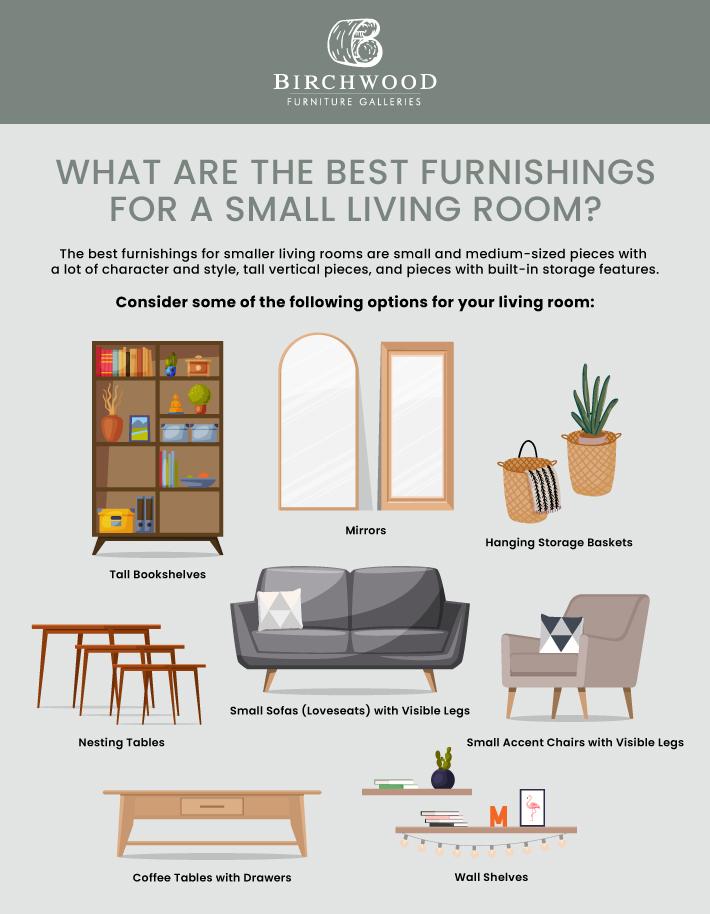
Credit: birchwoodfurniture.ca
Arranging Furniture For Flow
Arranging furniture in a small living room requires careful planning. The goal is to create a natural flow that makes the space feel open and comfortable. Proper flow helps people move around easily without bumping into furniture.
Smart furniture placement can make the room look larger and more inviting. It also improves how the room functions for daily use. Here are some simple tips to arrange furniture for better flow.
Create Clear Pathways
Keep walking paths free from obstacles. Leave enough space between furniture for easy movement. A good rule is to allow at least 24 inches wide for pathways. This prevents the room from feeling cramped. Clear paths guide guests naturally through the space.
Float Furniture Away From Walls
Pull furniture slightly away from walls to create depth. This makes the room feel airier and less boxy. Floating pieces also help define different areas in the room. Use rugs or lighting to anchor these groupings. Avoid pushing everything flush against the walls.
Limit End Tables And Use Central Pieces
Too many small tables clutter a small room. Choose one or two central pieces like a coffee table instead. Central furniture helps gather seating together and keeps the area organized. It also provides surface space without overwhelming the room.
Using Odd Number Groupings
Using odd number groupings is a smart way to arrange furniture and decor in a small living room. Odd numbers like three, five, or seven create a natural balance. They avoid a rigid or overly symmetrical look. This makes the space feel more inviting and relaxed. Odd groupings also help fill the room without crowding it.
Group Decorative Items
Place decorative items in groups of three or five. For example, cluster three candles or vases together on a shelf. This draws the eye and adds focus. Groups of odd numbers look less forced than pairs or even numbers. They give your small living room a cozy, curated feel. Keep the size and style of items similar for harmony.
Mix Sizes And Textures
Use odd numbers with varied sizes and textures. Combine a tall lamp, a small plant, and a medium-sized sculpture. This variety adds depth and interest. Different textures like wood, metal, and fabric create a tactile experience. Mixing sizes and textures in odd groups prevents the room from feeling flat or dull. It also helps highlight each piece.
Enhance Visual Interest
Odd number groupings improve the room’s visual appeal. They create movement and rhythm, guiding the eye around the space. This technique works well with furniture, cushions, and artwork. For example, place three cushions of different colors on a sofa. Or hang five pieces of wall art in an engaging pattern. Odd numbers keep the small living room dynamic and lively.
Maximizing Visual Space
Maximizing visual space in a small living room creates a feeling of openness. Proper design tricks make the room look bigger and more inviting.
Choosing the right colors, using mirrors, and keeping surfaces clear helps create an airy atmosphere. These ideas improve both comfort and style.
Incorporate Light Colors
Light colors reflect more natural and artificial light. Whites, creams, and soft pastels open up the space visually. Walls, furniture, and rugs in light shades reduce the feeling of crowding. Avoid dark colors that absorb light and make the room feel smaller.
Use Mirrors Strategically
Mirrors bounce light around the room and create depth. Place a large mirror opposite a window to maximize natural light. A decorative mirror on a focal wall adds interest without taking floor space. Mirrors can make tight corners feel more spacious and airy.
Maintain Clutter-free Surfaces
Clear surfaces keep the eye moving and avoid visual heaviness. Use storage solutions to hide items and reduce mess. Minimal decorations on tables and shelves prevent the space from feeling cramped. A tidy room feels larger and more peaceful.
Lighting And Accessories
Lighting and accessories play a key role in small living rooms. They enhance the space without crowding it. Good lighting makes the room feel larger and more inviting. Accessories add personality but must be chosen carefully to avoid clutter.
Wall-mounted Lighting Options
Wall-mounted lights free up floor space. They create a clean, open feel in the room. Sconces or swing-arm lamps are perfect choices. Place them near seating areas for reading or relaxing. Avoid bulky fixtures that take up visual space. Choose designs with slim profiles and soft light.
Choose Space-saving Accessories
Select accessories that serve more than one purpose. Think of storage ottomans or small side tables with shelves. Keep decorations simple and minimal. Use mirrors to reflect light and open the room visually. Avoid large or heavy items that crowd the small space.
Add Plants For Freshness
Plants bring life and color without adding bulk. Choose small potted plants or hanging planters. Place them near windows or on shelves to save floor space. Greenery improves air quality and adds a natural touch. Keep plant care easy with low-maintenance varieties.

Credit: www.youtube.com
Planning Before Buying
Planning before buying furniture for a small living room is essential. It helps you use the space wisely and avoid overcrowding. Thoughtful preparation ensures each piece fits well and serves a purpose. It also creates a comfortable and inviting area.
Sketch Layouts
Start by drawing your living room’s floor plan on paper. Include doors, windows, and any fixed features. Sketch different furniture arrangements to see what fits best. This visual guide helps you plan without moving heavy items. It also shows how to maximize your space.
Measure Furniture And Clearances
Measure your room’s length and width carefully. Note the sizes of doorways and walkways too. Check the dimensions of potential furniture pieces before buying. Leave enough space for walking and opening doors. This step prevents buying items that are too big or block paths.
Test With Temporary Arrangements
Use temporary setups to test your layout ideas. Move boxes or light items to mark furniture spots. Live with the arrangement for a day or two. Notice if the space feels cramped or if flow is easy. Adjust as needed before making final purchases.

Credit: www.homedit.com
Frequently Asked Questions
What Is The 2 3 Rule For Living Rooms?
The 2/3 rule for living rooms means sizing furniture or decor at two-thirds the length or width of adjacent elements. It ensures visual balance, better flow, and stylish proportions. Examples include sofa-to-rug, coffee table-to-sofa, or wall art-to-console ratios.
What Is The Best Layout For A Small Living Room?
The best layout for a small living room places a sofa facing a focal point with a central coffee table. Use an area rug to unify elements and wall-mounted lighting to save space. Arrange furniture to maintain clear pathways and maximize flow.
What Is The 3-5-7 Rule In Interior Design?
The 3-5-7 rule in interior design guides grouping objects in odd numbers for balance and visual appeal. Group items like vases or books in sets of three, five, or seven, varying their sizes, shapes, and textures to create a dynamic, harmonious arrangement.
What Is The 70/30 Rule In Interior Design?
The 70/30 rule in interior design divides a space or elements into two parts: 70% dominant and 30% accent. This balance creates harmony, improves flow, and enhances visual appeal. It applies to furniture size, color distribution, and decor placement for a stylish, cohesive look.
Conclusion
Choosing the right amount of furniture keeps a small living room cozy. Avoid overcrowding to maintain open, easy movement. Select pieces that fit the space and serve multiple purposes. Balance size and function for a neat, inviting look. Remember, less furniture often means more comfort.
Use these tips to create a room you enjoy every day.