Have you ever dreamed of having a secret room hidden right in your home? Building a hidden door bookshelf is a clever way to add mystery and style to your space.
Imagine a bookshelf that not only holds your favorite books but also swings open to reveal a secret passage. You might think this project is too complex, but with the right steps, you can create it yourself. In this guide, you’ll learn exactly how to build a hidden door bookshelf that looks amazing and works smoothly.
Ready to turn your home into a place full of surprises? Keep reading, and you’ll discover how easy and rewarding this project can be.

Credit: www.reddit.com
Planning Your Hidden Door Bookshelf
Planning your hidden door bookshelf takes careful thought. This step sets the base for a smooth build. You must think about space, materials, and the perfect spot for your door. Good planning helps avoid mistakes and saves time later.
Choosing The Right Location
Pick a wall that fits the hidden door well. The spot should be easy to access but not too obvious. Avoid places with pipes or wires behind the wall. Check for enough room to open the door fully.
Measuring Space And Dimensions
Measure the height and width of the chosen wall area. Note the thickness of the wall and door frame. Measure twice to avoid errors. Allow extra space for hinges and door movement. Keep in mind the size of your books too.
Selecting Materials And Tools
Choose strong wood or plywood for the bookshelf and door. Use quality hinges and a sturdy frame. Gather tools like a saw, drill, screwdriver, and level. Buy materials that match your room’s style and colors.
Designing The Bookshelf Door
Designing the bookshelf door is a key step in building a hidden door bookshelf. It combines style, function, and clever design to blend the door with the rest of the room. A well-designed door makes the secret entrance truly invisible and adds charm to your space.
Careful planning helps avoid mistakes and ensures the door works smoothly. The door must look like a regular bookshelf but also open easily when needed. This part guides you through designing a bookshelf door that fits your needs and style.
Creating A Blueprint
Start with a clear blueprint. Sketch the bookshelf and door on paper or use a computer program. Include exact measurements for height, width, and depth. Plan where the door will open and how it will swing or slide. Mark spots for hinges or tracks. A detailed blueprint helps you build the door accurately.
Deciding On Door Style
Choose a door style that matches your room’s look. It can be a full bookshelf door or a partial panel. Consider flat shelves or ones with decorative edges. Pick a style that hides the door’s edges well. Decide if the door will have trim or be flush with the wall. The style affects how secret the door looks.
Incorporating Bookshelf Features
Add practical bookshelf features to the door design. Include enough shelves to hold books or decorations. Think about shelf height and spacing for different items. Use strong materials to support weight. Add back panels to hide the door frame. These features make the door look like a real bookshelf.
Building The Bookshelf Frame
Building the bookshelf frame is the foundation for your hidden door project. A strong frame supports the shelves and the door mechanism. It shapes the entire structure and ensures durability. Careful planning and precise work help you create a sturdy frame that fits perfectly.
Cutting And Assembling Wood
Start by measuring the space where your bookshelf will go. Cut wood pieces for the sides, top, and bottom of the frame. Use a saw to make straight, clean cuts. Assemble these pieces with wood screws or nails. Make sure the corners are square and tight. Use clamps to hold pieces in place while fastening.
Installing Shelves
Decide how many shelves you want in your bookshelf. Cut shelf boards to fit inside the frame width. Attach each shelf with screws or brackets for extra support. Space shelves evenly or adjust to fit your books. Check that each shelf is level before fixing it in place.
Ensuring Structural Stability
Reinforce the frame with extra wood strips inside corners. Add a back panel to prevent wobbling and add strength. Check for any loose joints and tighten them. Use wood glue along with screws for a stronger bond. Test the frame by gently pushing to see if it holds firm.
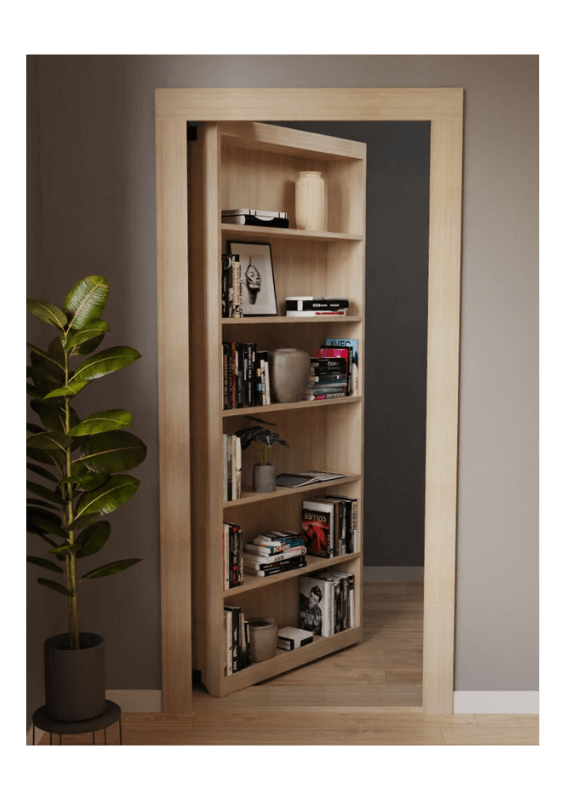
Credit: hiddendoorstore.com
Constructing The Hidden Door Mechanism
Constructing the hidden door mechanism is the most exciting part of building a hidden door bookshelf. This step makes the bookshelf functional as a secret door. It requires careful planning and precise work to ensure smooth operation and durability. Attention to detail here guarantees that the door blends seamlessly with the rest of the bookshelf.
Installing Hinges And Supports
Start by choosing strong hinges that can hold the door’s weight. Piano hinges work well for hidden doors because they spread the weight evenly. Attach the hinges to the door frame and the bookshelf panel carefully. Use a level to keep everything straight. Add extra supports if the door is heavy. These supports prevent sagging and improve stability over time.
Adding A Concealed Handle Or Trigger
The handle or trigger should be hidden but easy to use. Small magnets or push latches work well as secret triggers. Place the trigger in a spot that feels natural to reach. Avoid obvious handles that give away the door’s secret. Test different spots to find the best position. The goal is a clean look without visible hardware.
Testing Door Movement And Alignment
After installation, open and close the door several times. Check if the door moves smoothly without sticking or wobbling. Adjust the hinges or supports if needed. Make sure the door aligns perfectly with the bookshelf edges. Proper alignment keeps the door hidden and prevents damage. Repeat testing until the door works quietly and effortlessly.
Finishing Touches
Finishing touches bring your hidden door bookshelf to life. They ensure your project looks great and works well. Small details make a big difference in the final look and function.
Sanding And Painting
Smooth all surfaces with fine-grit sandpaper. Sanding removes rough spots and prepares wood for paint or stain. Clean dust from the wood after sanding.
Choose paint or stain that matches your room’s style. Apply thin, even coats for the best finish. Let each coat dry fully before adding the next.
Installing Books And Decorations
Place books carefully to avoid blocking the door’s movement. Use lighter items near hinges for easier opening. Add small decorations to personalize your shelf.
Keep the door area clear. This prevents damage and keeps the door easy to open. A neat arrangement enhances the hidden door effect.
Maintaining The Hidden Door
Check hinges and locks regularly for smooth operation. Tighten screws if parts feel loose. Clean the door and shelves with a soft cloth.
Touch up paint or stain as needed to keep the door looking fresh. Regular care extends the life of your hidden door bookshelf.
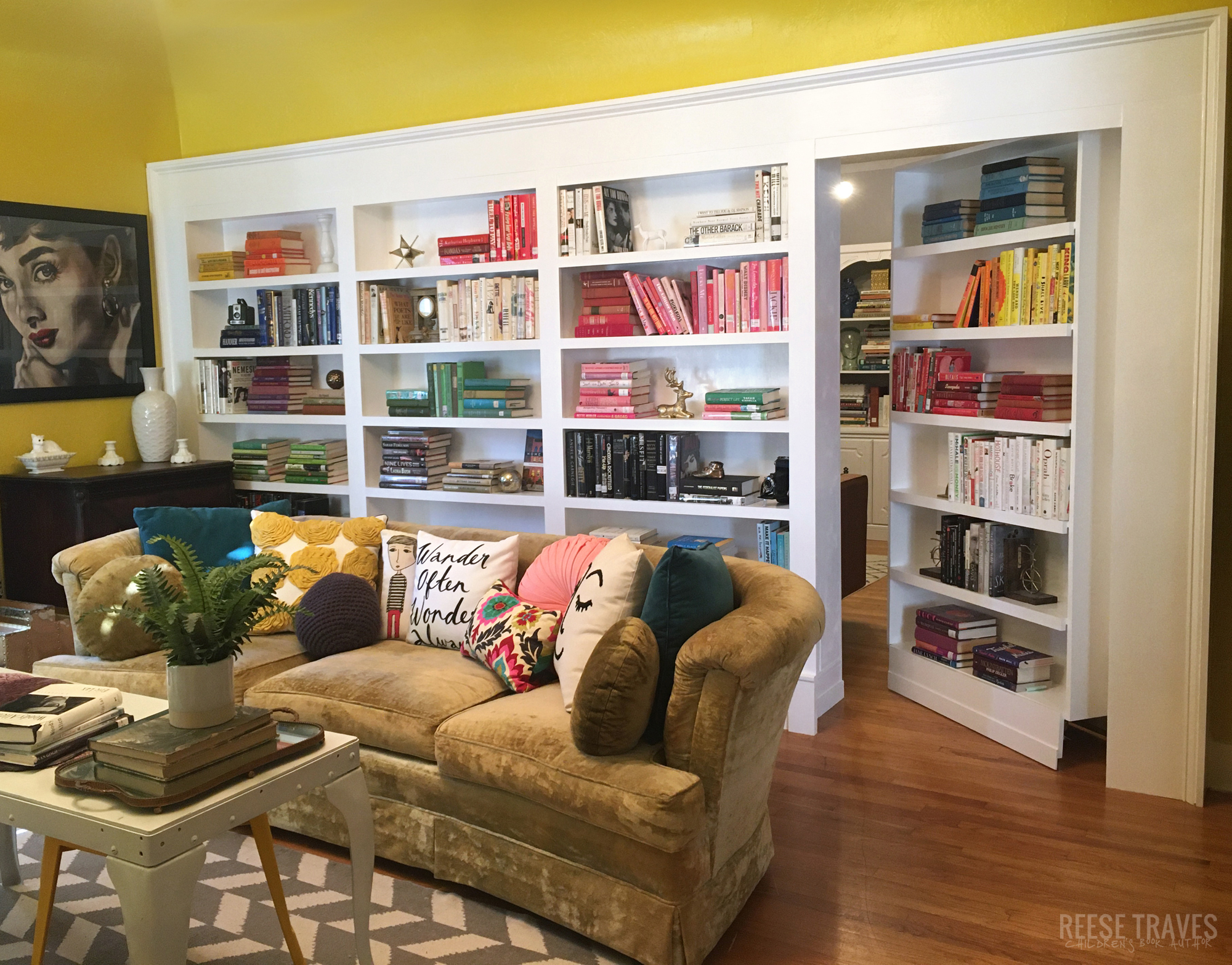
Credit: reesetraves.com
Safety And Troubleshooting Tips
Building a hidden door bookshelf is fun but requires care. Safety and troubleshooting help keep your project strong and safe. This section guides you through common errors, securing the door, and fixing issues.
Avoiding Common Mistakes
Measure twice, cut once. Mistakes often come from rushing. Use the right tools for clean cuts and smooth edges. Check the frame’s level before attaching the door. Avoid heavy shelves that strain the hinges. Make sure the door swings freely without scraping the floor or walls.
Ensuring Door Security
Use strong hinges designed for heavy doors. Add a magnetic catch or hidden latch to keep the door closed. Test the lock or latch several times to ensure it works well. Secure the bookshelf to the wall to prevent tipping. Avoid gaps that make the door obvious or unsafe.
Handling Repairs
Fix squeaky hinges with oil or lubricant. Tighten loose screws regularly. Replace damaged parts quickly to avoid bigger problems. If the door sticks, check the alignment and adjust the hinges. Keep spare parts handy for quick fixes. Small repairs keep your hidden door working smoothly.
Frequently Asked Questions
What Materials Do I Need For A Hidden Door Bookshelf?
You need wood panels, hinges, a latch, screws, a drill, and paint. Choose sturdy wood for durability and smooth hinges for easy door movement.
How Do I Ensure The Bookshelf Door Opens Smoothly?
Install high-quality concealed hinges and align them precisely. Lubricate hinges and check for any obstructions to ensure smooth, silent operation.
Can I Build A Hidden Door Bookshelf Without Professional Help?
Yes, with basic woodworking skills and tools, you can build it. Follow detailed plans and safety guidelines for a successful DIY project.
How Do I Make The Hidden Door Bookshelf Blend In?
Paint the bookshelf to match surrounding walls or furniture. Use similar molding and design to keep the door discreet and camouflaged.
Conclusion
Building a hidden door bookshelf adds charm and function to your space. It creates a secret spot for books or treasures. The process takes patience but feels rewarding. Each step brings you closer to a unique piece. You control the style and size to fit your room.
Enjoy the mix of creativity and craftsmanship. Your hidden door bookshelf will impress friends and family. Try it yourself and see how fun it can be. A simple project with a special result.