Have you ever noticed your bookshelf sagging in the middle and wondered why? That bending you see is called vertical deflection, and understanding how to find it can save your shelves from damage.
Knowing how to measure this deflection helps you keep your furniture safe and sturdy. You’ll learn simple steps to find the vertical deflection of your bookshelf. By the end, you’ll have the confidence to protect your shelves and keep your space looking great.
Let’s dive in and uncover what’s really happening when your bookshelf bends.
Basics Of Vertical Deflection
Vertical deflection is the bend or drop that happens in a bookshelf under weight. This happens when the shelf holds books or other items. The shelf may sag in the middle or at certain points. Understanding vertical deflection helps in building shelves that stay strong and safe.
Knowing the basics lets you check how much a shelf bends. This helps avoid damage or accidents. It also helps in choosing the right materials and design for your bookshelf.
What Causes Deflection
Deflection happens because of the load on the shelf. The weight of books pushes down on the shelf. The shelf material bends under this pressure. The longer the shelf, the more it can bend.
Material type also matters. Wood, metal, and plastic bend differently. The thickness and support points affect how much the shelf bends. Poor design or weak materials increase deflection.
Importance In Bookshelves
Deflection affects the shelf’s strength and safety. Too much bend can break the shelf. It can also damage books or items stored.
Good control of deflection keeps shelves stable. It extends the shelf’s life and usefulness. It also keeps your books safe and organized. Checking deflection helps you build better, safer bookshelves.
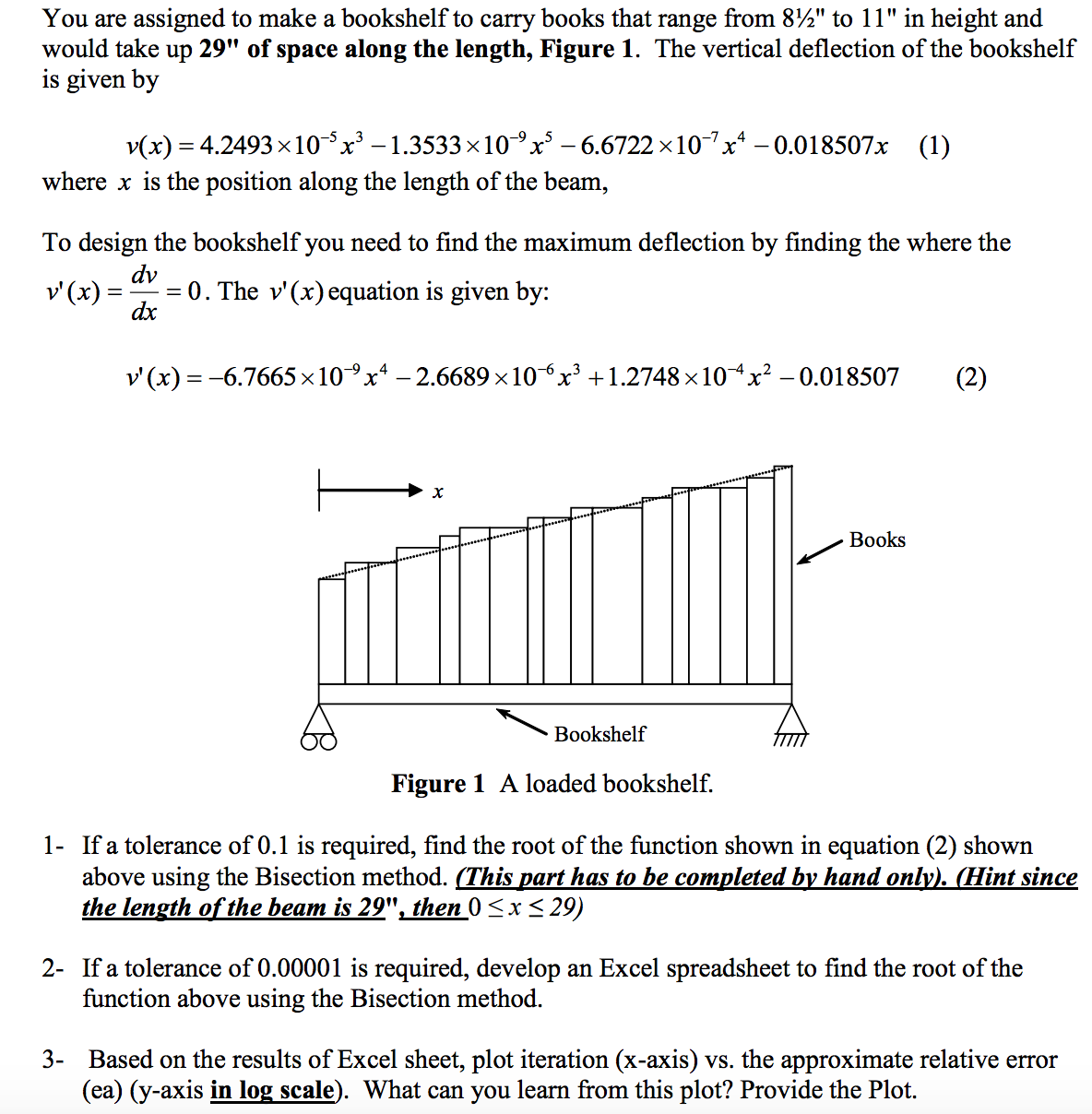
Credit: www.chegg.com
Key Factors Affecting Deflection
Understanding the key factors affecting vertical deflection helps design stronger bookshelves. Deflection means how much a shelf bends down when loaded. Several things control this bending. Knowing these factors helps keep shelves safe and stable.
Material Properties
The type of material affects how much a shelf bends. Wood, metal, and plastic all behave differently under weight. Stronger materials bend less. The stiffness of a material, called the modulus of elasticity, plays a big role. Higher stiffness means less deflection. Moisture and age can also change material strength.
Load Distribution
How weight spreads on a shelf changes deflection. A heavy load in the middle causes more bending than weight spread evenly. Books stacked tightly reduce bending compared to scattered loads. Point loads, like heavy objects placed in one spot, increase deflection more than uniform loads. Understanding load patterns helps predict shelf behavior.
Shelf Dimensions
The size and shape of the shelf affect deflection. Longer shelves bend more than shorter ones under the same weight. Thicker shelves resist bending better. The shelf’s width also matters; wider shelves can be stronger. The shape of the shelf edges and supports influences how the load transfers and how much it bends.
Measuring Load On The Bookshelf
Measuring the load on a bookshelf is a key step in finding its vertical deflection. Knowing the load helps you understand how much weight the shelf holds. This information shows how the shelf bends or sags under pressure. Accurate load measurement ensures safety and durability.
Types Of Loads
Bookshelves face different types of loads. The first is the dead load, which is the weight of the shelf itself. This includes the wood, screws, and brackets. The second is the live load, which is the weight of books and other items placed on the shelf. Both loads affect how much the shelf will bend.
Calculating Total Load
To find the total load, add the dead load and live load together. Start by weighing the empty shelf or checking its specifications. Next, estimate the weight of all items on the shelf. Use a scale or look at the book’s weight on the label. Add these weights to get the total load. This total is used to calculate the vertical deflection accurately.
Simple Formulas For Deflection
Finding the vertical deflection of a bookshelf helps ensure it holds weight safely. Simple formulas make this calculation easier. These formulas use basic beam theory, focusing on how much the shelf bends under load. Understanding these helps predict if the shelf will sag or stay firm.
Beam Deflection Equation
The common formula for beam deflection is δ = (F × L³) / (48 × E × I). Here, δ means deflection, F is the force or weight on the shelf. L is the length of the shelf. E stands for the material’s stiffness. I is the moment of inertia, which depends on the shelf’s shape. This formula works for a shelf supported at both ends.
Using this formula lets you estimate how much the shelf will bend. If the deflection is too large, the shelf may not be safe to use.
Modulus Of Elasticity Role
The modulus of elasticity, or E, shows how stiff the shelf material is. Higher E means less bending. Wood, metal, and plastic all have different E values. Choosing a material with a higher modulus reduces deflection.
This value plays a key role in the formula. A small change in E can greatly affect the shelf’s deflection. Knowing the modulus of elasticity helps pick the right material for a strong bookshelf.
Step-by-step Calculation Process
Finding the vertical deflection of a bookshelf helps ensure it can hold weight safely. This process measures how much the shelf bends under load. Understanding each step makes the calculation clear and simple. The following sections break down this process.
Gathering Measurements
First, measure the length of the bookshelf. Note the distance between the supports. Measure the thickness and width of the shelf board. Write down the weight placed on the shelf. Collecting these numbers is key for accuracy.
Applying The Formula
Use the deflection formula for beams:
δ = (5wL⁴) / (384EI).
Here, δ is deflection, w is the load, L is length, E is material stiffness, and I is moment of inertia. Plug in your measurements carefully. Calculate each part step-by-step for best results.
Interpreting Results
The result shows how much the shelf will bend. A small value means the shelf is strong. A large value warns of too much bending. Compare this with acceptable deflection limits. Decide if the shelf needs reinforcement or redesign.
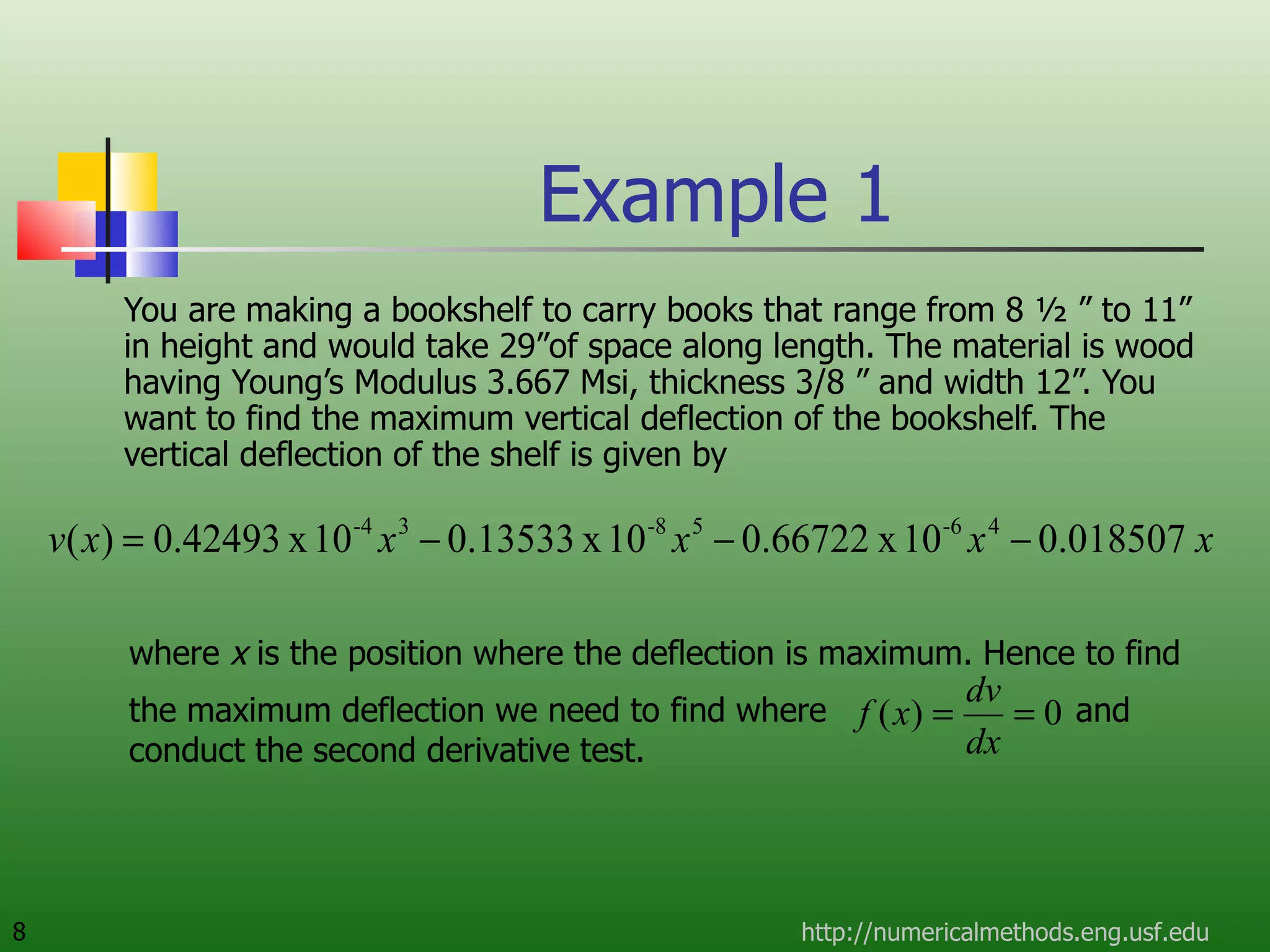
Credit: www.slideshare.net
Tools And Techniques For Measurement
Measuring the vertical deflection of a bookshelf helps check its strength and stability. Using the right tools and techniques gives accurate results. These methods show how much a shelf bends under weight. Measuring deflection protects your books and prevents damage.
Using A Deflection Gauge
A deflection gauge is a simple tool to measure bending. It has a pointer that moves when the shelf bends. Place the gauge under the shelf at the center point. Add weight slowly and watch the pointer move. The pointer shows how far the shelf bends in millimeters or inches. This method is easy and reliable for small deflections.
Digital Measurement Options
Digital tools provide quick and precise readings. Laser displacement sensors measure deflection without touching the shelf. Attach the sensor opposite the weight to track movement. Digital gauges can connect to computers for data recording. These tools are ideal for larger shelves or detailed tests. They reduce human error and speed up the process.
Common Mistakes To Avoid
Calculating the vertical deflection of a bookshelf can be tricky. Many make avoidable errors that affect accuracy and safety. Understanding common mistakes helps improve your measurements and results.
Incorrect Load Estimation
Estimating the load on the bookshelf is essential. Often, people guess the weight of books or items too low or too high. This leads to wrong deflection calculations. Always measure or check the actual weight. Include the weight of the shelf itself. Don’t forget to consider uneven weight distribution.
Ignoring Material Variations
Materials have different strengths and flexibilities. Many assume all wood or metal behaves the same. This mistake causes wrong deflection estimates. Check the material type and its properties. Consider any defects or moisture that may weaken the shelf. Using exact material data improves your accuracy.
Improving Bookshelf Strength
Improving the strength of a bookshelf helps prevent vertical deflection. This keeps shelves from bending or sagging under weight. Stronger shelves hold books safely and last longer. Simple steps can make a big difference in stability and durability.
Choosing Better Materials
Selecting strong materials is key to reducing deflection. Solid wood resists bending better than particleboard. Plywood is also a good choice for its strength. Avoid thin or low-quality boards that bend easily. Thicker shelves provide more support for heavy books.
Adding Supports
Supports reduce the load on each shelf. Vertical dividers or braces help spread the weight. Metal brackets or wooden cleats add extra strength. Adding a center support can stop shelves from sagging. Proper support keeps the bookshelf steady and safe.
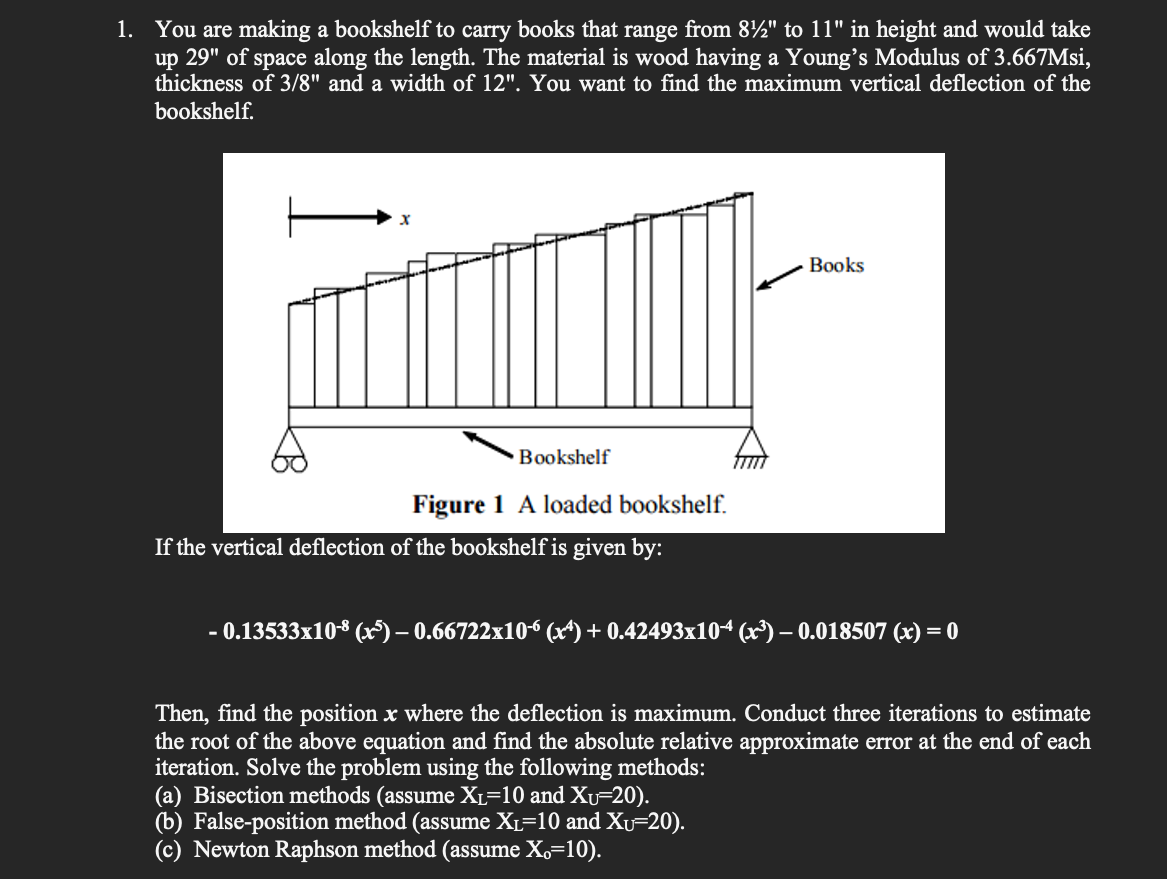
Credit: www.chegg.com
Frequently Asked Questions
What Is Vertical Deflection In A Bookshelf?
Vertical deflection is the downward bending of a bookshelf under load. It occurs due to the weight of books causing the shelves to sag or deform.
How Do You Measure Bookshelf Vertical Deflection?
Measure vertical deflection by placing a ruler at the shelf’s midpoint. Note the distance between the unloaded and loaded shelf positions.
Why Is Calculating Vertical Deflection Important?
Calculating vertical deflection ensures shelf safety and durability. It prevents excessive sagging that can damage shelves or cause structural failure.
Which Factors Affect Bookshelf Vertical Deflection?
Load weight, shelf length, material stiffness, and shelf thickness affect vertical deflection. Heavier loads and longer spans increase deflection.
Conclusion
Finding the vertical deflection of a bookshelf helps keep it safe and strong. You measure how much it bends under weight. This simple step stops damage and keeps books secure. Use basic tools and easy math to check deflection. Regular checks help spot problems early.
A sturdy shelf lasts longer and holds more. Keep your bookshelf steady with these easy tips. Small efforts make a big difference in shelf care.