Have you ever tried to open a cabinet in front of your bookshelf, only to find yourself stuck or bumping into things? Knowing exactly how much space you need in front of your bookshelf to open a cabinet smoothly can save you frustration and make your room more comfortable.
You’ll discover simple, practical tips to measure and arrange your space perfectly. By the time you finish reading, you’ll have the confidence to create a setup that works effortlessly for your daily routine. Keep reading to find out how to make your space both functional and inviting.
Ideal Clearance For Cabinet Doors
Choosing the right space in front of a bookshelf to open cabinet doors is important. It ensures smooth access and prevents damage. Proper clearance helps you open doors fully without hitting nearby objects.
Understanding the ideal clearance helps in planning your room layout well. It improves comfort and usability in your space. Let’s explore the standard space needs and what affects these measurements.
Standard Space Requirements
Most cabinet doors need at least 20 to 30 inches of clearance to open fully. This space allows enough room for the door to swing wide. It also leaves space for a person to stand comfortably while reaching inside.
For smaller cabinets, 18 to 24 inches may be enough. Larger or double doors need more space, around 30 to 36 inches. These measurements help avoid bumping into furniture or walls.
Factors Affecting Clearance
The door type affects how much space is needed. Swing-out doors need more room than sliding or bi-fold doors. Handle size also changes clearance needs. Larger handles require extra space to avoid catching on things.
Room layout matters too. Narrow hallways or tight corners reduce available space. The location of other furniture or obstacles impacts door clearance. Consider these factors when planning cabinet placement.
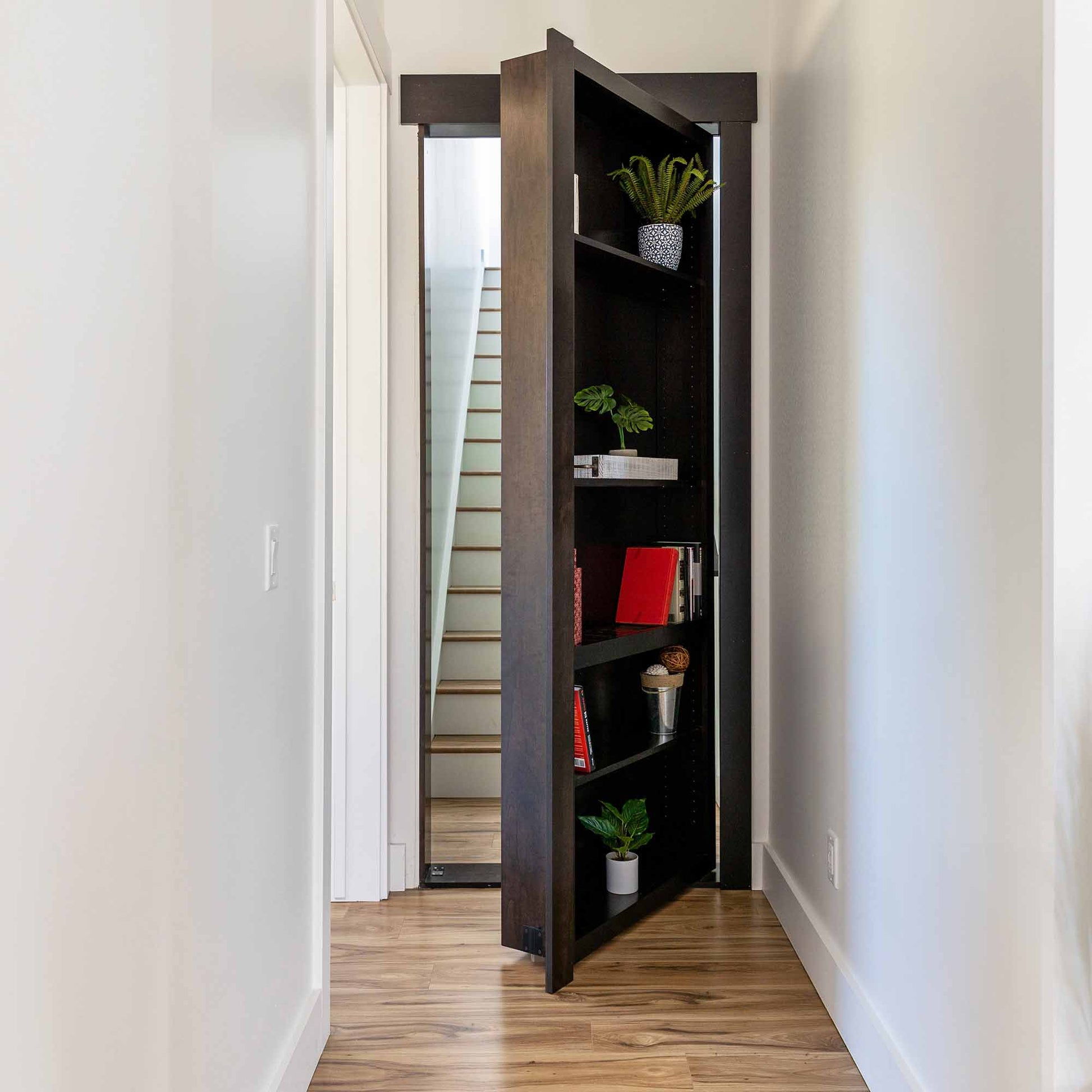
Credit: murphydoor.com
Measuring Space In Front Of Bookshelves
Measuring space in front of bookshelves is important for easy access. It helps to know how much room you need to open cabinet doors fully. Without proper space, doors may hit walls or furniture. This can cause damage or make the area hard to use. Taking precise measurements avoids these problems and keeps your space functional.
Careful measuring also helps with planning your room layout. It ensures enough walking space and prevents crowding. This step is key before buying or installing cabinets near bookshelves.
Tools Needed For Accurate Measurement
Use a tape measure for the most accurate results. A laser measure tool can speed up the process and improve precision. A pencil and paper help to note down measurements clearly. A level tool checks that your bookshelf and cabinet are straight. Having these tools ready makes measuring simple and reliable.
Step-by-step Measurement Process
First, clear the area in front of the bookshelf. Remove any obstacles that block the space. Next, measure the distance from the bookshelf edge to the nearest object or wall. Write down this number carefully. Then, check the cabinet door width and how far it swings open. Add this to the space needed in front of the bookshelf. Finally, ensure there is extra space for comfortable movement. This simple process gives you the exact space needed.
Types Of Cabinet Doors And Their Space Needs
Choosing the right cabinet door affects how much space you need in front of your bookshelf. Different doors open in different ways. This changes the amount of space you need to open the cabinet fully. Knowing the types of cabinet doors helps plan the area better. It avoids crowding and makes the room look neat. Here are the common types of cabinet doors and their space needs.
Swing Doors
Swing doors open outward on hinges. They need space equal to the door’s width. For example, a 24-inch door needs 24 inches of clear space in front. This space allows the door to open fully without hitting anything. Swing doors are easy to use and common in many homes. But they need enough room to open wide.
Sliding Doors
Sliding doors move sideways on a track. They do not need extra space in front. Sliding doors are good for tight spaces. You only need space equal to the width of the cabinet. The doors slide past each other inside the cabinet frame. This design saves space and keeps the area clear.
Bi-fold Doors
Bi-fold doors fold in half when opened. They need less space than swing doors. These doors need about half the door width in front. Bi-fold doors are useful in small rooms. They open quickly without blocking much space. This type works well if space is limited in front of the bookshelf.
Adjusting Bookshelf Placement For Cabinet Access
Adjusting the placement of your bookshelf is important for easy cabinet access. Proper spacing helps you open cabinet doors fully without hitting the bookshelf. It also keeps your room neat and safe. Careful planning saves space and improves comfort.
Measure the space before placing the bookshelf. Think about how far the cabinet doors open. This step avoids any blocking or damage. Small changes in placement make a big difference.
Optimal Distance Between Bookshelf And Cabinet
Keep at least 24 inches between the bookshelf and cabinet. This space allows cabinet doors to open wide. It also gives you room to reach inside comfortably. If doors are sliding, 18 inches may work. Measure your cabinet doors first to decide.
Consider door handles and knobs. They need extra space to avoid hitting the bookshelf. Leave a little more room for safety. This prevents scratches and accidents.
Space-saving Tips
Use narrow bookshelves to save space near cabinets. Floating shelves on the wall are good alternatives. They keep floors clear and allow cabinet doors to open fully.
Organize books vertically to reduce shelf depth. This creates more walking space in front of cabinets. Avoid bulky furniture that blocks cabinet access.
Try corner bookshelves to use unused room. This keeps cabinets free for easy opening. Small adjustments improve both storage and access.
Safety Considerations
Safety is important when placing space in front of a bookshelf to open a cabinet. Enough space helps avoid accidents and makes daily use easier. This section covers safety tips for proper spacing.
Preventing Door Obstruction
Doors should open fully without hitting objects. Keep at least 24 inches of clear space in front of the cabinet. This space stops the door from getting stuck or damaged. It also stops books or other items from blocking the door.
Ensuring Comfortable Movement
People need room to walk and move around. A narrow gap can cause bumps and trips. Leave at least 30 inches of space for easy walking. This space makes it safer and more comfortable to use the cabinet and bookshelf together.
Common Mistakes To Avoid
Planning space in front of a bookshelf to open a cabinet needs care. Many people make avoidable mistakes. These errors lead to discomfort and less efficient use of space. Learning what to avoid helps create a smooth, functional area.
Underestimating Door Swing Space
People often forget how much room cabinet doors need to open fully. Doors require enough space to swing out without hitting objects. Not leaving enough space blocks the door or damages nearby items. Measure door size and add extra space for easy movement.
Ignoring Furniture Layout
Furniture placement affects how cabinet doors open. Crowded areas stop doors from opening wide. Avoid placing chairs, tables, or other furniture too close to the cabinet. Arrange furniture to keep the cabinet area clear and accessible.
Custom Solutions For Tight Spaces
Custom solutions help fit cabinets in small or tight spaces. These ideas save room and keep the area easy to use. They make sure you have space to open cabinets without trouble. Smart designs help use every inch wisely.
Compact Cabinet Designs
Compact cabinets take less space but still hold many items. They fit well in narrow rooms or small corners. These cabinets often have thinner frames and shallow depths. They keep your space open and clear. You can store books, tools, or kitchen items without crowding the room.
Innovative Door Mechanisms
New door types need less space to open. Sliding doors move sideways instead of swinging out. Folding doors collapse to take up little room. Some doors lift up, creating no front clearance. These mechanisms help keep the area in front of the cabinet free. They make tight spaces easy to use and comfortable.

Credit: reperch.com

Credit: eurekaergonomic.com
Frequently Asked Questions
How Much Space Is Needed To Open A Cabinet Fully?
You need at least 24 to 36 inches of space in front of the bookshelf. This clearance allows cabinet doors to open fully without obstruction.
Why Is Space Important In Front Of A Bookshelf Cabinet?
Sufficient space prevents damage to doors and allows easy access to contents. It ensures smooth movement and improves the room’s functionality.
Can Limited Space Affect Cabinet Usability?
Yes, limited space restricts door opening and access. It makes it hard to reach items and may cause wear over time.
What Is The Ideal Distance Between Bookshelf And Cabinet?
An ideal gap is 30 inches to comfortably open cabinet doors and move around. This distance balances space efficiency and usability.
Conclusion
Choosing the right space in front of your bookshelf helps cabinets open easily. Leave enough room to avoid bumping into furniture or walls. A clear area makes your room look neat and feels comfortable. Small changes in spacing improve how your furniture works daily.
Think about how much you walk and reach around the cabinet. Plan well to keep your space safe and useful. Simple steps like this make your home better every day.