Are you tired of searching for the perfect bookshelf that fits your space and style? What if you could create one yourself, exactly how you want it?
Building a bookshelf out of wood is easier than you think, even if you have little experience. Imagine having a sturdy, beautiful shelf that holds your favorite books and adds charm to your room. In this guide, you’ll discover simple steps and insider tips to build your own bookshelf quickly and confidently.
Ready to turn plain wood into a stunning piece for your home? Let’s get started!
Materials And Tools Needed
Building a wooden bookshelf starts with gathering the right materials and tools. Choosing the proper wood and having the essential tools makes the project easier. Safety gear protects you throughout the process. Prepare all before you begin.
Types Of Wood To Use
Choose wood that is strong and easy to work with. Pine is a good choice for beginners. It is affordable and soft enough to cut easily. Oak and maple are harder woods. They last longer but need stronger tools. Plywood can also work well. It is stable and less likely to warp.
Essential Tools List
You need a few basic tools to build a bookshelf. A saw will help you cut wood to size. Use a drill to make holes and drive screws. Sandpaper or a power sander smooths the wood surface. A tape measure ensures accurate cuts. Clamps hold wood pieces while you work. A screwdriver or a screw gun is needed to fasten parts together.
Safety Gear
Protect yourself with safety gear. Wear safety glasses to shield your eyes. Use ear protection if you work with loud tools. Gloves protect your hands from splinters and cuts. A dust mask keeps you from breathing sawdust. Always wear closed shoes to protect your feet.
Designing Your Bookshelf
Designing your bookshelf is the first step to building a useful and attractive piece. It helps to think about where you want to place it and what you want to keep on it. Planning makes the building process easier and the final product better suited to your needs.
Good design balances size, style, and shelf spacing. These elements work together to create a shelf that fits your space and holds your books well. Let’s explore how to decide on each part.
Choosing The Size
Measure the space where the bookshelf will stand. Think about the height, width, and depth you need. The size should fit the room but also hold your books comfortably. Small shelves work well in tight spaces. Large shelves can store many books and decor items.
Selecting The Style
Pick a style that matches your room’s look. Simple, clean lines suit modern spaces. Ornate details fit traditional rooms. Open shelves create a light feel. Closed shelves protect books from dust. Choose a style you enjoy and that fits your home.
Planning Shelves And Spacing
Think about the types of books you own. Tall books need taller shelves. Small paperbacks can fit on shorter shelves. Leave some space for decorations or other items. Adjustable shelves add flexibility for future needs. Proper spacing keeps books organized and easy to access.
Preparing The Wood
Preparing the wood is a key step in building a strong and beautiful bookshelf. It sets the base for all other work. Taking time to prepare wood carefully helps avoid problems later.
Good preparation makes cutting easier and ensures pieces fit well. It also improves the look and feel of your finished shelf. Let’s explore how to prepare your wood step by step.
Measuring And Marking
Start by measuring your wood pieces precisely. Use a tape measure for accuracy. Mark the cut lines clearly with a pencil. Double-check all measurements before cutting. Straight and exact marks guide your cutting tools well.
Cutting Techniques
Choose the right saw for your wood type. A handsaw works well for small cuts. A circular saw speeds up larger cuts. Cut slowly and follow your lines closely. Keep your hands steady to avoid mistakes. Clean, straight cuts make assembly easier.
Sanding For Smoothness
Sanding removes rough edges and splinters. Use medium-grit sandpaper first to smooth out cuts. Then switch to fine-grit for a soft finish. Sand along the wood grain for best results. Smooth wood feels better and looks more polished.
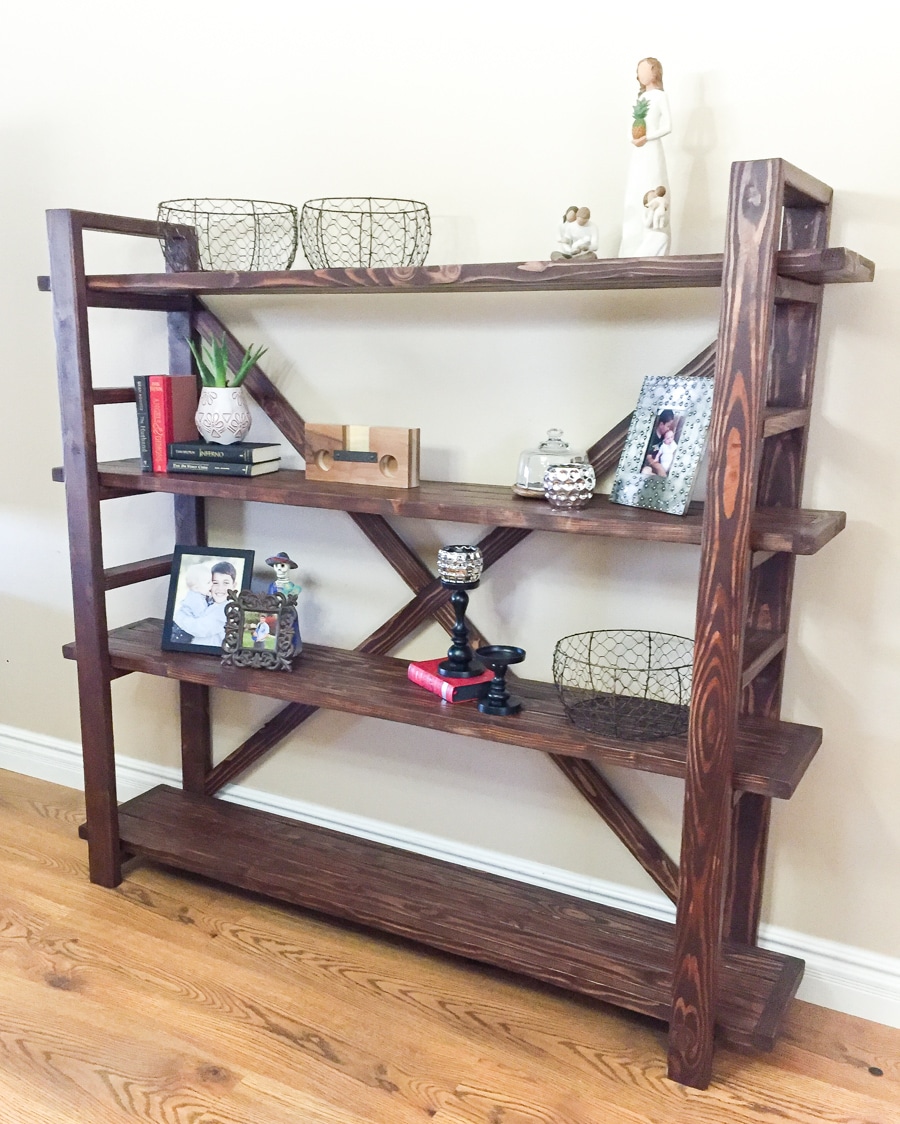
Credit: jenwoodhouse.com
Assembling The Frame
Assembling the frame is the next important step in building your wooden bookshelf. This step shapes the basic structure. It holds all parts together and keeps the shelf strong. Take your time to fit each piece carefully. A solid frame makes your bookshelf last longer.
Joining The Sides And Shelves
Start by placing the two side panels upright. Then, fit the shelves between these sides. Use clamps to hold them in place. Make sure the shelves are level. Check the distance between each shelf. This keeps your books from falling or leaning.
Using Screws And Nails
Use screws for a strong hold. Drill pilot holes first to avoid splitting the wood. Drive screws in slowly and straight. Nails can be used but screws are better. They keep the frame tight and steady. Use a screwdriver or power drill for faster work.
Adding Support Braces
Support braces strengthen the frame. Attach them at the back corners. Use small wooden strips or metal brackets. Fix braces with screws for extra stability. Braces stop the frame from wobbling or twisting. This makes your bookshelf safer and more durable.
Finishing Touches
Finishing touches make your wooden bookshelf look complete and polished. These steps improve its appearance and protect the wood. A well-finished bookshelf lasts longer and fits better in your space.
Filling Gaps And Holes
Check your bookshelf for small holes and gaps. Use wood filler to fill these spots. Apply it with a putty knife and smooth it out. Let the filler dry fully before sanding. Sand the filled areas until smooth to match the wood surface.
Applying Paint Or Stain
Choose paint or stain based on your style preference. Paint gives a solid color and hides wood grain. Stain shows the natural wood patterns and adds color. Apply thin, even coats with a brush or cloth. Allow each coat to dry before adding another. This prevents drips and uneven color.
Sealing For Durability
Seal your bookshelf to protect it from water and scratches. Use a clear sealant like polyurethane or varnish. Apply it evenly with a brush and follow the wood grain. Let the sealant dry well between coats. This step keeps your bookshelf strong and looking new longer.

Credit: www.youtube.com
Maintenance Tips
Building a wooden bookshelf is just the first step. To keep it looking great and lasting long, regular maintenance is key. Simple care can protect your bookshelf from damage and keep it sturdy for years. Follow these easy tips to maintain your wooden bookshelf.
Cleaning The Bookshelf
Dust your bookshelf often with a soft cloth. Avoid using wet cloths that can damage the wood. Use a dry microfiber cloth to remove dirt and dust. For sticky spots, lightly dampen the cloth with water. Wipe gently and dry immediately. Keep cleaners and harsh chemicals away. They can ruin the wood’s finish.
Preventing Damage
Place the bookshelf away from direct sunlight. Sunlight can fade and dry out the wood. Keep it in a dry area to avoid moisture damage. Use coasters or pads under heavy items to avoid scratches. Do not overload shelves beyond their weight limit. Move the bookshelf carefully to prevent cracks or breaks.
Repairing Minor Issues
Fix small scratches with wood polish or a wax stick. Fill tiny holes or dents with wood filler. Sand lightly after filler dries to smooth the surface. Tighten loose screws or nails to keep shelves stable. Replace damaged parts quickly to stop problems growing. Regular checks catch small issues early.

Credit: thediyplaybook.com
Frequently Asked Questions
What Tools Are Needed To Build A Wooden Bookshelf?
You need basic woodworking tools like a saw, drill, measuring tape, screwdriver, and sandpaper. Clamps and wood glue also help ensure strong joints and smooth finishes.
Which Wood Type Is Best For Building A Bookshelf?
Pine is affordable and easy to work with, while oak and maple offer durability. Choose wood based on budget, strength, and desired appearance.
How Do I Ensure A Bookshelf Is Sturdy And Safe?
Use quality wood, secure joints with screws and glue, and add a back panel for support. Anchor the shelf to the wall to prevent tipping.
What Is The Best Finish For A Wooden Bookshelf?
Use stain or paint to protect the wood and enhance its look. Apply a clear sealant like polyurethane for durability and moisture resistance.
Conclusion
Building a wooden bookshelf is a rewarding project anyone can try. With simple tools and clear steps, you create something useful and beautiful. Take your time and follow the instructions carefully. Choose the right wood for strength and look. Personalize your shelf to fit your space and style.
Enjoy the satisfaction of using your own handmade bookshelf every day. This project helps improve your skills and adds charm to your home. Start small, stay patient, and watch your bookshelf come to life.