Are you ready to create a magical space where your toddler can sleep, play, and dream? Building a toddler house bed is more than just making furniture—it’s about crafting a cozy retreat that sparks your child’s imagination every night.
Imagine your little one climbing into their very own mini house, feeling safe and excited about bedtime. In this guide, you’ll discover simple steps and tips to build a sturdy, charming toddler house bed that fits your home and your child’s personality.
Keep reading, and soon you’ll turn this fun project into a special place your toddler will love.
Choosing The Right Materials
Choosing the right materials is key to building a safe and sturdy toddler house bed. Good materials make the bed strong and comfortable. They also ensure your child stays safe while sleeping or playing.
Focus on materials that are durable and child-friendly. Avoid anything that might cause harm or wear out quickly. Quality materials help the bed last longer and look better.
Selecting Safe Wood Types
Pick wood that is strong but not too heavy. Pine and cedar are good choices. They are easy to work with and safe for children.
Check for smooth surfaces with no sharp edges. Avoid wood with knots or cracks. These can weaken the bed and cause injuries.
Use untreated or low-VOC (volatile organic compound) wood. This keeps the bed free from harmful chemicals. Sand all surfaces carefully to prevent splinters.
Gathering Tools And Supplies
Prepare all tools before starting the project. Basic tools include a saw, drill, screwdriver, measuring tape, and sandpaper. These help you cut and assemble the wood accurately.
Buy child-safe paint or finish for the bed. Choose water-based products that dry quickly and have low odor. Have screws, nails, and wood glue ready for strong joints.
Keep safety gear handy. Use gloves and goggles to protect your hands and eyes. A clean workspace helps you work faster and safer.
Designing The Toddler Bed
Designing a toddler bed is an important step in building a safe and comfortable space. It helps ensure the bed fits your child’s needs perfectly. The design process includes measuring the bed size and making a clear plan.
A well-designed bed keeps your toddler safe and happy. It also makes the building process easier and faster. Start by thinking about the size and shape you want for the bed.
Measuring For Toddler Size
Measure your toddler to find the right bed size. Start with their height and length. Add a few extra inches to allow room for growth. Typical toddler beds are smaller than twin beds but bigger than cribs.
Measure the mattress size you want to use. Standard toddler mattresses are 28 by 52 inches. Check the mattress thickness too. This helps to build a frame that fits well and stays safe.
Sketching A Simple Plan
Draw a simple sketch of your toddler bed design. Include the mattress, frame, and guardrails. Mark the measurements clearly on the sketch. This helps avoid mistakes during building.
Keep the design simple and sturdy. Focus on safety features like low height and strong rails. A clear plan guides your work and saves time. It also helps to gather the right materials before starting.
Cutting And Preparing Wood
Cutting and preparing wood is a key step in building a toddler house bed. It sets the stage for a sturdy and safe bed. Precise cutting ensures all parts fit well. Clean edges make assembly easier and safer. Taking time in this phase saves effort later.
Using the right tools and techniques helps achieve accurate cuts. Safety should always come first to avoid accidents. Let’s break down the process into easy steps for best results.
Marking Measurements Accurately
Start by measuring the wood pieces carefully. Use a tape measure for clear numbers. Mark the cut lines with a pencil or chalk. Double-check each measurement before marking. Draw straight lines with a ruler or square tool. Clear marks guide your saw for precise cuts. Avoid guessing to prevent wasted wood.
Safe Cutting Techniques
Always wear safety goggles and gloves before cutting. Use a stable work surface to hold wood steady. Clamp the wood to stop it from moving. Cut slowly and follow the marked lines. Choose the right saw for your wood type. Keep fingers away from the blade. Turn off tools before adjusting or moving wood. Clean the area from sawdust to avoid slips.
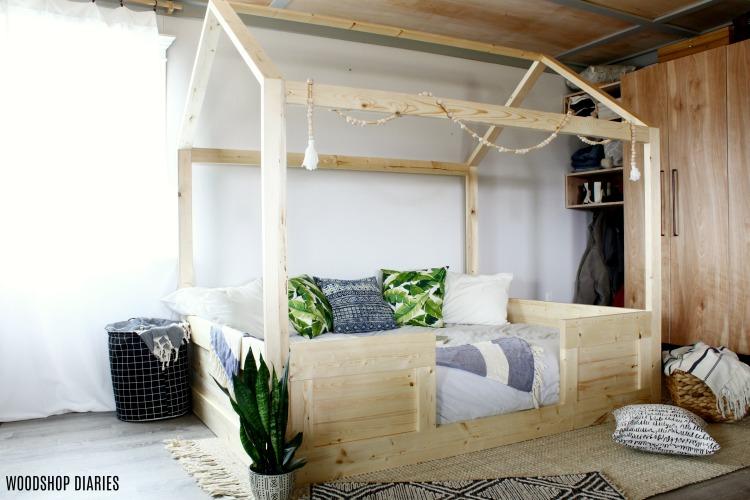
Credit: learn.kregtool.com
Assembling The Bed Frame
Assembling the bed frame is the key step in building a toddler house bed. It shapes the bed’s structure and ensures safety. Careful assembly creates a sturdy and secure frame. Follow the steps closely to build a strong base.
Joining Side Rails And Slats
Start by attaching the side rails to the headboard and footboard. Use screws or bolts provided in your kit. Tighten them firmly but avoid over-tightening. Next, lay the slats evenly across the side rails. These slats support the mattress and keep it stable. Secure each slat with screws to prevent movement. Check alignment to keep the frame square and even.
Securing The Base
Once the rails and slats are joined, focus on securing the base. Add corner brackets if available for extra strength. Tighten all screws and bolts again to ensure firmness. Test the frame by applying gentle pressure. A solid base will not wobble or creak. Properly securing the base protects your toddler during sleep and play.
Adding The House Features
Adding house features makes the toddler bed more fun and inviting. It turns a simple bed into a cozy little house. These features create a special place for your child to sleep and play. Focus on safe, simple designs that fit well with the bed frame.
Start by building the roof frame. This gives the bed its unique house shape. Then, attach decorative elements to add charm and personality. Small details make a big difference in the final look.
Building The Roof Frame
Cut two wooden beams to the same length for the roof sides. Attach them at an angle to form an A-shape. Secure the beams firmly to the bed’s base. Use screws and brackets for strong joints. Make sure the roof is stable and safe. Sand all edges to avoid splinters. The roof frame creates the classic house outline.
Attaching Decorative Elements
Choose simple decorations like small wooden shutters or flower boxes. Paint these pieces in bright, cheerful colors. Attach them carefully to the roof frame or bed sides. Use non-toxic paint to keep your child safe. Add small hooks for hanging toys or lights. Decorations personalize the bed and make it cozy. Keep everything secure and child-friendly.
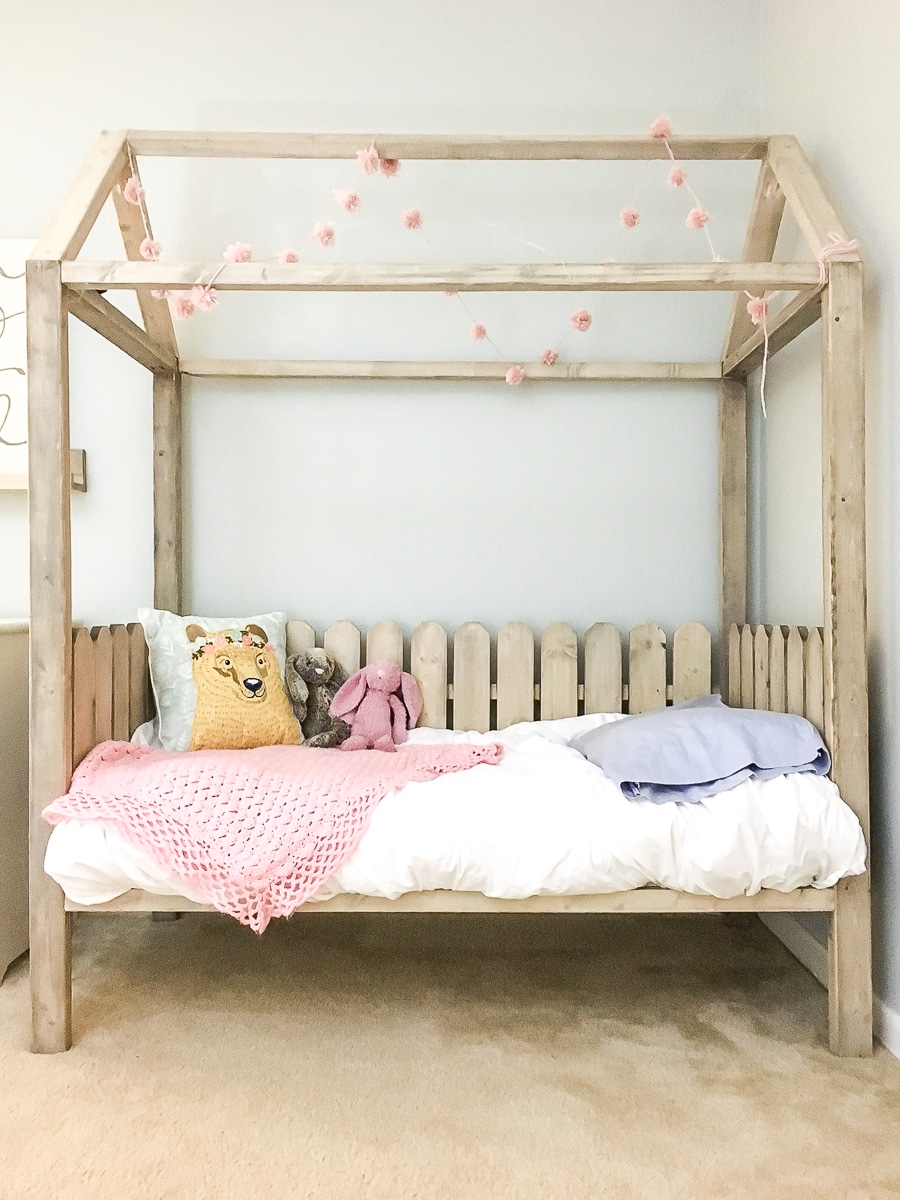
Credit: jenwoodhouse.com
Sanding And Finishing
Sanding and finishing are key steps in building a toddler house bed. These steps make the bed safe and smooth for your child. They also protect the wood and give the bed a nice look. Take time to do this part carefully. It helps avoid splinters and rough spots that could hurt your toddler.
Smoothing Rough Edges
Start sanding with medium-grit sandpaper. Focus on corners and edges of the wood. Sand in the direction of the grain. This method keeps the surface even and smooth. Check all surfaces with your hand to find rough spots. Use fine-grit sandpaper to finish. This step ensures no sharp edges remain. Make sure to clean off dust before moving on.
Applying Child-safe Paint Or Varnish
Choose paint or varnish that is safe for children. Look for non-toxic, low-VOC labels. Apply a thin, even coat with a brush or roller. Let the first coat dry completely. Lightly sand with fine sandpaper between coats. Apply a second coat for better protection. This finish makes the bed easy to clean. It also keeps the wood strong and lasting.
Safety Checks And Tips
Building a toddler house bed is fun and rewarding. Safety checks are important to protect your child. This section covers key safety tips. Follow these steps to create a safe bed.
Ensuring Stability
Check all bed parts for secure fitting. Tighten screws and bolts often. Use strong materials that hold weight well. Avoid wobbly or loose sections. Test the bed by gently shaking it. A stable bed prevents falls and accidents.
Avoiding Choking Hazards
Keep small parts away from toddlers. Remove loose nails, screws, or decorations. Sand sharp edges to smooth surfaces. Cover gaps where fingers or toys can get stuck. Use child-safe paint and finishes. These steps reduce choking risks and injuries.
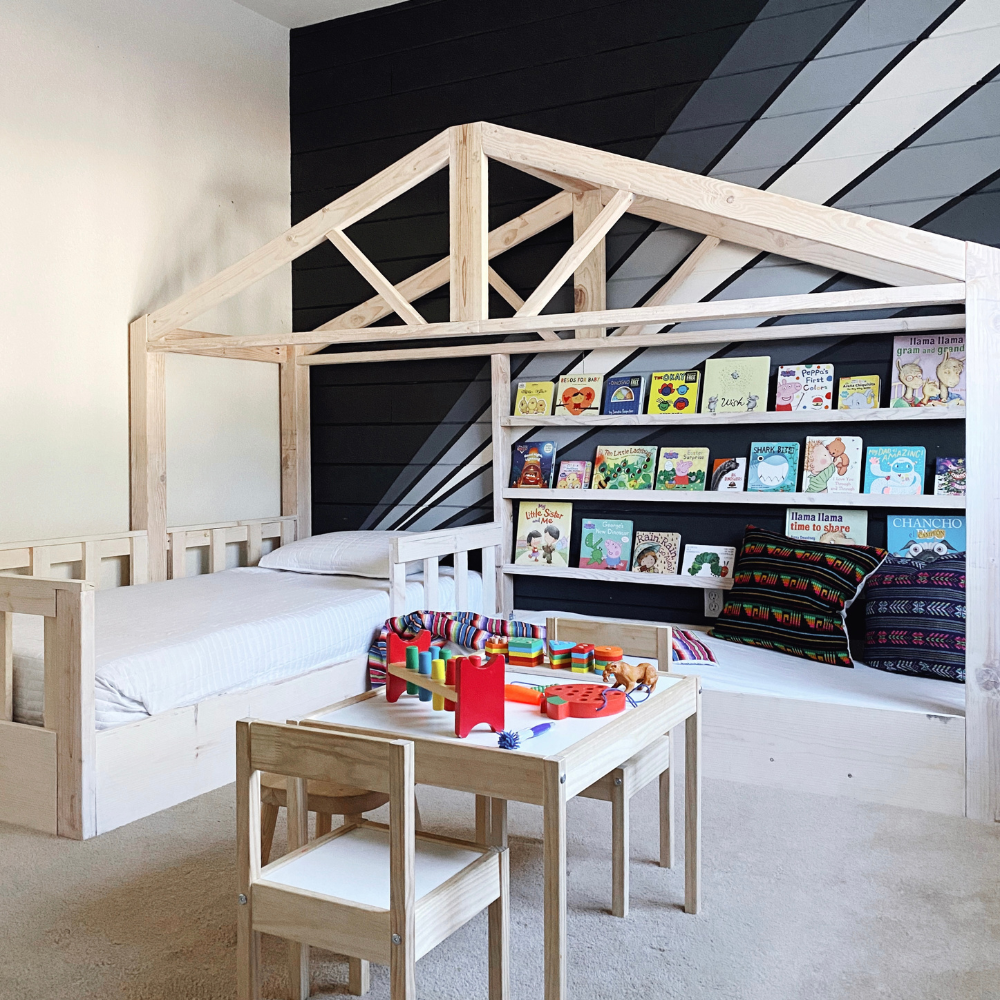
Credit: tylynnm.com
Personalizing The Toddler Bed
Personalizing the toddler bed makes it special and fun for your child. It helps create a cozy space that feels like their own. Simple touches can turn a basic bed into a magical little spot.
These personal touches also encourage your toddler to enjoy bedtime. They make the bed inviting and comfortable. Personalizing adds charm and practical features too.
Adding Curtains Or Canopy
Curtains or a canopy add a sense of privacy and play. Choose light fabrics in bright colors or fun patterns. Hang them from a simple frame above the bed.
This creates a cozy nook where your toddler can read or rest. Curtains can be tied back or closed for a quiet space. A canopy also blocks some light, helping with naps.
Incorporating Storage Solutions
Storage helps keep toys and books organized. Use drawers or baskets under the bed to save space. Easy access encourages your toddler to tidy up.
Shelves attached to the bed frame hold favorite items close by. Choose storage options that are safe and sturdy. This makes the bed area neat and practical.
Frequently Asked Questions
What Materials Are Needed To Build A Toddler House Bed?
To build a toddler house bed, you need wood, screws, nails, sandpaper, paint, and a mattress. Basic woodworking tools like a saw, drill, and measuring tape are essential. Choose non-toxic paint and smooth finishes for child safety and durability.
How Long Does It Take To Build A Toddler House Bed?
Building a toddler house bed typically takes 1 to 3 days. Time depends on your experience and complexity of the design. Allow extra time for sanding, painting, and drying to ensure a safe and polished final product.
What Safety Features Should A Toddler House Bed Have?
A toddler house bed should have smooth edges, sturdy construction, and non-toxic finishes. Ensure guardrails prevent falls, and the bed height is low for easy access. Avoid small parts that pose choking hazards and secure all components tightly.
Can I Customize The Design Of A Toddler House Bed?
Yes, you can customize the design to fit your child’s room and preferences. Add windows, doors, or themed decorations. Use colors and patterns your child loves. Customization makes the bed unique and encourages imaginative play.
Conclusion
Building a toddler house bed can be fun and rewarding. It creates a cozy space your child will love. Start with simple steps and take your time. Choose safe materials and keep measurements correct. Personalize the bed to fit your child’s style.
This project brings joy and comfort together. Your toddler will enjoy sleeping in their new bed. Enjoy the process and watch your creation come alive. A homemade bed adds charm to any bedroom. Give it a try and see the smiles grow.