Looking to create a cozy and practical sleeping space for your kids? Building a bunk bed with stairs might be the perfect solution.
Not only does it save space, but it also adds a fun and safe way for your children to climb up and down. You might think it’s a tough project, but with the right steps, you can build a sturdy and stylish bunk bed yourself.
Keep reading, and you’ll discover simple tips and clear instructions that make the whole process easier than you expect. By the end, you’ll have a bunk bed that fits your space and your family’s needs perfectly. Ready to get started? Let’s dive in!
Choosing The Right Materials
Choosing the right materials is important for building a safe and strong bunk bed with stairs. The materials must hold weight and last a long time. Using the correct wood, tools, and hardware makes the process easier and the bed safer for daily use.
Selecting Safe Wood Types
Choose wood that is strong and durable. Pine, oak, and maple are good options. Avoid soft woods that can easily break. Make sure the wood is smooth and free from cracks. Sand rough edges to prevent splinters. Use wood treated to resist insects and moisture.
Essential Tools Needed
Gather tools that help with cutting, measuring, and assembling. A saw, drill, screwdriver, and measuring tape are key. Sandpaper smooths rough wood surfaces. A level ensures the bed is even. Clamps hold pieces steady while you work.
Hardware And Fasteners
Use strong screws and bolts for secure joints. Avoid nails alone as they may loosen over time. Corner brackets add extra strength. Wood glue can improve stability. Choose hardware that fits the wood thickness to avoid splitting.
Designing The Bunk Bed
Designing a bunk bed with stairs requires careful thought to ensure safety and comfort. The bed must fit well in the room and be strong enough to hold weight. A good design blends practicality with style, making the bed both useful and attractive.
Each part of the bed, from the height to the stairs, must be planned carefully. This planning helps prevent accidents and creates a sturdy structure. Think about who will use the bed and how often it will be used.
Planning Dimensions And Height
Measure the room space before you start designing the bunk bed. The bed should fit without crowding other furniture. Consider the ceiling height to ensure enough space above the top bunk.
Standard bunk beds are usually around 65 inches tall. Adjust height to fit your room and user needs. Leave at least 30 inches of space between the top mattress and ceiling for comfort.
Incorporating Stairs For Safety
Stairs provide safer access to the top bunk than a ladder. Design stairs with wide, deep steps to avoid slipping. Include a handrail on one or both sides for extra support.
Make sure the stairs are firmly attached to the bed frame. Check for smooth edges and no sharp corners. Stairs can also have built-in storage to save space.
Adding Guardrails And Supports
Guardrails are essential to keep sleepers safe on the top bunk. They should run along the full length of the bed sides. The rails must be tall enough to prevent falls during sleep.
Use strong, durable materials for both guardrails and supports. Secure all parts tightly to avoid wobbling. Proper supports keep the bed stable and durable over time.
Preparing The Workspace
Preparing the workspace is an important first step for building a bunk bed with stairs. A clean, organized area makes the project easier and safer. It helps you find tools quickly and avoid accidents. Getting the workspace ready saves time and reduces stress during the build process.
Clearing And Organizing Area
Start by removing all unnecessary items from the workspace. Clear enough room to move around freely. Organize tools and materials in one place. Keep screws, nails, and small parts in containers. This prevents loss and keeps the space tidy.
Ensuring Proper Lighting
Good lighting is essential for precise work. Use bright lights to avoid shadows on your project. Natural light is best if available. If not, set up lamps or work lights around the workspace. Proper lighting reduces mistakes and eye strain.
Setting Up Workbench
Choose a sturdy, flat workbench to build the bunk bed. Make sure it is at a comfortable height. Arrange clamps and measuring tools nearby. This setup keeps everything within reach. A solid workbench supports heavy parts and improves safety.
Credit: event.rmutt.ac.th
Building The Frame
Building the frame is the first step in creating a sturdy bunk bed with stairs. This part sets the foundation for the entire structure. It requires precision and care to ensure safety and durability. The frame must be strong enough to hold weight and stable to prevent wobbling.
Cutting Wood Pieces Accurately
Start by measuring all wood pieces carefully. Use a tape measure and mark each cut line clearly. Cut the wood using a saw, following the marks exactly. Accurate cuts help the pieces fit together well. Take your time to avoid mistakes that can weaken the frame.
Assembling The Base And Supports
Lay out the cut wood pieces for the base on a flat surface. Connect the sides and cross supports to form a rectangle. This base holds the mattress and supports the top bunk. Use clamps to hold pieces steady while assembling. Check that the base is level and square before moving on.
Securing Joints And Connections
Join the wood pieces using screws or bolts for strong hold. Drill pilot holes first to prevent splitting the wood. Tighten all fasteners firmly but avoid over-tightening. Apply wood glue at joints to add extra strength. Double-check each connection to ensure the frame is solid and safe.
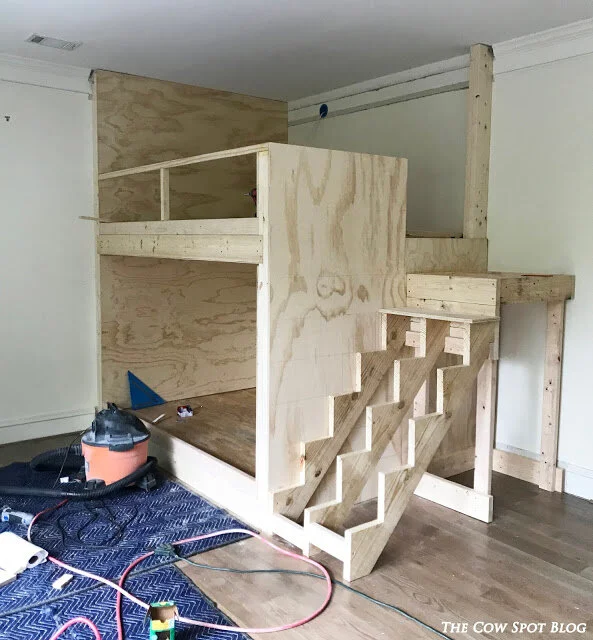
Constructing The Stairs
Constructing the stairs for your bunk bed requires careful planning and precision. Stairs add safety and ease for climbing up and down. This section guides you through measuring, cutting, attaching, and adding handrails. Follow each step for strong, stable stairs that fit perfectly.
Measuring And Cutting Steps
Start by measuring the height from the floor to the top bunk. Divide this height by the number of steps you want. This gives the rise height for each step. Measure the width you want for the stairs. Mark the wood pieces for each step using these measurements. Use a saw to cut the steps cleanly and accurately. Smooth the edges with sandpaper to avoid splinters. Check that all steps are the same size before moving on.
Attaching Steps To Frame
Position the steps evenly along the stair frame. Use clamps to hold each step in place. Drill pilot holes to prevent wood from splitting. Secure the steps with wood screws, driving them firmly into the frame. Double-check each step for level and stability. Reinforce with extra screws if needed. The steps must be very sturdy to hold weight safely.
Adding Handrails For Stability
Handrails provide support and reduce falls. Measure the height alongside the stairs for the rail placement. Cut the handrail wood to the correct length. Attach vertical posts at regular intervals along the stairs. Secure the handrail to these posts with screws. Make sure the handrail is smooth and easy to grip. Test the handrail’s strength by applying pressure. Strong handrails make the stairs safer and easier to use.
Finishing Touches
Finishing touches make your bunk bed safe and beautiful. These steps protect the wood and create a smooth feel. They also prepare the bed for comfortable use. Pay close attention to these final details.
Sanding And Smoothing Surfaces
Start by sanding all wooden surfaces. Use medium-grit sandpaper first, then fine-grit for smoothness. Sand corners and edges carefully to avoid splinters. Check every part until it feels soft to touch. This step prevents injuries and helps paint stick better.
Applying Non-toxic Paint Or Sealant
Choose a non-toxic paint or sealant safe for children. Apply a thin, even coat on all surfaces. Allow the first layer to dry fully before applying a second coat. This protects the wood from moisture and wear. It also gives the bed a clean, finished look.
Installing Mattresses And Accessories
Place mattresses that fit the bed frame snugly. Avoid mattresses that are too thick or soft for safety. Add accessories like guardrails and storage bins if needed. Secure these accessories firmly to avoid accidents. These details improve comfort and usability.
Safety Checks
Safety checks are crucial when building a bunk bed with stairs. They protect children from accidents and injuries. Careful inspection ensures the bed is strong and secure. Each part needs to be tested before use. This keeps the bunk bed safe and reliable.
Testing Stability And Strength
Start by shaking the bed gently to check for wobbling. Make sure the bed does not move or creak. Tighten all screws and bolts firmly. Use strong wood or metal parts that can hold weight. Test the bed by applying pressure on each part. Confirm it can support the weight of children safely.
Checking For Sharp Edges
Run your hand along every edge and corner. Sand down any sharp or rough spots. Sharp edges can cause cuts or bruises. Cover exposed nails or screws with caps. Smooth surfaces help prevent injuries during play or sleep.
Ensuring Stair And Rail Security
Check each stair step for firmness and even spacing. Make sure steps do not wobble or tilt. Secure the handrails tightly to the bed frame. Handrails must be strong and at a safe height. This helps children climb safely without falling. Inspect rails regularly for any looseness or damage.

Credit: www.youtube.com
Maintenance Tips
Maintaining your bunk bed with stairs is important for safety and durability. Regular care keeps the bed strong and looking good. It also helps prevent accidents and costly repairs.
Regular Inspection Routine
Check the bed every week. Look for cracks, loose screws, or worn parts. Pay close attention to the stairs and guardrails. Early detection helps fix small problems fast.
Tightening Loose Parts
Use a screwdriver or wrench to tighten screws and bolts. Loose parts can cause the bed to wobble or collapse. Tighten all joints at least once a month to keep the bed stable.
Cleaning And Upkeep Advice
Dust the bed weekly to avoid buildup. Clean wooden surfaces with a damp cloth and mild soap. Avoid harsh chemicals that can damage the finish. Keep the stairs clear of dirt to prevent slipping.

Credit: www.youtube.com
Frequently Asked Questions
What Tools Are Needed To Build A Bunk Bed With Stairs?
You need a saw, drill, screws, measuring tape, level, and clamps. Sandpaper and wood glue also help. Safety gear is essential for protection.
How Do I Ensure Stairs Are Safe For Kids?
Use sturdy wood with non-slip treads. Attach handrails securely. Ensure steps are evenly spaced and wide enough for small feet.
What Type Of Wood Is Best For Bunk Beds?
Choose hardwoods like oak, maple, or birch for durability. Softwoods like pine are budget-friendly but less durable. Always use quality, untreated wood.
How Much Space Is Required For A Bunk Bed With Stairs?
Allow at least 7 feet in height and 6 feet in length. Ensure enough clearance for stairs and movement around the bed.
Conclusion
Building a bunk bed with stairs can save space and add safety. Follow the steps carefully to create a sturdy structure. Use good materials and measure twice before cutting. Take your time to assemble each part properly. A well-built bunk bed offers comfort and fun for kids.
Enjoy the process and the final result. Your effort will bring a useful and attractive piece of furniture. Simple planning and patience make the project easier and rewarding. Keep safety in mind and check all connections. Now, you are ready to build a great bunk bed with stairs.