Are you looking to add a stylish and functional touch to your bookshelf? Building folding doors for your bookshelf is a smart way to keep your space neat while showcasing your favorite books.
Imagine having doors that open smoothly, save space, and give your room a fresh, custom look. In this guide, you’ll discover simple steps to create folding doors that fit perfectly and work effortlessly. Ready to transform your bookshelf and impress your guests?
Let’s dive in and make your project easy and fun!
Materials And Tools Needed
Building folding doors for your bookshelf needs the right materials and tools. Choosing quality components helps create strong, lasting doors. Knowing which wood, hardware, and tools to use makes the project easier and more fun.
Essential Wood Types
Pick wood that is sturdy and easy to work with. Pine is affordable and light. Oak offers strength and a nice finish. Birch is smooth and holds paint well. Use plywood for the door panels. It resists warping and is stable.
Hardware Components
Folding doors need special hardware to function smoothly. Hinges connect the door panels and allow folding. Use piano hinges for strong, even support. Install a magnetic catch to keep doors closed. Add handles for easy opening. Screws and brackets hold everything in place.
Required Tools
Gather tools to cut, assemble, and install the doors. A saw cuts wood to size. Drill holes for screws and hardware. Screwdriver tightens screws securely. Sandpaper smooths wood surfaces. Measuring tape ensures accurate dimensions. Clamps hold pieces steady while gluing or screwing.
Measuring And Planning
Measuring and planning are key steps to build folding doors for your bookshelf. Accurate measurements ensure doors fit perfectly. Careful planning helps avoid mistakes and wasted materials. This section guides you through measuring, designing, and choosing the folding mechanism.
Taking Accurate Measurements
Start by measuring the height and width of your bookshelf opening. Use a metal tape measure for precision. Measure the top, middle, and bottom widths to check for any differences. Write down the smallest width to ensure the doors fit. Measure the height from the bottom to the top edge. Double-check all measurements before moving on.
Designing Door Dimensions
Decide how many door panels you want. Two or three panels work well for most bookshelves. Divide the total width by the number of panels to find each door’s width. Leave a small gap, about 1/8 inch, between panels for smooth folding. Set the door height slightly shorter than the bookshelf height to avoid floor contact. Sketch your door design on paper with these dimensions.
Selecting Folding Mechanism
Choose a folding mechanism that fits your door size and weight. Common options include bi-fold hinges or track systems. Bi-fold hinges connect door panels and allow easy folding. Track systems guide the doors along a rail for smooth movement. Consider the space around the bookshelf to pick the best mechanism. Always pick hardware rated for your door’s weight and size.
Cutting The Wood Panels
Cutting the wood panels is a key step in building folding doors for your bookshelf. Precise cuts ensure the doors fit well and work smoothly. This stage requires careful measuring and handling.
Using the right tools and techniques helps avoid mistakes. Clean cuts also improve the door’s look and function. Let’s explore how to mark, cut, and finish the panels properly.
Marking The Panels
Start by measuring the space where the doors will go. Use a pencil to mark the wood clearly. Mark each panel carefully on both sides. Double-check the measurements to avoid errors. Use a straight edge for clean, straight lines. Clear marks guide your saw and keep cuts accurate.
Safe Cutting Techniques
Wear safety glasses and gloves before cutting. Use a saw suitable for your wood type. Clamp the panel to a stable surface to stop movement. Cut slowly along your marked lines for neat edges. Keep fingers away from the saw blade at all times. Maintain a steady hand for smooth, straight cuts.
Sanding Edges Smooth
After cutting, sand the edges to remove splinters. Use medium-grit sandpaper first, then fine-grit for smoothness. Sand in the direction of the wood grain to avoid scratches. Smooth edges help the folding doors open without catching. Wipe away dust before moving to the next step.

Credit: www.projectsmallhouse.com
Assembling The Folding Doors
Assembling folding doors for your bookshelf is a key step. This process brings together all parts into a working unit. Careful assembly ensures smooth operation and a neat finish. Focus on joining panels, aligning sections, and securing the frame.
Joining Panels With Hinges
Start by placing the panels flat on a clean surface. Attach hinges between each panel edge. Use screws that fit your hinges for a strong hold. Make sure hinges are evenly spaced for balance. Check that the hinge pins move freely without binding. This step connects panels into folding sections.
Aligning The Folding Sections
Stand the folding door upright after joining panels. Align each section so they fold neatly against one another. Adjust hinges slightly if panels do not sit flush. Test the folding action by opening and closing gently. Make sure the doors do not rub or catch. Proper alignment helps the door operate smoothly.
Securing The Frame
Fit the folding door into the bookshelf opening. Use screws or brackets to attach the door frame firmly. Check that the door frame is square and level. Tighten all screws securely to prevent wobbling. Confirm the door folds and unfolds without resistance. A solid frame keeps the door stable and long-lasting.
Installing The Doors On The Bookshelf
Finishing touches bring your folding doors to life. These final steps make doors look great and work well. Pay attention to details for a polished result. The right finish protects the wood and matches your room’s style.
Painting Or Staining Options
Choose paint or stain that fits your décor. Paint covers the wood with a solid color. It hides imperfections and brightens the space. Stain shows the wood’s natural grain. It gives a warm, rich look. Use primer before painting for better adhesion. Apply stain with a brush or cloth evenly. Let each coat dry fully before adding another.
Adding Handles Or Knobs
Select handles or knobs that are easy to grip. Match their style to your room’s theme. Screw them into pre-drilled holes on the door edges. Test handles for comfort and reach. They help open and close doors smoothly. Secure fittings prevent loosening over time.
Ensuring Smooth Operation
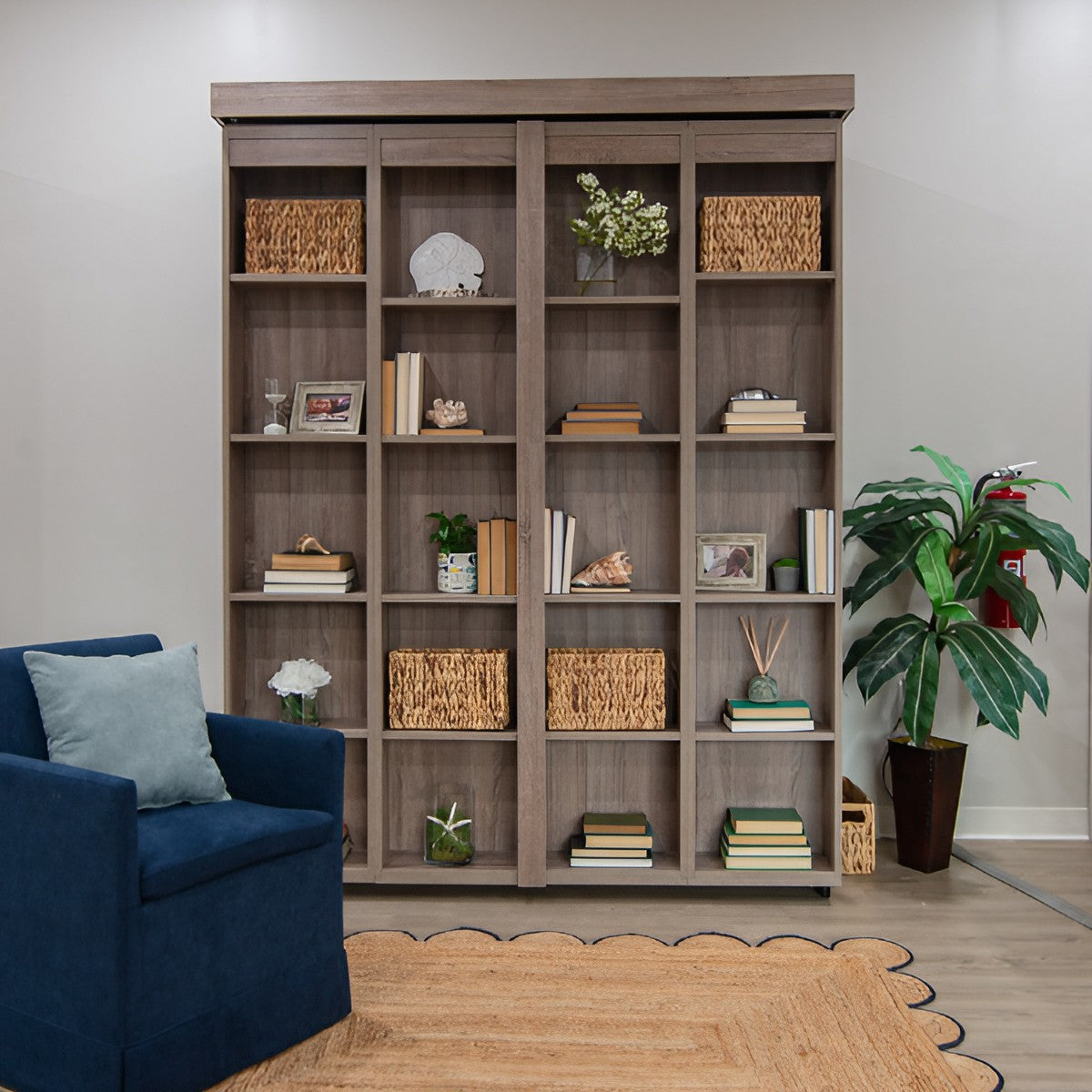
Check hinges and tracks for any tight spots. Lubricate moving parts with a silicone spray or oil. Adjust screws to align doors perfectly. Open and close doors several times to test. Smooth action means less wear and noise. Fix any squeaks or sticking right away.
Credit: murphybeddepot.com
Finishing Touches
Maintaining folding doors for your bookshelf helps keep them working well. It also keeps them looking nice for a long time. Simple care steps can stop problems early. These tips help your doors stay strong and smooth.
Cleaning And Care
Dust your folding doors often with a soft cloth. Use a mild soap and water mix for dirt. Avoid harsh chemicals that can damage the finish. Dry the doors after cleaning to stop water marks. Clean both sides and the edges carefully. This keeps the doors fresh and neat.
Tightening Hinges
Check the hinges every few months. Loose hinges make the doors wobble or fall. Use a screwdriver to tighten any loose screws. Tight hinges help the doors open and close smoothly. Do not over-tighten to avoid stripping the screws. Regular checks stop bigger problems later.
Preventing Warping
Keep folding doors away from direct sunlight. Sunlight can cause wood to warp or crack. Avoid placing doors near heaters or air conditioners. Keep the room humidity steady to protect the wood. Use a dehumidifier if the air is too moist. Proper care stops warping and keeps doors straight.
Credit: www.myrepurposedlife.com
Frequently Asked Questions
What Materials Are Needed To Build Folding Doors For A Bookshelf?
You need plywood or hardwood panels, hinges, screws, a drill, measuring tape, wood glue, and paint or finish. Quality materials ensure sturdy and smooth folding doors that fit perfectly on your bookshelf.
How Do I Measure For Folding Bookshelf Doors Accurately?
Measure the height and width of your bookshelf opening carefully. Deduct a small gap for easy door movement. Accurate measurements prevent fitting issues and ensure your folding doors operate smoothly.
What Type Of Hinges Work Best For Folding Bookshelf Doors?
Bi-fold or piano hinges work best. They allow smooth folding and provide strong support. Choose hinges that match your door size and weight for durability and easy operation.
How Can I Finish Folding Doors For A Polished Look?
Sand doors smoothly, then apply primer and paint or wood stain. Use a clear sealant for protection. A good finish enhances appearance and protects doors from wear and moisture.
Conclusion
Building folding doors for your bookshelf adds style and function. The process is simple with the right tools and steps. Take your time measuring and fitting each part carefully. You will enjoy the smooth opening and closing doors every day.
This small project can change how your room looks and feels. Give it a try and see the difference yourself. Folding doors make your bookshelf neat and easy to use. A bit of effort brings great results.