Are you looking to add a stylish touch to your bookshelf while keeping your favorite reads dust-free? Making a cabinet door for your bookshelf is a simple project that can transform your space instantly.
You don’t need to be a woodworking expert to create a door that fits perfectly and looks great. You’ll discover easy-to-follow steps and practical tips that will guide you through the entire process. By the end, you’ll have the confidence to build a beautiful cabinet door that matches your style and needs.
Ready to get started? Let’s dive in!
Choosing The Right Materials
Choosing the right materials is key to making a strong and attractive cabinet door for your bookshelf. The materials affect how the door looks, feels, and lasts over time. Good materials also make the door easier to build and fit well with your bookshelf style. Focus on wood type and hardware to get the best result.
Selecting Wood Types
Wood choice changes the door’s weight, color, and texture. Softwoods like pine are easy to cut and affordable. They work well for painted doors. Hardwoods like oak or maple are strong and have beautiful grains. These woods are great if you want a natural wood look. Plywood is another option. It is stable and resists warping. Choose smooth plywood for a clean finish. Always pick dry wood to avoid cracks or warping later.
Picking Hardware And Accessories
Hardware includes hinges, handles, and screws. Good hardware helps the door open smoothly and last longer. Choose hinges that support the door’s weight. Soft-close hinges prevent slamming and reduce noise. Handles come in many styles and materials. Pick one that matches your bookshelf’s design. Metal handles offer durability, while wooden ones blend well with wood doors. Also, use rust-resistant screws and fittings for strength and durability.

Credit: www.youtube.com
Measuring And Planning
Measuring and planning are the first steps to making a cabinet door for your bookshelf. Careful measurement ensures the door fits well. Planning helps you decide the style and size. This saves time and materials later.
Taking Accurate Measurements
Start by measuring the bookshelf opening. Use a tape measure and note the height and width. Measure at the top, middle, and bottom for accuracy. Write down the smallest width and height. This prevents the door from being too big.
Check the depth of the bookshelf frame. It helps in choosing the right door thickness. Measure twice to avoid mistakes. A small error can cause fitting problems.
Designing The Door Layout
Decide the door style before cutting wood. Choose between flat panel or framed doors. Sketch the design on paper or use software. Mark the exact size based on measurements.
Plan the placement of hinges and handles. Leave space for them in the layout. Consider how the door will open. Think about the look you want to create.
Cutting And Preparing Wood
Cutting and preparing wood is the first step in making a cabinet door for a bookshelf. It sets the foundation for a clean, strong door. Careful measurement and precise cuts help the door fit perfectly. Smooth edges ensure a professional look and make the door safe to handle. Follow these steps to prepare your wood correctly.
Cutting Panels To Size
Start by measuring the space where the door will fit. Mark the wood panels clearly with a pencil. Use a saw to cut the panels along the marks. Cut slowly and steadily to keep the edges straight. Double-check the size after cutting. Adjust if needed to ensure a perfect fit.
Sanding And Smoothing Edges
After cutting, the wood edges may be rough or sharp. Use sandpaper to smooth all edges carefully. Sand in one direction to avoid scratches. Focus on corners and cut areas. Smooth edges prevent splinters and improve the door’s look. Wipe the dust off before moving to the next step.
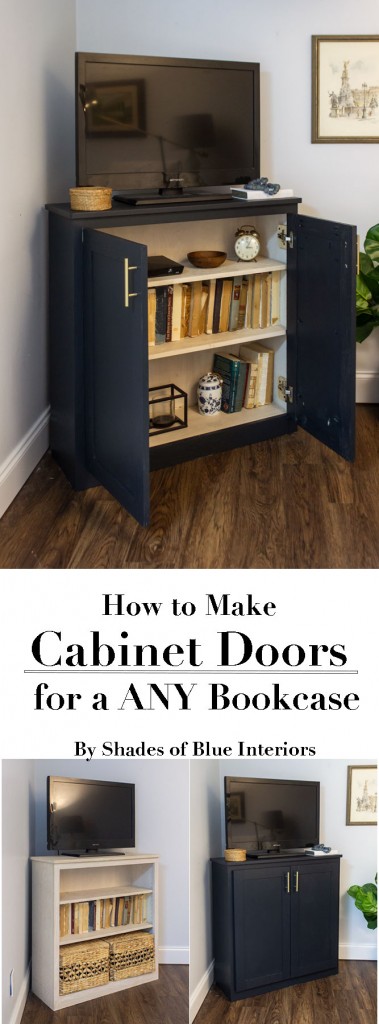
Credit: www.shadesofblueinteriors.com
Assembling The Door Frame
Assembling the door frame is a key step in making a cabinet door for your bookshelf. This step shapes the door and gives it strength. Accuracy here ensures the door fits well and works smoothly.
Use quality wood pieces cut to size. Take time to check corners and edges. A clean frame makes the door look neat and professional.
Joining Pieces Together
Start by placing the frame pieces on a flat surface. Arrange them in the shape of the door. Make sure the corners meet tightly at right angles.
Use clamps to hold the pieces in place. This stops movement while joining. Check for square corners with a carpenter’s square. Adjust until the frame is perfectly aligned.
Choose the right joinery method. Common ways include butt joints, dowels, or pocket holes. Each method holds the frame firmly. Dowels and pocket holes add extra strength.
Securing With Glue And Screws
Apply wood glue to the edges before joining. Spread it evenly for a strong bond. Press the pieces together firmly after gluing.
Insert screws at the joints to lock the frame. Use pilot holes to avoid splitting the wood. Screws add durability and keep the frame steady.
Wipe off extra glue immediately. Let the glue dry for several hours. Proper drying time ensures the frame stays strong and stable.
Attaching Panels And Trim
Attaching panels and trim gives your cabinet door a polished look. It also strengthens the door structure. This step requires careful fitting and attention to detail. Proper attachment ensures the door fits well and lasts long.
Fixing The Center Panel
Start by placing the center panel inside the door frame. Check that it fits snugly but can expand slightly. Wood expands and contracts with humidity. Secure the panel using small wood glue beads along the edges. Press the panel firmly into place. Use clamps to hold the panel while drying. Avoid using nails or screws directly on the panel. This allows the panel to move without cracking.
Adding Decorative Trim
Cut trim pieces to fit around the door frame edges. Measure twice to ensure accurate cuts. Attach trim with small finishing nails or wood glue. Press trim firmly to avoid gaps. Use a nail set to countersink nails below the surface. Fill holes with wood filler for a smooth finish. Sand the trim lightly to blend with the door surface. This step adds style and hides panel edges.

Credit: www.youtube.com
Installing Hinges And Handles
Installing hinges and handles is a key step in making a cabinet door for your bookshelf. Proper placement of these parts ensures smooth door movement and a neat look. This section explains how to mark hinge positions and mount hardware correctly.
Marking Hinge Positions
Start by choosing the right height for your hinges on the door. Usually, place one hinge about 3 inches from the top and another 3 inches from the bottom. Mark these spots clearly with a pencil.
Next, align the hinges on the marks and trace their outline. This outline helps to fit the hinge flush with the door surface. Use a chisel or router to make shallow recesses inside the marks.
Check that the hinges sit flat and even. This step avoids gaps between the door and frame. Accurate marking makes the door open and close smoothly.
Mounting Hardware Correctly
Attach hinges to the door first using screws that come with them. Tighten screws but avoid over-tightening to prevent wood damage. Then, hold the door in place on the bookshelf frame.
Mark the screw holes on the frame through the hinge plates. Remove the door and drill small pilot holes at these marks. Pilot holes guide the screws and stop the wood from splitting.
Fix the door back by screwing the hinges into the frame holes. Test the door’s movement. Adjust screws slightly if the door does not sit right or swings unevenly.
Install handles on the door last. Measure and mark the handle placement for balance and comfort. Drill holes if needed and secure the handle with screws.
Finishing Touches
Finishing touches bring your cabinet door to life. They protect the wood and improve its look. The right finish makes your door last longer. It also matches the door with your bookshelf style. This step is key to a great final product.
Applying Paint Or Stain
Choose paint or stain based on your style. Paint gives a solid, smooth look. Stain shows the wood’s natural grain and color. Use a brush or cloth for even application. Apply thin, even coats to avoid drips. Let each coat dry fully before the next. Light sanding between coats helps smooth the surface.
Sealing For Durability
Seal your door to protect it from damage. Use clear polyurethane or varnish for a strong finish. Apply thin layers with a clean brush. Allow drying time between coats. Sand lightly to remove rough spots. Sealing guards against moisture, scratches, and wear. It keeps your door looking fresh and new longer.
Mounting The Door On The Bookshelf
Mounting the door on the bookshelf is an important step. It ensures the door fits well and works smoothly. Careful mounting makes your bookshelf look neat and professional. Take time to align and attach the door with care. This will help avoid problems later.
Aligning And Attaching
Start by holding the door in place. Check that it sits evenly on the bookshelf frame. Use clamps to keep the door steady. Mark the spots for the hinges carefully. Attach the hinges to the door first. Then fix the door with hinges onto the bookshelf. Use screws that match the hinge size. Tighten screws just enough to hold the door firmly. Make small adjustments to keep the door straight.
Testing Door Movement
Open and close the door several times. Watch for any rubbing or catching points. The door should move smoothly and quietly. Check if the door stays closed without gaps. Adjust the hinges if the door does not align well. Test the movement after each adjustment. Repeat until the door works perfectly. Proper testing ensures long-lasting use and easy operation.
Frequently Asked Questions
How Do I Measure For A Cabinet Door On A Bookshelf?
Measure the bookshelf opening’s height and width precisely. Subtract 1/8 inch from each dimension for clearance. This ensures the door fits well without sticking or gaps.
What Materials Work Best For Bookshelf Cabinet Doors?
Use solid wood, plywood, or MDF for durability and style. Choose materials that match your bookshelf finish. These options offer strength and smooth surfaces for painting or staining.
How Do I Attach Cabinet Doors To A Bookshelf?
Install hinges on the door edges and bookshelf frame. Use concealed or surface-mounted hinges for stability. Ensure hinges allow smooth opening and closing without misalignment.
Can I Add A Glass Panel To A Bookshelf Door?
Yes, glass panels add elegance and display visibility. Use tempered glass for safety. Secure the glass within a wooden frame or door inset for stability.
Conclusion
Making a cabinet door for your bookshelf is simple and rewarding. Follow each step carefully to get the best results. Choose the right materials and tools to ensure a good fit. Take your time measuring and cutting for accuracy. Adding a door can protect your books and improve your room’s look.
Now, you have the skills to create a custom door that suits your style. Enjoy building and personalizing your bookshelf with confidence.