Are you looking to add safe and sturdy stairs to your bunk bed? Building stairs might seem tricky, but with the right steps, you can create something both practical and stylish.
Imagine your kids climbing up and down easily, without any risk of slipping or falling. In this guide, you’ll discover simple, clear instructions that make the process straightforward. Whether you’re new to DIY or just want a reliable solution, this article will help you build stairs that fit perfectly and keep everyone safe.
Let’s get started and turn your bunk bed into a safer, more accessible space.
Materials And Tools Needed
Gathering the right materials and tools is the first step to build sturdy stairs for a bunk bed. The quality of these items affects safety and durability. Using proper tools makes the process faster and easier.
Prepare everything before you start cutting or assembling. Check the list carefully to avoid interruptions.
Wood For The Stairs
Choose strong, smooth wood like pine or oak. The wood should be thick enough to hold weight safely. Avoid wood with cracks or knots that may weaken the structure.
Measuring Tools
A tape measure and a carpenter’s square help create accurate cuts. Precise measurements ensure the stairs fit well and look good.
Cutting Tools
A handsaw or power saw cuts the wood pieces. Sharp blades make clean cuts and reduce splintering. Use a saw guide for straight lines.
Fasteners And Hardware
Use wood screws and nails to join the parts. Choose screws with the right length for strong joints. Consider brackets for extra support.
Safety Equipment
Wear safety glasses and gloves to protect your eyes and hands. A dust mask helps if you work with power tools.
Additional Supplies
Wood glue adds strength to joints. Sandpaper smooths rough edges. A pencil marks measurements and cutting lines clearly.

Credit: www.youtube.com
Choosing The Right Design
Choosing the right design for bunk bed stairs is important for safety and style. The design should fit the room size and user needs. Think about space, ease of use, and extra features. The right stairs make climbing easier and safer for kids or adults. Here are some popular stair designs to consider.
Straight Stairs
Straight stairs are simple and easy to build. They run directly from the floor to the top bunk. This design saves space along one wall. Straight stairs are good for small rooms. They offer a steady climb with wide steps. This design is best if you want a clean and simple look.
L-shaped Stairs
L-shaped stairs turn at a corner, making a 90-degree angle. This design fits well in room corners. It can reduce the length needed for the stairs. L-shaped stairs feel safer because of the landing platform. The landing gives a small rest spot. This design works well in medium to large rooms.
Storage Stairs
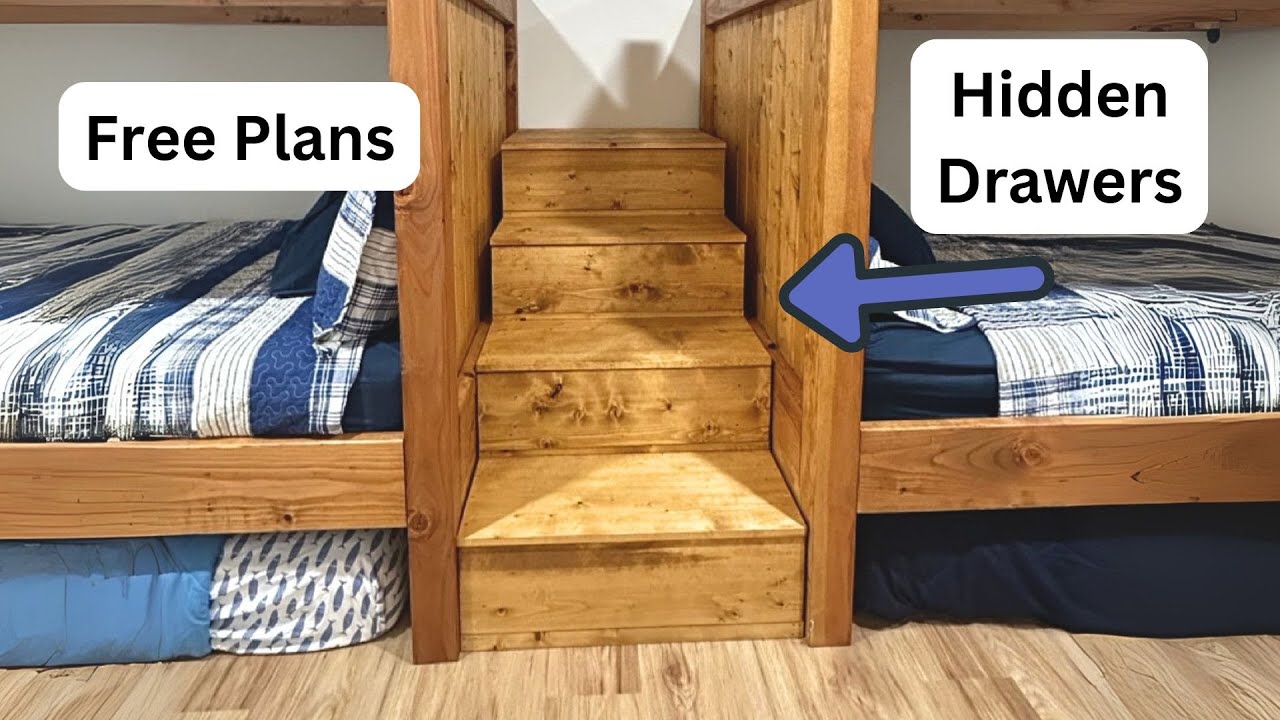
Storage stairs combine steps with built-in drawers or shelves. This design saves space by adding storage inside the stairs. It helps keep toys, clothes, or books organized. Storage stairs are perfect for small rooms with limited space. They make the bunk bed area neat and functional.
Measuring And Planning
Measuring and planning are the first steps to build safe and sturdy stairs for a bunk bed. Careful measurement ensures the stairs fit well and are comfortable to use. Planning helps avoid mistakes and makes the building process easier. Take your time with this stage for the best results.
Determine Stair Height
Start by measuring the total height from the floor to the top bunk. This height is the distance your stairs will cover. Use a tape measure for accuracy. Write down this number to use in your calculations. Knowing the total height helps you decide the number of steps needed.
Calculate Step Dimensions
Divide the total height by the number of steps you want. This gives the height of each step, called the rise. Steps usually have a rise between 7 and 8 inches. Next, decide the depth of each step, or the tread. A comfortable tread is about 10 inches deep. Proper step dimensions make climbing easy and safe.
Plan For Safety And Comfort
Check that the stairs are not too steep. Steep stairs can be hard to climb and unsafe. Make sure the steps are wide enough for a foot to fit. Add a handrail if possible for extra support. Smooth edges on steps prevent injuries. Safety and comfort should guide your entire design.
Cutting The Wood
Cutting the wood is a key step in making stairs for a bunk bed. Accurate cuts ensure the stairs are safe and sturdy. Prepare your tools and measure carefully before cutting. Use good quality wood for strong stairs. Take your time to follow the steps below.
Cut Stringers
Stringers support the steps and shape the stairs. Start by measuring the height and depth of the bunk bed. Mark the stringers on a wooden board using a carpenter’s square. Cut the notches where the steps will fit. Use a saw to cut along the marked lines. Smooth the edges with sandpaper to avoid splinters.
Cut Steps And Risers
Steps are the parts you step on, and risers go between steps. Measure the width and depth to fit the stringers. Cut the wooden boards to size with a saw. Sand the edges to make them smooth. Check each piece fits well before assembly. Properly cut steps and risers make climbing safe and easy.
Assembling The Stair Frame
Assembling the stair frame is a crucial step in building safe stairs for a bunk bed. This frame supports every step and holds the entire structure together. A strong frame means sturdy stairs that last long and hold weight well.
Start by preparing the stringers. These long wooden pieces form the sides of the stairs. Mark where each step will go. Precise measurements keep the steps level and even.
Attach Steps To Stringers
Place the steps on the marked spots of the stringers. Use screws to fix each step firmly. Make sure the steps sit flat and do not wobble. Check the distance between steps to keep it uniform. Tighten all screws securely to avoid any movement.
Reinforce With Support Brackets
Support brackets add strength to the stair frame. Attach brackets under each step where it meets the stringer. Use strong screws for extra hold. These brackets stop the steps from sagging or shifting. Double-check all brackets are tight and well placed for safety.
Sanding And Finishing
Sanding and finishing are key steps in making stairs for a bunk bed. They make the wood safe and nice to touch. Proper sanding removes rough spots and splinters. Finishing protects the wood from damage and wear. Both steps help the stairs last longer and look better.
Smooth Edges
Start sanding with medium-grit sandpaper. Move in the direction of the wood grain. Focus on all edges and corners. Sand until all roughness disappears. Use fine-grit sandpaper for a smooth finish. Check edges with your hand. They should feel soft and safe. Sand any sharp spots again. Smooth edges prevent injuries and splinters.
Apply Paint Or Stain
Choose paint or stain that suits the room. Use a brush or cloth to apply it evenly. Cover all surfaces, including edges. Let the first coat dry completely. Apply a second coat for better protection. Paint adds color and hides flaws. Stain enhances natural wood look. Finish with a clear sealant for durability. This step protects stairs from moisture and wear.
Installing The Stairs
Installing the stairs for a bunk bed is a key step. It makes the bed safe and easy to use. Proper installation keeps the stairs steady and secure. Follow clear steps to attach the stairs firmly. This helps prevent accidents and makes climbing easier.
Secure To Bunk Bed Frame
Start by aligning the stairs with the bed frame. Use screws or bolts to attach the stairs tightly. Check if the stairs do not wobble. Tighten all fasteners to keep the stairs stable. Use a level tool to ensure stairs are straight. This will stop slipping or shifting during use.
Add Handrails If Needed
Handrails can improve safety for children and adults. Attach rails on one or both sides of the stairs. Use strong wood or metal for the handrails. Fasten them firmly to the stair frame. Smooth any rough edges to avoid splinters. Handrails give extra support while climbing up or down.

Credit: ikeahackers.net
Safety Checks And Maintenance
Safety is very important for bunk bed stairs. Proper checks keep the stairs strong and safe. Regular care stops accidents before they happen. Follow these steps to keep stairs in good shape.
Test Stability
Check the stairs for any movement. Push each step gently to see if it wobbles. Make sure all screws and bolts are tight. Loose parts can cause falls. Stand on the stairs and feel for any shake. If the stairs feel unstable, fix them right away.
Regular Inspection Tips
Look at the stairs every week. Check for cracks in the wood or metal. Notice any worn or broken parts. Look for sharp edges that could hurt. Clean the stairs to avoid slipping. Tighten all connections often. This simple habit keeps stairs safe and strong.
Credit: www.youtube.com
Frequently Asked Questions
How Do I Measure Stairs For A Bunk Bed?
Measure the height from the floor to the top bunk. Divide this by the number of steps you want. Ensure each step height is comfortable and safe for climbing.
What Materials Are Best For Bunk Bed Stairs?
Use sturdy, durable wood like pine or oak. Choose materials that support weight and resist wear. Avoid fragile or slippery materials for safety.
How Can I Make Bunk Bed Stairs Safe?
Add non-slip treads on each step. Secure the stairs firmly to the bed frame. Include handrails if possible for extra support.
What Tools Are Needed To Build Bunk Bed Stairs?
Basic tools include a saw, drill, measuring tape, and screwdriver. You may also need wood screws, sandpaper, and a level for precision.
Conclusion
Building stairs for a bunk bed can be simple and safe. Follow clear steps and measure twice before cutting. Use strong wood and secure each part tightly. Take your time and check your work often. A sturdy stair helps kids climb easily and safely.
Enjoy your project and the extra space it creates. Making stairs yourself saves money and adds a personal touch. Keep safety first and have fun building!