Measuring a vanity cabinet might seem simple, but getting it right is key to avoiding costly mistakes. Whether you’re replacing an old cabinet or planning a brand-new bathroom setup, knowing exactly how to measure ensures your new vanity fits perfectly.
In this guide, you’ll discover easy steps to take accurate measurements, so you can shop with confidence and make your bathroom look amazing. Ready to get started? Let’s dive in!
Gather Necessary Tools
Gathering the right tools makes measuring a vanity cabinet easy and accurate. Having everything ready saves time and avoids mistakes. Use simple tools that fit your needs and skill level.
Measuring Tape
A measuring tape is the most important tool. Choose one at least 12 feet long. It helps measure width, height, and depth clearly. Keep it straight and tight for best results.
Level And Pencil
A level ensures your measurements are straight and even. Mark points lightly with a pencil. Pencil marks are easy to adjust or erase later. This keeps your measurements neat and precise.
Notepad Or Measuring App
Write down all measurements as you go. Use a small notepad or a measuring app on your phone. Apps can store and organize numbers quickly. This helps avoid forgetting or mixing up sizes.

Credit: www.homedepot.com
Measure Vanity Width
Measuring the width of your vanity cabinet is important for a perfect fit. The width affects how well the cabinet fits in your bathroom space. Taking accurate measurements helps avoid buying a vanity that is too big or too small.
Measure carefully from one side of the wall to the other. Then, check for any obstacles that might affect the size of the vanity. These steps help you get the right width for your cabinet.
Find Wall-to-wall Distance
Use a tape measure to find the distance between the walls. Place the tape at one edge of the wall. Stretch it straight across to the other side. Record this length in inches or centimeters. This is the maximum width your vanity can be.
Measure twice to be sure the number is correct. Small errors can cause problems later. Make sure the tape is level for an accurate reading.
Account For Obstacles
Look for any pipes, outlets, or fixtures along the wall. These can reduce the space available for your vanity. Measure around these obstacles to see how much space is left.
Leave a small gap between the vanity and obstacles. This allows room for installation and prevents damage. Adjust your width measurement by subtracting the space taken by obstacles.
Measure Vanity Depth
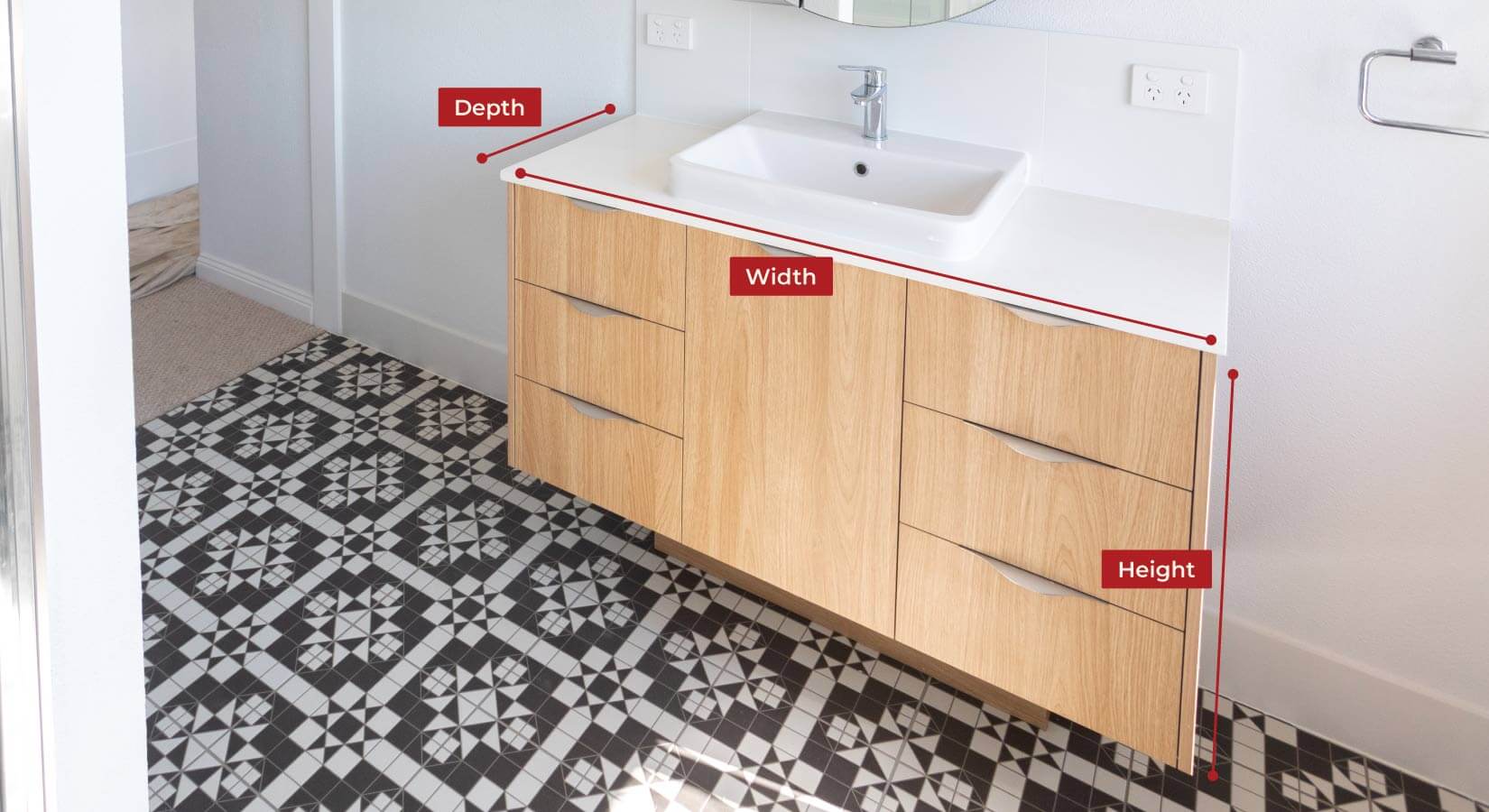
Measuring the depth of a vanity cabinet is key for a perfect fit in your bathroom. The depth affects both space and usability. A wrong depth can block doors or pipes. Take careful steps to get it right.
Check Countertop Overhang
Start by measuring the countertop’s total depth. Many countertops extend beyond the cabinet edge. This overhang adds style but affects space. Measure from the wall to the countertop front. Then measure the cabinet’s front edge. The difference is the overhang size. Make sure the vanity depth fits under this overhang comfortably.
Consider Plumbing Space
Plumbing pipes need room behind the vanity. Measure the distance from the wall to the furthest pipe point. Check for water supply lines and drain pipes. The vanity must not press against or block these pipes. Leave extra space for easy access and repairs. This prevents damage and future problems.
Credit: kitchencabinetkings.com
Measure Vanity Height
Start by measuring from the floor to the top edge of the vanity cabinet. This height helps ensure the vanity fits well in your bathroom space. Accurate measurement prevents installation issues and improves comfort.
Measuring the vanity height is an important step. It ensures the cabinet fits well in your bathroom. The right height makes daily tasks easier and more comfortable. Start by knowing the standard height before adjusting for your needs.
Standard Height Guidelines
Most vanity cabinets are 32 to 36 inches tall. This range suits many bathrooms and users. It fits well with standard sink sizes and plumbing. Measure from the floor to the top of the cabinet. Avoid including the countertop in this measurement.
Adjust For User Comfort
Consider who uses the vanity the most. Taller users may prefer a higher cabinet, around 36 inches. Shorter users might need a lower height, near 32 inches. Think about daily activities like washing hands or brushing teeth. Adjusting height can prevent bending or stretching. Always measure carefully and mark the wall if needed.
Measure Plumbing And Fixtures
Measuring plumbing and fixtures is key before buying a vanity cabinet. Plumbing affects the cabinet size and placement. Without proper measurements, pipes or faucets might not fit well. Taking accurate measurements saves time and money. It helps avoid costly mistakes during installation.
Locate Drain Pipes
Find the drain pipes under your sink. Use a flashlight to see clearly inside the cabinet. Measure the distance from the wall to the center of the drain pipe. Note the height of the pipe from the floor. Check if the pipe sticks out or is flush with the wall. Mark these measurements on your notes.
Drain pipe location affects the cabinet design. Some vanities have cutouts or spaces for pipes. Knowing pipe positions helps choose the right cabinet style. It also ensures easy access for future repairs.
Identify Faucet Requirements
Measure the faucet holes on your sink or countertop. Count how many holes there are. Measure the distance between each hole center. This helps pick a vanity that matches your faucet type. Also, check if the faucet is wall-mounted or deck-mounted.
Consider faucet height and reach. Tall faucets need more space above the sink. Wide-reaching faucets require enough room inside the cabinet. Knowing these details avoids fitting problems after installation.
Double-check Measurements
Double-checking your vanity cabinet measurements is crucial. It prevents mistakes and saves time during installation. Taking extra care ensures your cabinet fits perfectly in the space. Small errors can cause big problems later. Always verify your numbers before buying or cutting materials.
Re-measure Key Dimensions
Start by measuring the width, height, and depth again. Use a tape measure and write down each number clearly. Measure at least twice to confirm accuracy. Check the space where the cabinet will go. Look for any obstacles like pipes or vents. Re-measuring helps catch any mistakes made the first time.
Verify Level And Alignment
Check if the floor or wall is level. Use a spirit level tool for this step. An uneven surface affects how the cabinet sits. Make sure the cabinet aligns with nearby fixtures. Misalignment can cause gaps or doors not to close properly. Adjustments might be needed before final installation.
Record And Organize Data
Recording and organizing your measurements is key to a smooth vanity cabinet project. Clear notes help avoid mistakes. They save time during shopping and installation. Keeping data organized makes it easy to share with others. Follow simple steps to create a useful record of your measurements.
Good organization means your measurements stay accurate and easy to understand. Use tools and techniques that fit your style. This helps you track every detail and avoid confusion later.
Create A Measurement Sketch
Draw a simple sketch of your vanity cabinet area. Include walls, doors, and plumbing if possible. Mark each part you measured on the sketch. This visual guide helps you see where each number belongs.
A sketch does not need to be perfect. Just clear enough to show lengths and spaces. Use straight lines and blocks for cabinets and sinks. A good sketch speeds up your work.
Use Clear Labels
Label every measurement on your sketch and notes. Use simple terms like “width,” “height,” and “depth.” Number the measurements to match your sketch marks. Clear labels remove any guesswork.
Write down units too, such as inches or centimeters. Consistency in labels keeps your data reliable. This step helps when you buy or order your cabinet.
Tips For Tight Spaces
Measuring a vanity cabinet in tight spaces needs care and precision. Small bathrooms or narrow areas limit your choices. Every inch counts. Proper measurement helps avoid buying a cabinet that does not fit. It also ensures the space feels open and functional.
Focus on clear, exact measurements of width, depth, and height. Measure from wall to wall and check for obstacles like pipes or electrical outlets. Use a tape measure and note down each dimension carefully. Accurate numbers help find the best cabinet for your space.
Custom Cabinet Options
Custom cabinets fit perfectly in tight spaces. They match your exact measurements. Choose materials and colors that blend with your bathroom style. Custom options offer drawers, shelves, and doors sized just right.
Custom cabinets can use space under sinks or awkward corners well. They avoid wasted space and look neat. Although custom cabinets cost more, they save money by fitting perfectly and lasting longer.
Maximize Storage Efficiency
Use clever storage ideas for small vanities. Add pull-out drawers or baskets to keep items organized. Vertical storage saves floor space. Tall cabinets or wall shelves hold extra toiletries.
Choose slim cabinets with deep drawers to store more. Keep essentials easy to reach by planning the layout. Good storage reduces clutter and keeps your bathroom tidy.
Credit: vevano.com
Frequently Asked Questions
How Do I Measure The Width Of A Vanity Cabinet?
Measure the cabinet’s width from the left edge to the right edge. Use a tape measure for accuracy. Record the measurement in inches or centimeters for precise fitting.
What Is The Best Way To Measure Vanity Cabinet Depth?
Measure from the front edge to the back edge of the cabinet. Keep the tape measure straight for an accurate depth reading. Include any overhang or countertop if relevant.
How To Measure Vanity Cabinet Height Correctly?
Measure from the floor to the top edge of the cabinet. Avoid including the countertop height unless specified. This helps in finding a cabinet that fits your space perfectly.
Why Is Accurate Vanity Cabinet Measurement Important?
Accurate measurements ensure the cabinet fits your bathroom space. It helps avoid costly mistakes and remodeling delays. Proper sizing also improves bathroom functionality and aesthetics.
Conclusion
Measuring a vanity cabinet is simple with the right steps. Start by noting the width, height, and depth carefully. Double-check your numbers to avoid mistakes later. Accurate measurements help find the perfect fit for your space. Take your time and use a reliable tape measure.
This ensures your new cabinet looks great and works well. Remember, good measuring saves time and money. Now, you are ready to choose a vanity cabinet with confidence.