Are you struggling to figure out the best way to arrange your living room furniture? You’re not alone.
Getting the layout right can transform your space from cramped and awkward to warm and inviting. Imagine walking into your living room and instantly feeling relaxed, knowing every piece of furniture has its perfect spot. In this guide, you’ll discover simple, practical tips to help you place your furniture in a way that maximizes comfort, flow, and style.
Whether your room is small or spacious, you’ll learn how to create a balanced setup that invites conversation and makes your living area truly feel like home. Ready to make your living room work for you? Let’s dive in!
Choose A Focal Point
Choosing a focal point is the first step to arrange furniture in the living room. It helps organize the space and guides where to place your main pieces. A clear focal point makes the room feel balanced and inviting. It draws attention and creates a natural flow.
Identify Natural Focal Points
Look for existing features that can serve as a focal point. A fireplace often acts as a strong center for the room. Large windows with a view also attract eyes and bring in light. Televisions are common focal points in modern living rooms. If no natural point stands out, create one with artwork or a bold piece of furniture. Arrange the largest furniture, like the sofa and armchairs, to face or surround this spot.
Create Conversation Areas
Place seating close enough to encourage talking. Chairs and sofas should be within easy reach. Avoid spreading seats too far apart, which can feel cold. Arrange furniture in a circle or a U-shape around the focal point. This setup invites guests to relax and chat. Leave space for easy movement around the area. Balance the room by placing large and small pieces evenly. Pull furniture slightly away from walls to open up the space.
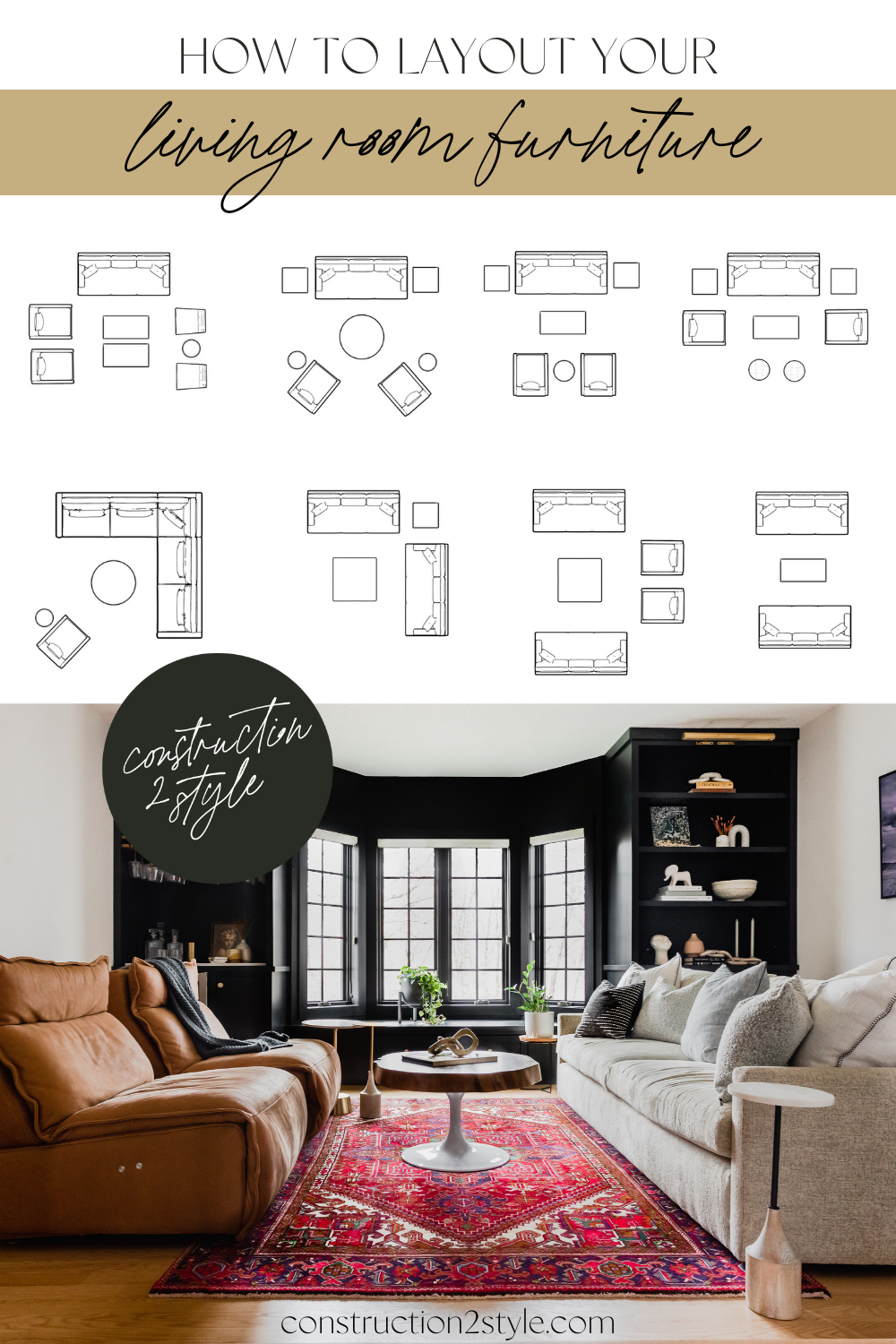
Credit: construction2style.com
Arrange Seating For Interaction
Seating arrangement shapes how people connect in your living room.
Good placement invites guests to talk and enjoy each other’s company.
Focus on comfort and closeness to create a warm, inviting space.
Keep Seating Close
Place chairs and sofas near each other to help people hear clearly.
Keep seats within 6 to 10 feet apart for easy talking.
Close seating makes the room feel cozy and inviting.
Avoid spreading seats too far; it can isolate guests.
Encourage Conversation Flow
Arrange seats in a circle or U-shape to face each other.
Open layouts let people move freely without blocking views.
Leave enough space for legs and small tables for drinks.
Balance the room by spreading furniture evenly for smooth flow.
Balance Visual Weight
Balancing visual weight is key to a comfortable living room. It helps create harmony and prevents the space from feeling lopsided or cluttered. Visual weight depends on the size, color, and shape of furniture pieces. When you balance these elements, the room looks inviting and well-organized.
Distribute Large And Small Pieces
Place large furniture like sofas and armchairs across the room to spread weight evenly. Avoid grouping all big pieces in one corner. Smaller items, such as side tables or ottomans, can fill empty spaces on the opposite side. This mix keeps the room balanced and visually pleasing.
Use lightweight furniture near heavier pieces to soften the look. For example, a slim chair can balance a bulky sofa. Keep the scale of furniture proportional to the room size. This prevents one side from appearing too heavy or overwhelming.
Avoid Crowding One Side
Do not push all furniture to one side of the room. Crowding makes that area feel heavy and cramped. Leave space for movement and breathing room. This helps the whole living room feel open and balanced.
Spread seating and tables around the room to create flow. Check from different angles to ensure no side feels too full. Aim for a smooth visual transition across the space. This technique makes the room comfortable and easy to enjoy.
Plan Traffic Flow
Planning traffic flow is key to a functional living room. It ensures easy movement and comfort. Good flow prevents accidents and makes the space feel open and inviting. Think about where people will walk and arrange furniture accordingly.
Leave Clear Pathways
Clear pathways help people move freely. Leave at least 2 to 3 feet between furniture pieces. Avoid narrow or blocked routes that force people to squeeze through. Paths should lead naturally to doors, windows, and seating areas. This makes the room feel spacious and easy to navigate.
Avoid Obstructive Furniture Placement
Place furniture so it does not block doorways or views. Avoid putting large pieces directly in walkways. Keep sofas and chairs away from entry points. This stops traffic jams and keeps the space open. Arrange furniture with flow in mind, not just style.
Pull Furniture Away From Walls
Pulling furniture away from walls changes how your living room feels and works. It breaks the usual pattern and adds interest. This simple move can make your space more inviting and comfortable. It also helps with how people move and use the room. Here are key benefits of this approach.
Create Spacious Feel
When furniture sits away from walls, rooms appear larger. It opens up floor space and reduces clutter. Air flows better, making the room feel fresh and light. This setup stops the room from feeling boxed in or crowded. Even small living rooms gain a sense of depth and openness.
Enhance Room Functionality
Pulling furniture out improves how you use the room. It creates clear walking paths for easy movement. Seating groups encourage conversation and socializing. This layout supports multiple activities without feeling cramped. It also allows for flexible furniture arrangements to suit different needs.
Incorporate Tables And Rugs
Incorporating tables and rugs in your living room enhances both style and function. These elements help organize the space and create a cozy atmosphere. Tables provide spots for drinks, books, and decor. Rugs add warmth and define seating areas clearly.
Place Coffee And Side Tables Within Reach
Position coffee and side tables close to seating for easy access. This placement allows guests to place items without stretching or standing. Choose tables that fit the scale of your furniture. Avoid overcrowding the space with too many tables. Keep pathways clear to maintain good flow.
Use Rugs To Anchor Furniture
Select rugs that fit the size of your seating area. Place the rug under the front legs of sofas and chairs to unify the space. Rugs create a visual boundary that ties the furniture together. Choose colors and patterns that complement your decor. Rugs also add texture and comfort underfoot.
Select Appropriate Furniture Size
Choosing the right furniture size is essential for a comfortable and balanced living room. The furniture should fit well within the space, allowing free movement and keeping the room visually appealing. Oversized pieces can make a room feel cramped, while too-small furniture might look lost and uncomfortable.
Careful selection helps create a cozy atmosphere and makes the room functional. Consider the room’s dimensions before buying or placing any furniture. This step improves the flow and usability of your living space.
Match Scale To Room Size
Measure your living room before selecting furniture. Small rooms need compact furniture to avoid overcrowding. Large rooms can handle bigger pieces without feeling tight. Choose sofas, chairs, and tables that fit the room’s scale. Keep enough space around furniture for easy walking. Proper scale keeps the room open and inviting.
Consider Multi-functional Pieces
Multi-functional furniture saves space and adds value. Look for sofas with storage or coffee tables with shelves. Foldable or expandable pieces work well in small rooms. These items provide extra function without crowding the space. Multi-use furniture keeps your living room neat and versatile.
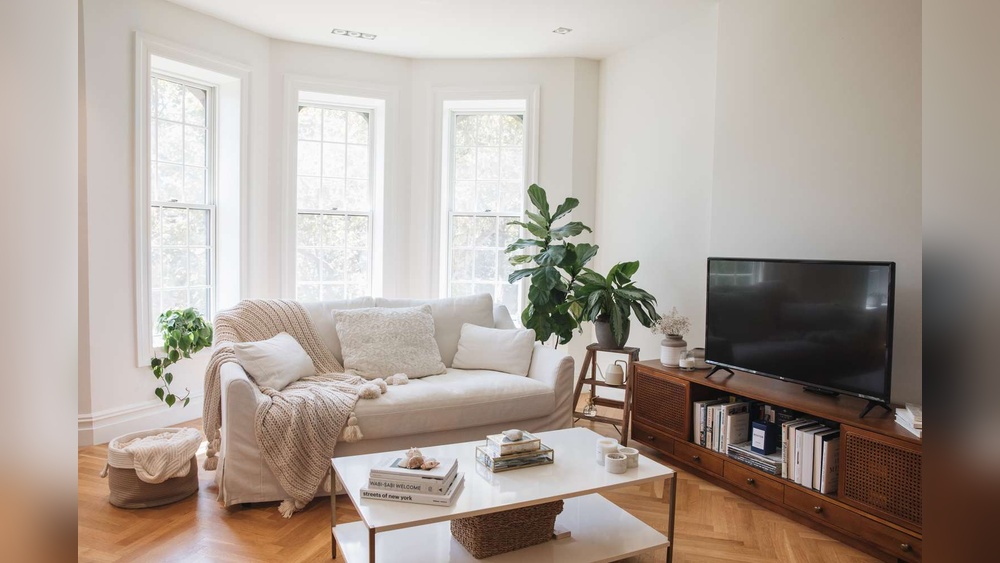
:strip_icc()/neutral-living-room-white-fireplace-594af4cd-dfb9df1c2680468ab84c14d87b0b9eb9.jpg)
Credit: www.bhg.com
Measure Before Buying
Measuring before buying furniture is key to a well-designed living room. It saves time and money by avoiding wrong purchases. Accurate measurements help you find pieces that fit perfectly and enhance the space. Planning with measurements ensures a comfortable and balanced layout.
Take Accurate Room Dimensions
Start by measuring the length and width of your living room. Include doorways, windows, and any built-in features. Measure the height of the walls for tall furniture choices. Write down all numbers clearly. Use a tape measure for precise results. Double-check each measurement to avoid mistakes. This data forms the foundation for your furniture plan.
Plan Layout With Measurements
Use your room dimensions to sketch a layout on paper or a digital tool. Mark where furniture will go and how much space each piece needs. Keep pathways clear for easy movement. Consider the size of sofas, chairs, and tables to avoid crowding. Make sure furniture does not block doors or windows. Planning with measurements helps create a balanced and functional living room.
Adapt For Open Plan Spaces
Open plan spaces blend living, dining, and kitchen areas into one large room. This layout offers flexibility but needs careful furniture placement. Proper arrangement helps create cozy, functional zones without walls. The goal is to maintain flow and define each area clearly. Adapt furniture placement to balance openness and structure.
Define Zones With Furniture
Use furniture to mark different zones in the open plan. A sofa can separate the living area from the dining space. Rugs help anchor each zone and add visual boundaries. Bookshelves or low cabinets act as subtle dividers without blocking light. Arrange seating to face inward, creating a clear living area. This technique guides movement and makes the space feel organized.
Maintain Clearances And Scale
Keep enough space between furniture pieces for easy movement. At least 30 inches of clearance allows comfortable walking paths. Choose furniture that fits the room’s size. Avoid oversized items that crowd the space. Small-scale furniture keeps the area open and airy. Proper scale and spacing make the open plan functional and inviting.
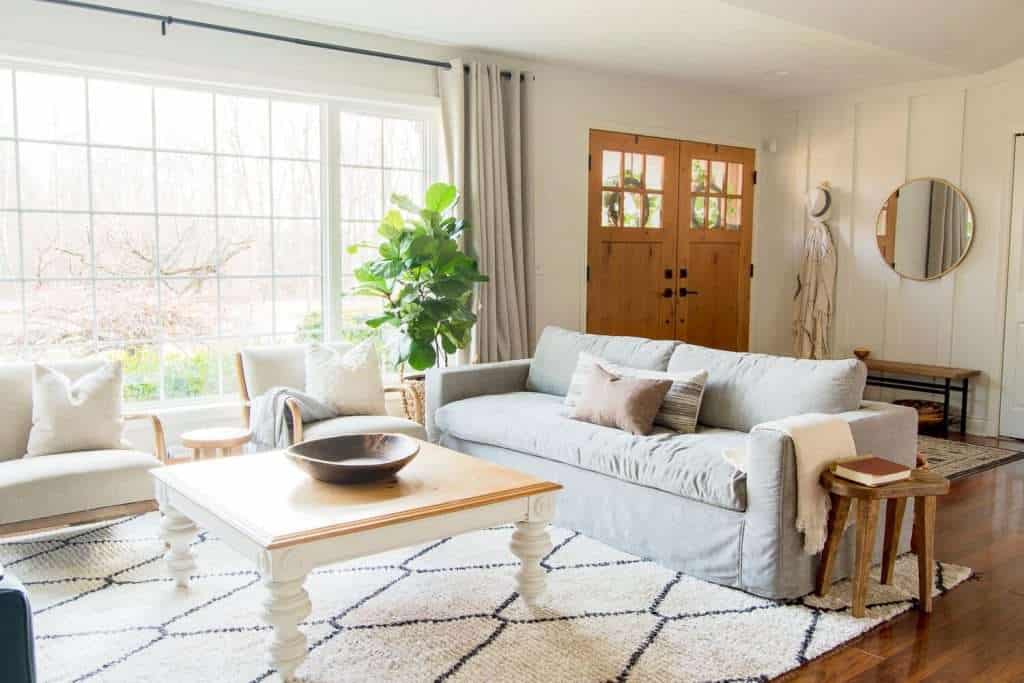
Credit: graceinmyspace.com
Avoid Common Arrangement Mistakes
Arranging furniture in the living room can be tricky. Avoiding common mistakes helps create a comfortable and inviting space. Poor placement can make the room feel cramped or awkward. Thoughtful planning improves both function and style. Focus on balance and space to enhance the room’s flow.
Prevent Overcrowding
Do not fill every inch with furniture. Too many pieces make the room feel small and cluttered. Leave enough space around furniture for easy movement. Choose only essential items that fit the room size. Open spaces help the room breathe and feel larger.
Keep pathways clear for walking. Avoid blocking doors or windows with big furniture. Use smaller pieces to fill gaps instead of adding bulky items. Arrange furniture so it does not compete for attention.
Ensure Comfortable Seating Distances
Place seats close enough for easy conversation. Sitting too far apart creates distance and discomfort. The ideal distance is about 4 to 10 feet between chairs or sofas. This range helps people talk without shouting or straining.
Arrange seats to face each other or the focal point. Avoid pushing all furniture against walls, which can feel cold. Pulling furniture slightly inward creates a cozy atmosphere. Remember, comfort matters for both guests and daily use.
Frequently Asked Questions
How To Position Furniture In A Living Room?
Start by selecting a focal point like a fireplace or TV. Arrange seating around it for easy conversation. Ensure clear pathways for smooth traffic flow. Balance furniture size and weight across the room. Pull furniture away from walls and place tables within arm’s reach for functionality.
What Is The 2 3 Rule For Living Rooms?
The 2-3 rule for living rooms means arranging 2 to 3 seating pieces facing each other. This setup encourages conversation and balances space effectively.
What Is The Biggest Mistake In Placement Of Furniture?
The biggest mistake in furniture placement is pushing all pieces against walls, which hinders flow and creates a disconnected space.
What Are The Four Rules In Furniture Arrangement?
Identify a focal point and arrange main seating around it. Ensure seating promotes conversation with proper proximity. Balance visual weight evenly across the room. Allow clear traffic flow by spacing furniture away from walls.
Conclusion
Arranging furniture in your living room shapes how the space feels and functions. Start by choosing a clear focal point like a TV or fireplace. Place sofas and chairs close enough for easy conversation. Leave room for smooth walking paths without clutter.
Balance large and small pieces to avoid crowding one side. Pull furniture slightly away from walls to make the room feel open. Add tables within arm’s reach for convenience. With these simple steps, your living room can become inviting and comfortable for everyone.