When winter arrives, your outdoor furniture cushions face harsh weather that can cause damage. If you want to keep them looking fresh and comfortable year after year, proper storage is key.
But how exactly do you store your cushions to protect them from moisture, mold, and fading? You’ll discover simple, effective tips to make sure your cushions stay in great shape all winter long. Keep reading—you’ll learn easy steps that save you time and money while extending the life of your outdoor furniture.
:strip_icc()/outdoor-sofa-coffee-table-93UGi6zz4bT8OHF5yZ5-MP-6c51040cf7ed4480a5704c571073ef4e.jpg)
Credit: www.bhg.com
Prepare Cushions For Storage
Preparing outdoor furniture cushions for storage is an important step. It helps keep them fresh and in good shape. Proper preparation stops mold, stains, and damage during winter months. Taking time now saves money and effort later.
Clean Cushions Thoroughly
Remove all loose dirt and debris first. Use a vacuum or a soft brush. Wash the cushions with mild soap and warm water. Gently scrub any stains with a sponge. Avoid harsh cleaners that can damage fabric. Rinse well to remove all soap. Clean cushions dry faster and last longer.
Dry Cushions Completely
Dry cushions fully before storing. Any moisture left can cause mold and mildew. Place cushions in a sunny, airy spot. Flip them over to dry both sides. Avoid storing damp cushions in sealed containers. Let them dry until no moisture remains.
Inspect For Damage
Check cushions for tears, holes, or loose seams. Small damages can get worse during storage. Repair any rips with needle and thread. Replace any missing or broken parts. Fixing cushions now keeps them ready for next season. Careful inspection helps avoid costly replacements.

Credit: www.earthkind.com
Choose The Right Storage Location
Choosing the right place to store your outdoor furniture cushions is very important. The right spot keeps cushions safe from damage during winter. It helps maintain their shape and color. It also stops mold and pests from ruining them. A good storage location makes cushions ready for use when warm weather returns.
Find A Dry, Cool Spot
Select a place that stays dry all winter. Moisture can cause mold and mildew on cushions. A cool spot helps prevent fabric from fading and wearing out. Avoid damp basements or garages that collect moisture. A dry shed or closet works well.
Avoid Direct Sunlight
Sunlight can quickly damage cushions. UV rays fade colors and weaken fabric fibers. Store cushions in a dark or shaded area. This keeps the material strong and looking new. Keep them out of windows or areas with bright light.
Keep Away From Pests
Mice, bugs, and other pests can damage cushions. Store cushions in sealed containers or bags to block pests. Choose a location that pests rarely visit. Check the area for signs of insects or rodents before storing.
Select Suitable Storage Containers
Choosing the right storage containers is key for protecting outdoor furniture cushions over winter. Proper containers keep cushions dry, clean, and free from pests. They also help maintain the cushions’ shape and freshness for the next season.
Use Airtight Bins
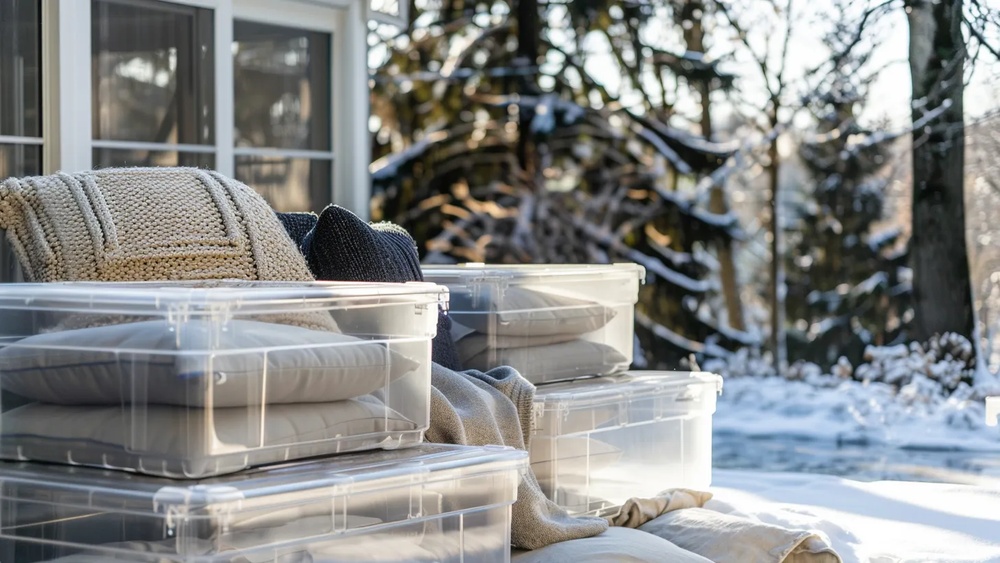
Airtight bins prevent moisture and dirt from entering. They keep cushions dry and safe from mold. Clear plastic bins help you see the contents without opening them. Choose bins with strong lids that seal tightly.
Consider Breathable Bags
Breathable bags allow air circulation while protecting cushions. They reduce moisture buildup inside the bag. Use fabric or mesh bags for this purpose. Avoid plastic bags that trap humidity and cause mildew.
Label Storage Containers
Labeling containers saves time and avoids confusion. Write the cushion type or the furniture set on each label. Use waterproof markers or printed labels. This helps find cushions quickly next season.
Protect Cushions From Moisture
Protecting outdoor furniture cushions from moisture is key to keeping them in good shape. Moisture causes mold, mildew, and bad smells. Cushions that stay dry last longer and look better. Proper storage techniques stop water damage and keep cushions fresh.
Add Desiccant Packs
Desiccant packs absorb moisture from the air around cushions. Place several packs inside the storage container or cover. These packs reduce humidity and prevent mold growth. They are small, cheap, and easy to use. Replace them every few months for best results.
Elevate Cushions Off The Floor
Keep cushions off cold, damp floors. Use shelves, pallets, or racks to raise them. This stops water from seeping in from below. Elevation improves air flow, helping cushions dry faster. Avoid direct contact with the ground to reduce moisture risk.
Maintain Cushions During Winter
Maintaining outdoor furniture cushions during winter helps keep them fresh and lasting longer. Cold, damp conditions can damage cushions if left unchecked. Simple care steps prevent mold, odors, and fabric wear. Regular attention makes cushions ready for use in spring.
Check For Mold Regularly
Mold can grow on cushions in dark, damp places. Look closely for small black or green spots. Check cushions every few weeks during winter storage. Clean any mold with mild soap and water. Let cushions dry completely before storing again.
Air Out Cushions Occasionally
Fresh air stops moisture buildup inside cushions. Take cushions outside on dry, sunny days. Let air flow through to keep them dry and fresh. Avoid storing cushions in sealed plastic bags. Proper airing reduces musty smells and mold risk.
Prepare Cushions For Spring Use
Preparing your outdoor furniture cushions for spring use helps keep them fresh and comfortable. Proper care extends their life and keeps them looking great. Follow these steps to make your cushions ready for warm days.
Clean And Fluff Cushions
Start by removing dirt and dust from the cushions. Use a soft brush or vacuum cleaner with an upholstery attachment. Spot clean any stains with mild soap and water. Let the cushions dry completely in the sun to prevent mold. Fluff the cushions by shaking or patting them. This restores their shape and makes them comfortable again.
Repair Any Damage
Check cushions for tears, holes, or loose threads. Fix small tears with a needle and thread to stop them from growing. Replace missing or broken zippers to keep covers secure. Inspect the foam inside for damage or mold. Swap out any damaged foam to keep cushions supportive. Repairing cushions before use saves money and keeps them looking new.

Credit: armadillosun.com
Frequently Asked Questions
How Should I Clean Cushions Before Winter Storage?
Clean cushions with mild soap and water. Remove dirt, stains, and mildew. Let them dry completely before storing to prevent mold growth.
Where Is The Best Place To Store Outdoor Cushions?
Store cushions in a cool, dry place like a shed or garage. Avoid damp areas to prevent mold and mildew damage.
Should I Use Plastic Bags For Cushion Storage?
Avoid plastic bags; they trap moisture. Use breathable storage bags or fabric covers to keep cushions dry and fresh during winter.
How Can I Protect Cushions From Pests In Storage?
Keep cushions off the ground on shelves or pallets. Use cedar blocks or mothballs nearby to deter pests naturally.
Conclusion
Storing outdoor furniture cushions properly protects them from damage. Clean and dry cushions before storing to avoid mold. Use breathable storage bags or containers to keep air flowing. Store cushions in a cool, dry place away from sunlight. This simple care extends cushion life and keeps them fresh.
Ready for next season, your cushions stay comfortable and clean. Taking these small steps saves money and effort later. Keep your outdoor space inviting year-round with well-stored cushions. Easy to do, easy to enjoy.