Are you thinking about getting a bunk bed for your child but wondering when it’s actually safe for them to sleep in one? You want your little one to have fun and enjoy their new bed, but safety is your top priority.
Knowing the right age for a child to use a bunk bed can help you avoid accidents and give you peace of mind. You’ll discover the key factors to consider before making the switch, so you can make the best choice for your family.
Keep reading to find out exactly when your child is ready for a bunk bed—and how to keep their sleep space safe and cozy.
Age Recommendations For Bunk Beds
Bunk beds save space and add fun to a child’s room. Safety is a top concern. Choosing the right age to start using a bunk bed is important. This helps prevent accidents and ensures a good night’s sleep. Parents should consider several factors before letting their child sleep in a bunk bed.
Below are key points about age guidelines, child development, and expert advice.
Minimum Age Guidelines
Most experts say children under six should not use the top bunk. This age limit reduces the risk of falls. Younger kids may not have the balance or coordination needed. The bottom bunk is safer for toddlers and preschoolers. Always check the manufacturer’s recommendations for age limits.
Developmental Considerations
Children develop skills at different rates. Some may climb safely at age six, others later. Think about your child’s physical ability and confidence. Can they climb ladders without help? Do they understand how to stay safe on the top bunk? These questions help decide the right time.
Pediatrician Advice
Doctors often recommend waiting until a child is six or older. They stress close supervision when kids use bunk beds. A safe environment includes guardrails on all sides of the top bunk. Pediatricians also suggest teaching children to avoid horseplay on or near the bed.

Credit: www.customkidsfurniture.com
Safety Features To Look For
Choosing a bunk bed for a child means focusing on safety first. Certain features help keep your child safe and comfortable while sleeping. Understanding these safety elements can guide you to the best choice. This section highlights key safety features to check before buying a bunk bed.
Guardrails And Bed Height
Guardrails prevent falls during sleep. The top bunk must have strong, high guardrails on all sides. This stops your child from rolling off the bed. The height of the bed also matters. Too high can be risky for young children. Choose a bed with a safe height for your child’s age.
Sturdy Ladder Design
The ladder should be easy to climb and stable. Wide steps provide better footing and reduce slipping risks. Look for ladders that attach firmly to the bed frame. Loose ladders can cause falls and injuries. A well-built ladder makes climbing safe for children.
Non-toxic Materials
Materials in the bunk bed must be safe and non-toxic. Paints and finishes should be free from harmful chemicals. Natural wood or certified safe materials are best. This protects your child from allergies and health issues. Check for safety certifications on the product label.
Common Risks And Hazards
Bunk beds save space and add fun to a child’s room. Yet, they come with risks parents must know. Safety is a top priority before letting a child use a bunk bed. Understanding common hazards helps protect children from harm.
Falls And Injuries
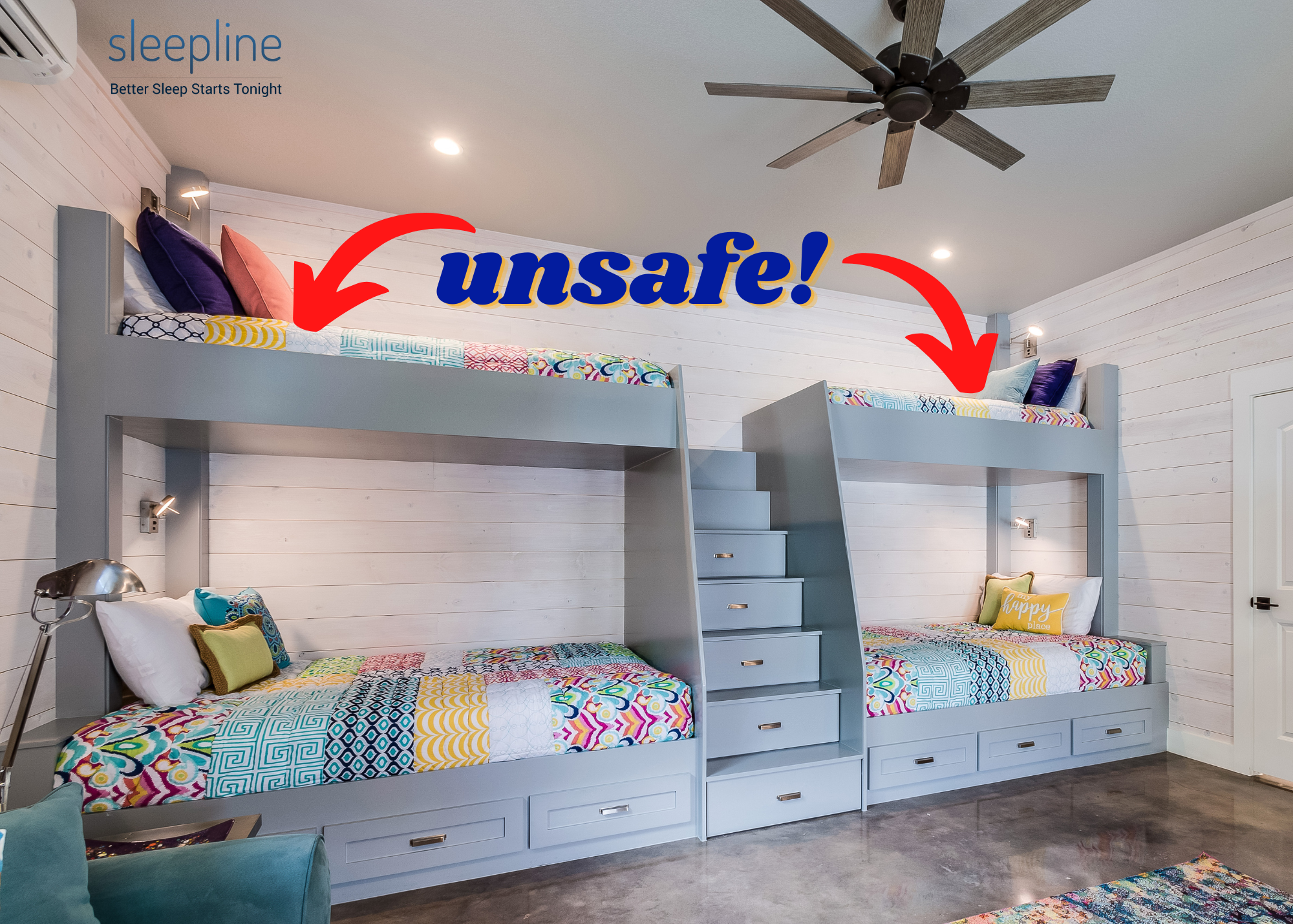
Falls are the most common danger with bunk beds. Children can slip off the top bunk during sleep or play. The height makes injuries more serious than regular beds. Guardrails help but do not prevent all falls. Supervision and safe bed design reduce the risk.
Entrapment Risks
Entrapment happens when a child’s head or body gets stuck. Gaps between the bed frame or guardrails can trap limbs. This causes pain, panic, or even breathing problems. Beds must meet safety standards to avoid wide gaps. Regular checks for loose parts keep the bed safe.
Overcrowding The Bed
Too many children in one bunk increases danger. Overcrowding raises the chance of falls and injury. Jumping or rough play on bunk beds adds risk. Only one child should use each bunk at a time. Clear rules and supervision keep play safe.
Credit: www.sleepline.com
Setting Up A Bunk Bed Safely
Setting up a bunk bed safely is very important for your child’s safety and comfort. Proper setup helps prevent accidents and makes the bed last longer. Follow simple steps to keep the bed secure and stable in your home.
Safety should always be the main focus when installing a bunk bed. Each part must fit well and stay strong. A well-set bunk bed creates a safe place for children to sleep and play.
Proper Assembly Tips
Start by reading the instruction manual carefully. Use all the screws and bolts provided. Tighten each connection firmly but avoid overtightening. Check that the ladder and guardrails are fixed tightly. Make sure the bed frame does not wobble. Use tools recommended by the manufacturer for best results. Assembly done right ensures the bed stays safe and stable.
Room Placement
Place the bunk bed away from windows and ceiling fans. Keep it near a wall for extra support. Avoid spots with heavy foot traffic to reduce accidents. Leave space around the bed for easy access. Ensure the room is well-lit to prevent trips or falls. Good placement adds another layer of safety for your child.
Regular Maintenance
Check the bunk bed every few months for loose screws. Tighten any parts that have become weak. Look for cracks or broken pieces and fix them quickly. Clean the bed regularly to keep it in good condition. Regular care keeps the bunk bed safe and extends its life. Your child will enjoy a secure and comfortable sleep space.
Supervising Children Using Bunk Beds
Supervising children using bunk beds is essential for their safety and comfort. Parents need to watch closely as kids learn to use the bed. This helps prevent accidents and builds good sleeping habits. Clear guidance and regular checks keep children safe and confident.
Establishing Rules
Set clear rules about using the bunk bed. Explain no jumping or rough play on the bed. Teach children to climb the ladder carefully. Make sure they understand not to lean over the guardrails. Rules help reduce risks and keep children safe.
Monitoring Sleep Habits
Watch how your child sleeps in the bunk bed. Check if they feel comfortable and secure. Look for signs of restlessness or fear. Adjust the bed setup if needed. Good sleep habits support healthy growth and well-being.
Emergency Preparedness
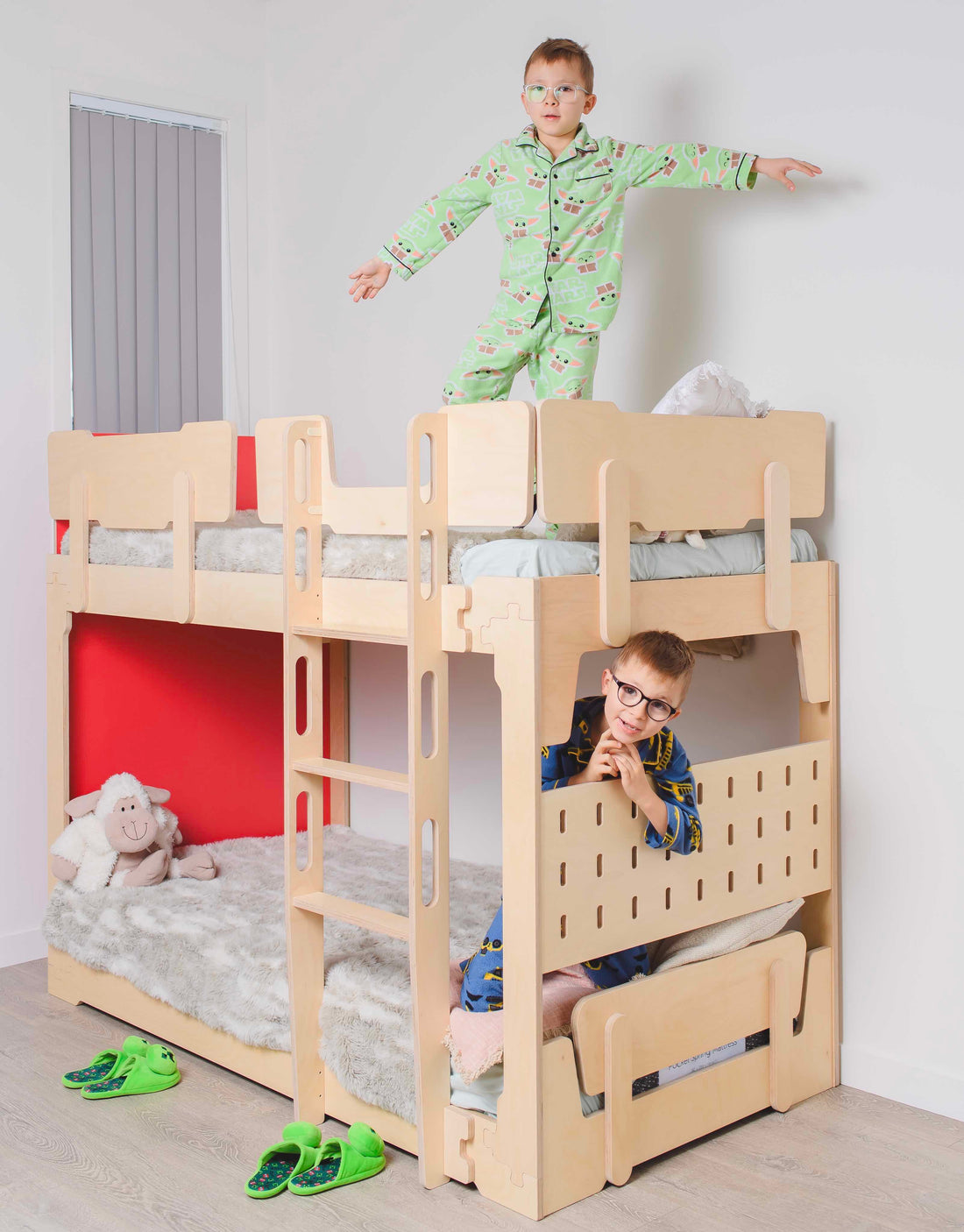
Prepare for emergencies with a clear plan. Teach children how to get down quickly but safely. Keep a flashlight near the bed for power outages. Make sure the room is easy to exit in case of fire. Being ready helps protect children in any situation.
Credit: kitsmart.co.nz
Alternatives To Traditional Bunk Beds
Traditional bunk beds are not always the best choice for every child. Some kids might need safer or more flexible options. Parents want beds that fit their child’s age and space. There are many alternatives that can work well in different rooms and for different needs.
These options offer comfort, safety, and fun without the risks of high bunk beds. They can help children feel secure and happy in their sleeping space. Here are some popular alternatives to traditional bunk beds.
Loft Beds
Loft beds raise the bed off the floor. This creates space underneath for play or storage. Kids enjoy having a cozy area below their bed. Loft beds work well for children who are too young for top bunks. They provide a safe height and save room in small spaces.
Floor Beds
Floor beds sit directly on the ground. They are perfect for toddlers and young children. Floor beds reduce the risk of falls and injuries. Kids can get in and out easily. These beds help children feel secure and independent. Parents like floor beds for their simplicity and safety.
Convertible Bed Options
Convertible beds change as your child grows. They can start as a crib or toddler bed. Later, they transform into a regular bed. These beds save money and space. Parents appreciate their flexibility and long-term use. Convertible beds adapt to children’s changing needs and rooms.
Frequently Asked Questions
What Is The Recommended Age For A Child To Use A Bunk Bed?
Children should be at least 6 years old before sleeping in a bunk bed. This age reduces risks of falls and injuries. Younger kids may lack the motor skills and judgment needed for safety.
Are Bunk Beds Safe For Toddlers?
Bunk beds are not safe for toddlers under 6 years. Toddlers are prone to falls due to their size and coordination. It is best to use cribs or toddler beds instead.
How Can Parents Ensure Bunk Bed Safety?
Use guardrails on both sides of the top bunk. Ensure the ladder is sturdy and easy to climb. Teach children to avoid horseplay and always climb carefully.
Can A Child’s Age Affect Bunk Bed Design Choice?
Yes, younger children need lower bunk beds with extra guardrails. Older kids can use standard bunk beds with safer ladder designs. Age helps determine bed height and safety features.
Conclusion
Children should sleep in bunk beds only after age six. Safety matters most when choosing a bunk bed. Guardrails and sturdy ladders help prevent falls. Always follow the manufacturer’s age and weight rules. Teach kids to climb carefully and avoid rough play.
Regularly check the bed for loose parts or damage. A bunk bed can save space and be fun. Choose one that fits your child’s needs and safety. Keep your child’s sleep safe and comfortable every night.