Are you wondering what size a camper bunk bed really is? If you’re planning a trip or thinking about upgrading your camper, knowing the exact dimensions can save you a lot of hassle.
You want to make sure your family or friends will sleep comfortably without wasting space. You’ll discover the common sizes of camper bunk beds and how to choose the right one for your needs. Keep reading to find out everything you need to know before making your decision.
Credit: recpro.com
Camper Bunk Bed Basics
Camper bunk beds are essential for saving space in small RVs and campers. They offer a practical sleeping solution for families and groups traveling together. Understanding the basics of camper bunk beds helps you choose the right size and style for your camper. The right bunk bed fits well and provides comfort during your trips.
Below are key points about camper bunk beds. These details explain common sizes and types available on the market.
Common Dimensions
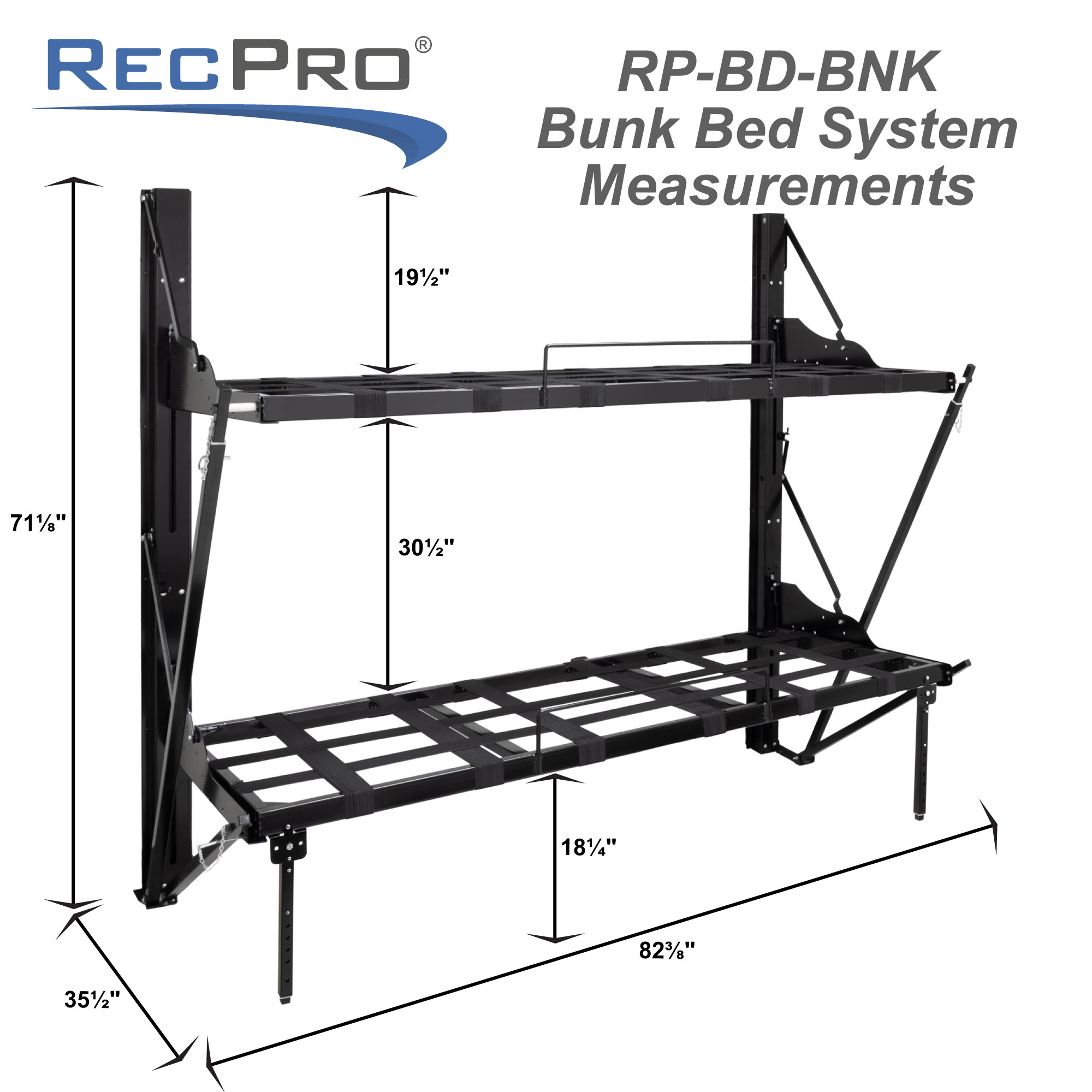
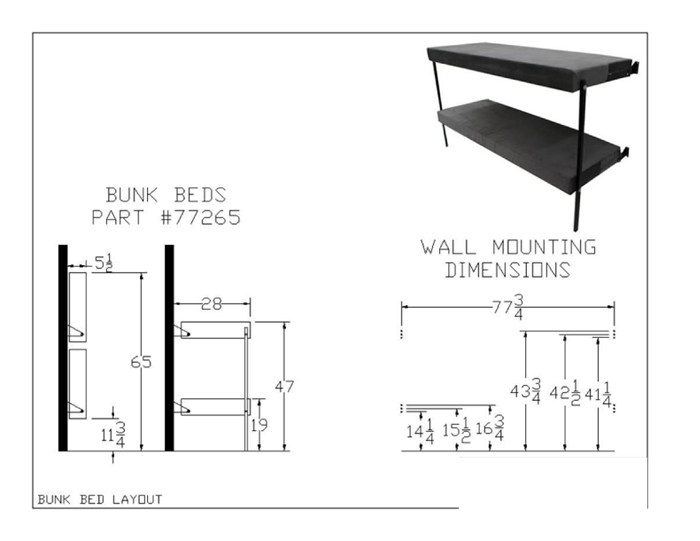
Camper bunk beds usually come in smaller sizes than home beds. The most common length is about 75 inches, which fits most campers well. Widths vary from 28 to 34 inches, smaller than a regular twin bed. This size helps save space without losing comfort. Some campers use shorter or narrower bunks to fit tight spaces. It is important to measure your camper’s available space before buying.
Types Of Camper Bunk Beds
Different styles of camper bunk beds suit different needs. Traditional bunk beds stack two beds vertically to save floor space. Some campers use slide-out bunk beds that extend when parked. Convertible bunks can change into seating or storage when not used for sleeping. Others have fold-down or fold-up bunks attached to the wall. Each type maximizes space and adds flexibility to your camper layout.
Measuring Your Camper Space
Measuring your camper space is the first step to choosing the right bunk bed size. It helps ensure the bed fits well without crowding the area. Accurate measurements make your camper safe and comfortable for everyone.
Take your time to measure carefully. Check all dimensions before buying or building a bunk bed. Knowing your space limits prevents mistakes and saves money.
Available Length And Width
Start by measuring the length of the area where the bunk bed will go. Use a tape measure for exact numbers. Measure from wall to wall or other obstacles nearby.
Next, measure the width of the space. This width must include room for bedding and some walking space. Compare these numbers to standard bunk bed sizes to find a good match.
Height Considerations
Measure the height from the floor to the ceiling above the bunk bed space. This helps avoid a cramped feeling or hitting the ceiling while sitting up.
Also, check the height of windows or vents that could affect the bunk bed placement. Proper headroom makes the bunk bed safe and cozy.
Standard Camper Bunk Bed Sizes
Standard camper bunk bed sizes help maximize space inside campers. They come in sizes that fit most campers easily. These beds offer a cozy place for sleeping without taking too much room. Knowing the right size helps in choosing the best fit for your camper.
Twin Size Options
Twin size camper bunk beds are the most common choice. They usually measure about 28 to 32 inches wide. The length is around 75 inches, similar to a regular twin bed. This size fits most campers and is good for kids and adults. Twin bunks save space but still offer enough room to sleep comfortably.
Custom And Compact Sizes
Some campers need smaller or unique bunk bed sizes. Custom sizes often range from 24 to 28 inches wide. Lengths can be shorter than standard twin beds, sometimes around 70 inches. Compact bunks fit in tight spaces and small campers. These beds help use every inch of space wisely.
Choosing The Right Mattress
Choosing the right mattress for your camper bunk bed is important for a good night’s sleep. The mattress must fit the bed size perfectly. It should offer enough support and comfort. This helps you rest well during camping trips. Knowing the mattress thickness and material can guide your choice.
Thickness And Comfort
Mattress thickness affects comfort and space in the bunk. Thicker mattresses feel softer but take up more room. Thin mattresses save space but may feel firm. A good thickness for camper bunk beds is usually 4 to 6 inches. This size balances comfort and space well. Consider how much padding you want before buying.
Material Choices
Mattresses come in different materials. Foam mattresses are lightweight and easy to handle. They offer good support and fit well in small spaces. Memory foam molds to your body, giving extra comfort. Innerspring mattresses are less common but offer firm support. Choose a material that suits your comfort needs and camper size.
Space-saving Tips
Maximizing space in a camper is key. Bunk beds can take up a lot of room. Smart design helps keep your camper cozy and open. Use clever ideas to save space without losing comfort.
Foldable And Convertible Beds
Foldable beds save a lot of space. They fold up against the wall when not in use. This opens the floor for other activities. Convertible beds change from a bed to a sofa. This dual use is perfect for small campers. Easy to use and quick to switch.
Storage Integration
Built-in storage under bunk beds is smart. Drawers and shelves keep your gear organized. It reduces clutter inside the camper. Using space under the bed means less need for extra furniture. A clean camper feels bigger and more comfortable.
Credit: www.laborkreis.de
Safety Features To Consider
Safety is very important for camper bunk beds. These beds are often used by kids or adults in small spaces. Proper safety features prevent falls and injuries. Checking these features helps you choose the best bunk bed for your camper.
Weight Limits
Each camper bunk bed has a weight limit. This limit keeps the bed strong and safe. Exceeding it can cause the bed to break. Always check the weight limit before use. This protects both the bed and the sleeper.
Guard Rails And Ladders
Guard rails stop sleepers from falling out. They should be tall and sturdy. Ladders must be easy to climb and firm. Poorly made ladders can cause slips or falls. Secure rails and ladders improve overall safety.
Installation And Maintenance
Installing and maintaining a camper bunk bed is important for safety and comfort. Proper setup ensures the bed stays strong during travel. Regular care helps the bed last longer and stay clean.
Secure Mounting Techniques
Use strong brackets and screws designed for camper beds. Attach the bunk bed frame tightly to the camper wall. Check that the mounting points hold the weight well. Avoid loose fittings that can cause wobbling. Test the bed’s stability before using it. Tighten all bolts after the first few uses to keep it secure.
Cleaning And Upkeep
Wipe the bunk bed frame regularly with a damp cloth. Remove dust and dirt to prevent damage. Use mild soap for tougher stains but avoid harsh chemicals. Check the mattress for moisture and air it out often. Look for signs of wear or damage on the bed. Fix small issues early to avoid bigger repairs later.

Credit: www.haircareclinic.net
Frequently Asked Questions
What Are The Standard Camper Bunk Bed Sizes?
Standard camper bunk beds typically measure 28 to 34 inches wide and 72 to 75 inches long. Sizes vary by manufacturer but often align with twin mattress dimensions for compact fitting in RVs.
How To Measure Camper Bunk Beds Accurately?
Measure the mattress length and width inside the camper. Use a tape measure from edge to edge. Account for mattress thickness and frame size for precise fitting.
Can Camper Bunk Beds Fit Full-size Mattresses?
Most camper bunk beds fit twin-size mattresses, not full-size. Full-size mattresses are usually too large for compact camper bunk spaces. Always check specific camper model dimensions.
Are Camper Bunk Beds Suitable For Adults?
Camper bunk beds are generally designed for children or smaller adults. Weight capacity and size vary, so verify manufacturer guidelines before adult use to ensure safety and comfort.
Conclusion
Camper bunk beds come in various sizes to fit different spaces. Most are smaller than regular beds but still comfortable. Knowing the size helps you plan your camper layout well. It also makes packing bedding easier. Always measure your camper space before choosing a bunk bed.
This ensures a good fit and better comfort. A well-sized bunk bed makes camping more enjoyable for everyone. Simple steps like these help create a cozy camper home.