Are you trying to figure out what size a camper bunk bed really is? Whether you’re planning your next adventure or upgrading your RV, knowing the right bunk bed size is key to comfort and space.
You want to make sure it fits just right—big enough to sleep well, but not so big it crowds your camper. Stick with me, and I’ll help you understand the exact measurements and what to look for, so you can make the best choice for your travel home.
Keep reading to get all the details you need!
Common Camper Bunk Bed Sizes
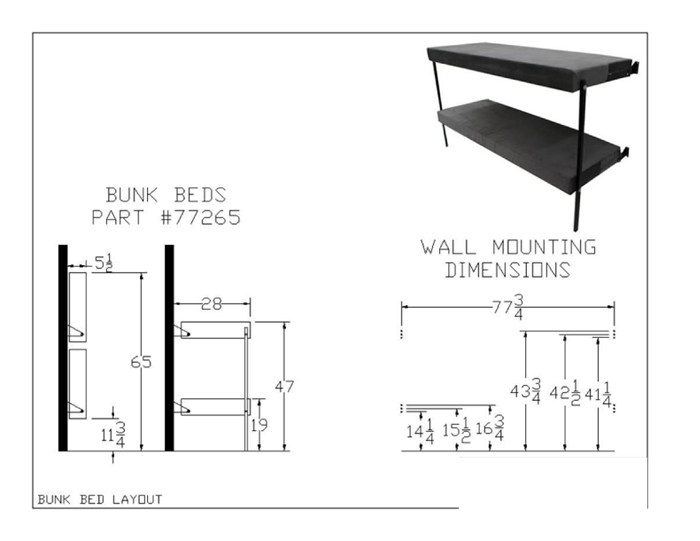
Measuring your camper space is the first step to choosing the right bunk bed size. Small spaces need exact measurements. This helps avoid buying a bed that does not fit. Take your time and use a tape measure for accuracy.
Measuring Length And Width
Start by measuring the length of the area where the bunk bed will go. Measure from wall to wall if possible. Then, measure the width of the space. Write down these numbers. Compare them with standard bunk bed sizes. This ensures the bed fits well without crowding.
Considering Height And Clearance
Measure the height from the floor to the ceiling. This space must allow enough room for the top bunk. Leave extra space above the top bunk for comfort. Check for low ceilings or overhead cabinets. These can limit how tall the bunk bed can be.
Accounting For Fixtures And Storage
Note any fixtures like windows, vents, or light switches near the bed space. These might affect where the bed can go. Also, measure built-in storage or shelves. Make sure the bed does not block them. Plan for easy access to these features before buying.
Credit: www.laborkreis.de
Measuring Your Camper Space
Choosing the right mattress for a camper bunk bed is important for a good night’s sleep. The mattress must fit well and feel comfortable. A mattress that is too big or small can cause problems. Comfort matters too, especially on the road. The right mattress helps you wake up refreshed and ready for the day.
Matching Mattress To Bunk Size
Measure the bunk bed before buying a mattress. Camper bunk beds come in different sizes. Common sizes include twin and short twin. The mattress must fit snugly to avoid gaps. Gaps can be unsafe and uncomfortable. Always check the exact length and width of the bunk bed.
Popular Mattress Types
Foam mattresses are lightweight and easy to move. They offer good support and comfort. Innerspring mattresses have coils inside for firmness. They can be heavier and less flexible. Memory foam molds to your body shape. It is soft but can trap heat. Choose a type that fits your sleeping style and camper space.
Mattress Thickness And Comfort
Thicker mattresses usually provide more comfort. But very thick mattresses might not fit well in some bunks. A mattress between 4 to 6 inches thick works best for most camper bunks. Thin mattresses save space but may feel hard. Balance thickness with comfort and space limits. Test the mattress before buying if possible.
Choosing The Right Mattress
Space-saving bunk bed designs are perfect for campers with limited room. These beds maximize sleeping space without crowding the camper. They help keep the camper organized and comfortable. Small campers benefit from smart designs that use every inch wisely.
Foldable And Convertible Bunks
Foldable bunk beds fold up against the wall during the day. This frees up floor space for other activities. Convertible bunks can change into sofas or tables. These designs make campers more flexible and practical. They offer comfort without taking permanent space.
Bunk Beds With Storage Solutions
Many camper bunk beds have built-in storage under the mattress. Drawers and shelves keep clothes, toys, or camping gear organized. This reduces clutter and makes packing easier. Storage bunk beds combine two needs in one smart piece of furniture.
Safety Features For Small Spaces
Safety is key with bunk beds in tight spaces. Guardrails prevent falls, even in a moving camper. Sturdy ladders with wide steps make climbing safe. Beds are built low to reduce injury risk. These features protect all campers, especially kids.

Credit: www.haircareclinic.net
Space-saving Bunk Bed Designs
Installing camper bunk beds requires careful planning. Proper installation ensures safety and comfort during your travels. Follow these tips to set up your bunk beds securely and make the most of your camper space.
Securing Bunks Safely
Attach bunk beds firmly to the camper wall. Use heavy-duty brackets or screws for strength. Check all joints and connections for tightness. Loose parts can cause accidents while driving or sleeping. Make sure guardrails are secure to prevent falls. Safety is the top priority when installing bunks.
Maximizing Stability
Place support beams under the bunk beds. These beams help spread weight evenly. Use corner braces to prevent wobbling. Avoid placing bunks in areas with too much movement. Keep the structure balanced to avoid tipping or shaking. Stability improves comfort and safety for everyone.
Tools And Materials Needed
Gather all tools before starting installation. You will need a drill, screwdriver, measuring tape, and level. Use screws designed for wood or metal frames. Have brackets and corner braces ready. Sandpaper helps smooth rough edges. A pencil and ruler assist with precise measurements. Preparing tools speeds up the process.
Credit: recpro.com
Frequently Asked Questions
What Are The Standard Dimensions Of A Camper Bunk Bed?
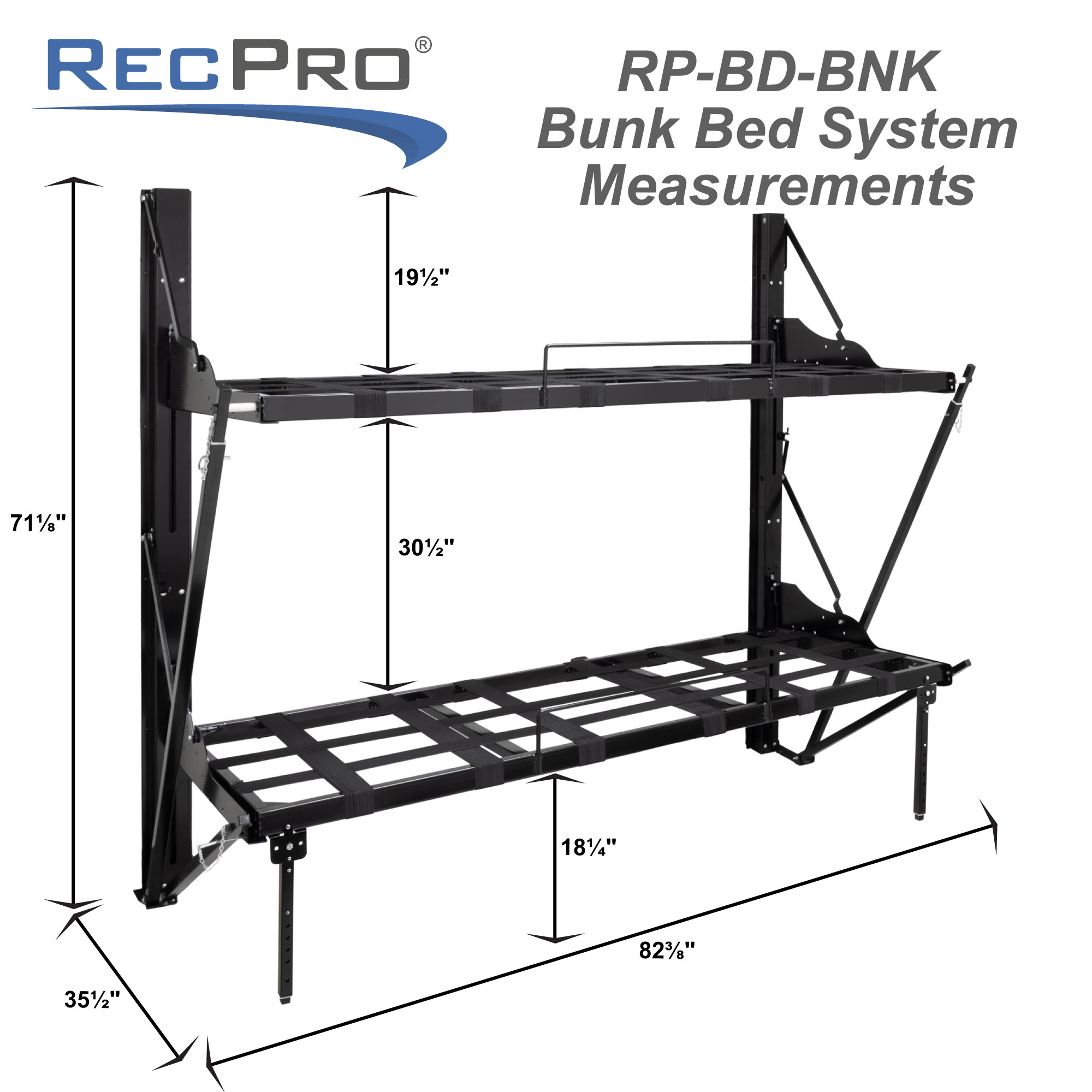
A camper bunk bed typically measures 28 to 34 inches wide and 75 to 80 inches long. Sizes vary by manufacturer but generally fit children or smaller adults comfortably.
How Do Camper Bunk Bed Sizes Compare To Regular Beds?
Camper bunk beds are narrower and shorter than standard twin beds. They maximize space in compact camper interiors while providing comfortable sleeping areas.
Can Camper Bunk Beds Fit Adults Comfortably?
Most camper bunk beds are designed for children or smaller adults. Some models offer longer and wider sizes to accommodate average adult dimensions.
Are Camper Bunk Bed Mattresses A Standard Size?
Camper bunk mattresses often differ from standard sizes and require custom or RV-specific mattresses. Measuring your bunk bed before purchasing is essential.
Conclusion
Camper bunk bed sizes vary but usually fit standard mattress dimensions. Knowing the right size helps plan your camper space well. Small campers often use twin or short twin beds. Larger campers might have full-size bunks for more comfort. Measure your camper before buying a bunk bed.
This ensures a good fit and better sleep. Comfort and space go hand in hand in camper design. Choose wisely to enjoy your travels with restful nights.