Are your outdoor furniture pieces looking dull, dirty, or covered in grime? You might be wondering if pressure washing is a quick and effective way to bring them back to life.
But is it safe for your furniture? Can it cause damage or make things worse? You’ll discover exactly how pressure washing works on outdoor furniture, what you need to watch out for, and the best tips to get your patio set sparkling clean without risk.
Keep reading to learn how to protect your investment and enjoy fresh, inviting outdoor spaces all year round.
Benefits Of Pressure Washing Outdoor Furniture
Pressure washing outdoor furniture offers many benefits. It removes dirt and grime quickly. This cleaning method saves time and effort. Outdoor furniture looks fresh and new after pressure washing. It also helps keep furniture in good condition longer.
Enhances Appearance
Pressure washing removes stains and mold. This makes furniture look clean and bright. It restores the original color of wood, metal, or plastic. Clean furniture improves the look of your outdoor space.
Prevents Damage
Dirt and mold can cause damage over time. Pressure washing removes these harmful elements. It stops wood from rotting and metal from rusting. This keeps furniture strong and safe for use.
Saves Time And Effort
Pressure washing cleans large areas fast. It reaches spots hard to clean by hand. This method requires less scrubbing and bending. You finish cleaning outdoor furniture quickly and easily.
Promotes Health
Mold and mildew can cause allergies and breathing problems. Pressure washing removes these allergens from furniture. This creates a healthier outdoor environment. It reduces the risk of illness for family and guests.
Credit: www.patioproductions.com
Types Of Outdoor Furniture Materials
Outdoor furniture comes in many materials. Each type needs different care. Knowing the material helps you clean it safely. Pressure washing can work well but might harm some surfaces.
Wood
Wood furniture looks warm and natural outside. Teak, cedar, and pine are common woods used. Wood can handle pressure washing but at low pressure. High pressure can cause splinters and damage. Always test a small spot first. Use gentle cleaning solutions made for wood.
Metal
Metal furniture is strong and lasts long. Aluminum and wrought iron are popular choices. Pressure washing removes dirt and rust easily on metal. Avoid high pressure on painted surfaces to stop peeling. Dry metal quickly after washing to prevent rust.
Plastic And Resin
Plastic and resin furniture is light and easy to move. These materials resist water and stains well. Pressure washing works great at medium pressure. Use a mild soap to avoid fading. Avoid high heat settings to keep plastic from warping.
Wicker And Rattan
Wicker and rattan give a classic outdoor look. Natural wicker is delicate and needs gentle cleaning. Synthetic wicker handles pressure washing better. Use low pressure and avoid soaking natural fibers. Let furniture dry fully to stop mold growth.
Choosing The Right Pressure Washer Settings
Choosing the right pressure washer settings matters a lot for cleaning outdoor furniture. The wrong settings can damage wood, plastic, or metal surfaces. Proper settings help remove dirt without harming the furniture. Understanding pressure levels, nozzle types, and water temperature makes cleaning safe and effective.
Pressure Levels
Pressure levels show how strong the water spray is. Low pressure works well for delicate materials like wood or wicker. Higher pressure suits tough surfaces like metal or plastic. Start with a low setting. Increase pressure slowly if needed. Avoid using very high pressure on soft furniture to prevent damage.
Nozzle Types
Nozzles change the shape and force of the water spray. Wide-angle nozzles spread water gently. Use them for fragile furniture parts. Narrow nozzles focus water in a small area. They clean stubborn stains but can harm soft surfaces. Choose nozzles based on the furniture’s material and dirt level.
Water Temperature
Water temperature affects cleaning power. Cold water is safe for most outdoor furniture. Warm water cleans grease and grime better. Avoid hot water on delicate materials to prevent warping or cracking. Match water temperature with the type of dirt and furniture material for best results.

Credit: www.youtube.com
Step-by-step Pressure Washing Process
Pressure washing outdoor furniture can restore its look quickly. Follow a clear process to clean safely and well. This step-by-step guide helps you get the best results. Each part is important to protect your furniture and your safety.
Preparing The Furniture
Remove cushions, pillows, and any loose items. Brush off dirt and leaves with a soft brush. Check for cracks or damage on the furniture. Cover any delicate parts or areas you don’t want wet. Place the furniture in an open space with good drainage.
Safety Precautions
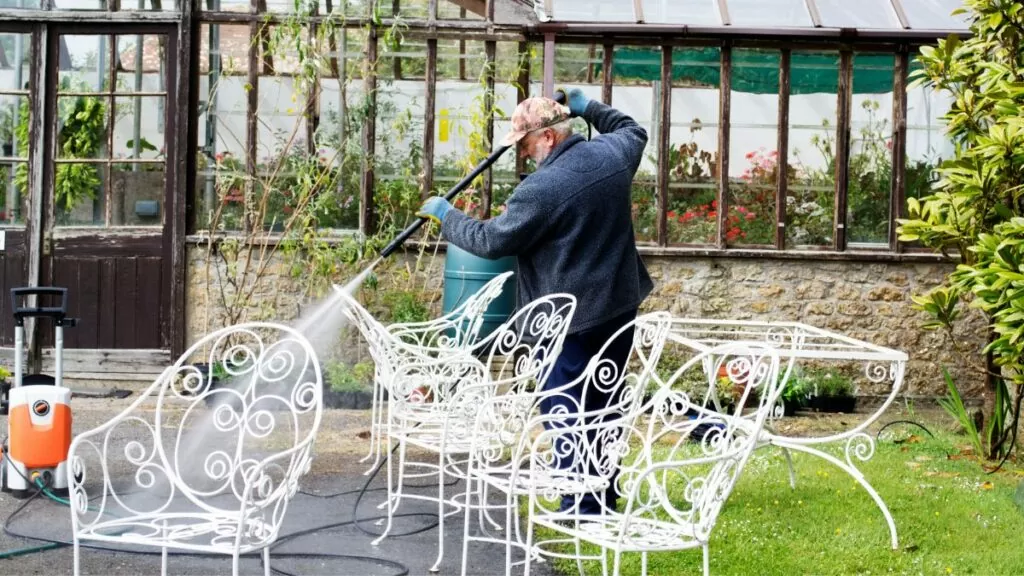
Wear safety glasses to protect your eyes. Use gloves to keep your hands safe. Wear closed shoes to avoid foot injuries. Keep children and pets away from the work area. Read the pressure washer manual before starting. Test the water pressure on a small area first.
Cleaning Techniques
Hold the pressure washer nozzle about 12 inches away. Use a wide spray to avoid damage. Move the spray in smooth, even strokes. Focus on one section at a time. Avoid staying too long on one spot. Rinse the furniture with clean water after washing.
Common Mistakes To Avoid
Pressure washing outdoor furniture can make it look fresh and clean fast. But mistakes happen easily. These errors can damage your furniture or leave it dirty. Avoid these common mistakes for better results and longer-lasting furniture.
Using Too Much Pressure
Too much pressure can harm your furniture’s surface. It may chip paint, scratch wood, or dent metal. Use a lower pressure setting for delicate materials. Test a small area before cleaning the whole piece.
Ignoring Material Sensitivity
Different materials need different care. Wood, plastic, metal, and wicker react differently to water and pressure. Some materials absorb water quickly and can crack. Know what your furniture is made of. Choose the right cleaning method for each type.
Skipping Protective Measures
Protect nearby plants and surfaces before you start. Cover electrical outlets and cushions. Wear safety glasses and gloves. These steps prevent accidents and damage. Prepare the area well to avoid unexpected problems.
Credit: www.thegoldhive.com
Maintenance Tips After Pressure Washing
Pressure washing outdoor furniture removes dirt and grime effectively. After washing, proper care keeps your furniture looking fresh longer. Follow these simple maintenance tips to protect your investment and extend its life.
Drying And Sealing
Allow the furniture to dry completely before use. Moisture can cause damage if trapped. Use a clean cloth to wipe off excess water. For wooden furniture, apply a sealant to protect the surface. Sealants prevent water damage and fading. This step is vital for durability and appearance.
Regular Cleaning Schedule
Set a routine to clean your furniture regularly. Light cleaning removes dust and prevents buildup. Use mild soap and water for quick touch-ups. Regular care reduces the need for harsh cleaning later. This saves time and keeps furniture in good shape.
Protective Covers
Use covers to shield furniture from weather and dirt. Covers prevent sun damage and moisture buildup. Choose breathable materials to avoid mold growth. Store furniture in a dry place when not in use. Covers extend the life of your outdoor pieces.
Alternative Cleaning Methods For Delicate Furniture
Delicate outdoor furniture needs gentle care to stay beautiful. Pressure washing may damage soft materials or detailed finishes. Alternative cleaning methods keep your furniture safe and clean. These options use mild tools and cleaners for better results. Choose a method that matches your furniture’s material and condition.
Hand Washing
Hand washing is the safest way to clean delicate furniture. Use a bucket of warm water mixed with mild soap. Dip a soft cloth or sponge into the solution. Gently wipe the surface without scrubbing hard. This method removes dirt without harming the finish or fabric.
Soft Brushes And Cloths
Soft brushes help clean textured or woven furniture gently. Select brushes with soft bristles to avoid scratches. A microfiber cloth works well for smooth surfaces. Use slow, circular motions to lift dirt and dust. This technique cleans deep without rough rubbing.
Eco-friendly Cleaners
Eco-friendly cleaners protect both furniture and the environment. Choose natural ingredients like vinegar or baking soda. These cleaners break down grime without harsh chemicals. Spray lightly and wipe with a soft cloth. Your furniture stays fresh and safe for outdoor use.
Frequently Asked Questions
Can Pressure Washing Damage Outdoor Furniture?
Pressure washing can damage delicate furniture if the pressure is too high. Use a low-pressure setting and test a small area first to avoid harm.
What Pressure Level Is Safe For Outdoor Furniture?
A pressure between 500 to 1200 PSI is generally safe for most outdoor furniture. Always adjust based on material and manufacturer recommendations.
Is Pressure Washing Effective For Removing Mold On Furniture?
Yes, pressure washing effectively removes mold and mildew from outdoor furniture surfaces, making them clean and safe.
Can All Types Of Outdoor Furniture Be Pressure Washed?
No, metal, plastic, and treated wood furniture are suitable, but delicate wood or fabric cushions may get damaged by pressure washing.
Conclusion
Pressure washing can clean outdoor furniture well and fast. Use low pressure to avoid damage. Test a small spot first to see how it reacts. Always follow the furniture’s care instructions. Regular cleaning keeps furniture looking fresh and lasts longer.
Simple steps can make a big difference. Keep your outdoor space neat and inviting with safe cleaning.