Looking for a simple, affordable way to organize your books? You don’t need fancy furniture or a big budget.
With just some cardboard boxes and a little creativity, you can build your own sturdy bookshelf. Imagine having a custom storage solution that fits perfectly in your space and shows off your style. In this guide, you’ll discover easy steps to make a cardboard box bookshelf DIY that looks great and holds all your favorite reads.
Ready to turn ordinary boxes into something amazing? Let’s get started!

Credit: www.youtube.com
Materials Needed
Before starting your cardboard box bookshelf DIY, gather all materials. Having the right supplies makes the project smooth and fun. This section covers the basics you need to build a sturdy, attractive bookshelf.
Choosing The Right Cardboard
Select thick, strong cardboard for best results. Double-wall or triple-wall boxes work great. Avoid thin or damaged pieces that might bend or break. Large flat sheets help create clean, straight shelves. Use clean cardboard without prints for a neat look.
Essential Tools
You need a sharp utility knife to cut cardboard precisely. A metal ruler helps make straight lines. Use a pencil to mark measurements clearly. Hot glue or strong craft glue holds parts together firmly. Scissors are useful for smaller cuts and trimming edges. A cutting mat protects surfaces and keeps cuts safe.
Optional Decorative Supplies
Paints add color and style to your bookshelf. Use acrylic or spray paint for easy application. Washi tape or colored paper can create fun patterns. Stickers or stencils personalize your design. Seal with clear varnish to protect the decoration. Sandpaper smooths rough edges for a polished finish.
Planning Your Bookshelf
Planning your cardboard box bookshelf is the first step to a successful DIY project. Careful planning saves time and materials. It helps create a sturdy and attractive shelf. This section guides you through measuring, designing, and sketching your bookshelf.
Measuring Space And Dimensions
Start by measuring the space where the bookshelf will go. Use a tape measure to get accurate width, height, and depth. Note these numbers down. Consider space for books and decorations. Leave some extra room for easy access and air circulation.
Designing The Layout
Think about how many shelves you want. Decide the height between each shelf based on book sizes. Include different shelf sizes for variety. Keep the structure balanced to avoid tipping. Plan for a strong base to support weight.
Sketching Your Blueprint
Draw your bookshelf on paper or use a digital tool. Start with the outer frame. Add shelves inside with correct spacing. Label each part with measurements. This blueprint guides cutting and assembly. It prevents mistakes and saves cardboard.
Cutting And Shaping Cardboard
Cutting and shaping cardboard is a key step in building your DIY bookshelf. It sets the foundation for a strong and neat structure. Proper cutting ensures your pieces fit well and the shelf holds its shape. Taking time to measure and cut carefully makes the whole project easier and more enjoyable.
Marking Pieces Accurately
Start by measuring your cardboard carefully. Use a ruler or tape measure for straight lines. Mark each piece clearly with a pencil. Double-check your marks before cutting. Accuracy here means your pieces will fit together tightly. This step helps avoid waste and saves time later.
Safe Cutting Techniques
Use a sharp utility knife or box cutter for clean cuts. Cut on a flat, sturdy surface to avoid slips. Keep your fingers away from the blade path. Make light, repeated cuts instead of one deep cut. This method reduces mistakes and keeps edges neat. Always cut slowly and with control.
Creating Support Structures
Support pieces add strength to your bookshelf. Cut extra strips of cardboard for braces and shelves. Fold some pieces into triangles or rectangles for better support. Glue or tape these inside the main frame. Strong supports help the shelf hold heavy books safely. Plan where to place supports before attaching them.
Assembling The Bookshelf
Assembling your cardboard box bookshelf is a fun and rewarding step. It brings your project to life and creates a useful piece for your space. Careful assembly ensures your bookshelf stays strong and looks great.
Joining Pieces Securely
Start by aligning the cardboard pieces properly. Use strong glue or double-sided tape to join edges. Hold pieces together until the glue sets well. Avoid gaps between pieces to keep the structure tight. Secure corners firmly for better support.
Reinforcing For Stability
Add extra cardboard strips inside corners for strength. Tape or glue these strips firmly in place. Reinforce the bottom and back panels to prevent bending. Use multiple layers if needed to handle heavy books. Stability keeps your bookshelf safe and lasting.
Adding Shelves And Compartments
Cut shelves to fit the inside width of the bookshelf. Attach shelves evenly to create balanced compartments. Use glue and tape on both sides for secure hold. Check shelf levels with a ruler or straight edge. Create compartments for different book sizes or items.
Decorating Ideas
Decorating your cardboard box bookshelf makes it unique and fun. It turns a simple DIY project into a stylish piece for your room. Use easy techniques to make your bookshelf stand out. Choose colors and patterns that match your style. Small details can make a big difference in the final look.
Painting And Finishing
Painting is the simplest way to decorate your bookshelf. Use acrylic or spray paint for bright, even colors. Apply a primer first to help paint stick better. Let each layer dry before adding another. Finish with a clear coat to protect the paint. This also gives a smooth, shiny look.
Using Wrapping Paper Or Fabric
Wrapping paper adds color and patterns without much effort. Cut paper to fit the shelves and glue it carefully. Use a brush to smooth out air bubbles. Fabric works well for a soft, textured look. Attach fabric with glue or double-sided tape. Both materials are easy to change later.
Adding Personal Touches
Personal touches make your bookshelf truly yours. Add stickers, washi tape, or small decals. Write quotes or draw simple designs with markers. Attach small hooks or knobs for extra function and style. Use photos or postcards to decorate the shelves. These details reflect your personality and taste.
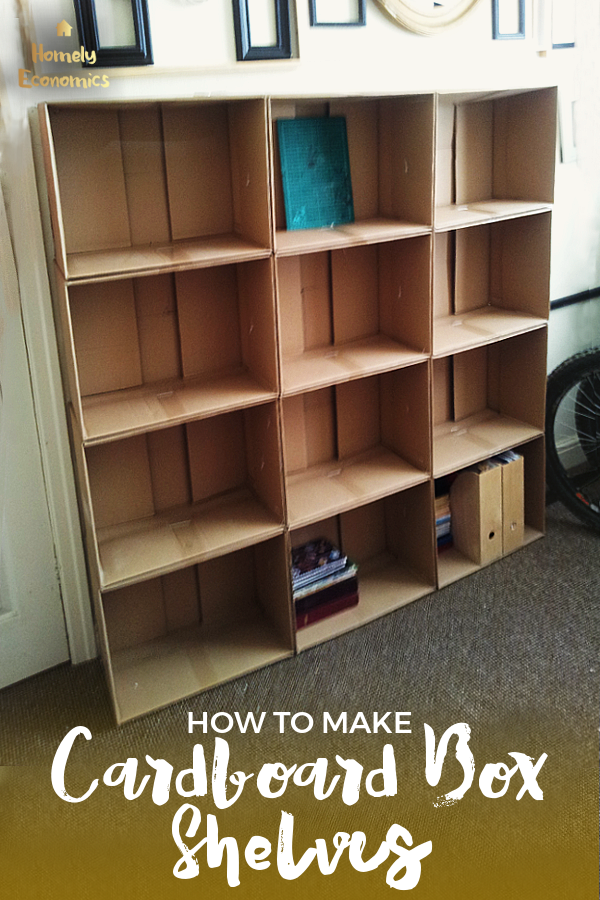
Credit: homelyeconomics.com
Tips For Durability
Building a cardboard box bookshelf is fun and eco-friendly. To keep it strong and lasting longer, follow some smart tips. These tips help protect your shelf from damage and keep it steady.
Durability is key for a useful bookshelf. Small steps can make a big difference in how long your shelf lasts.
Protecting Against Moisture
Cardboard can weaken when wet. Keep your shelf away from damp places. Use a clear waterproof spray to coat the surface. This spray stops water from soaking in. Let the shelf dry fully after spraying. Avoid placing drinks or plants directly on the shelf.
Weight Distribution Advice
Place heavier books at the bottom shelves. This balance prevents the shelf from tipping or bending. Avoid overloading any one section with too many books. Spread items evenly to keep the shape stable. Use smaller boxes inside for extra support if needed.
Maintenance And Repairs
Check your shelf often for wear and tear. Fix small tears with strong tape or glue. Replace any parts that get too weak or damaged. Dust the shelf regularly to keep it clean. Regular care helps your shelf stay useful longer.
Creative Variations
Creative variations make your cardboard box bookshelf unique and fun. They let you match your style and needs. Experimenting with different ideas can turn a simple shelf into a special piece. Here are some ideas to inspire your DIY project.
Modular Designs
Modular designs use separate boxes that fit together. You can change their arrangement anytime. Stack them vertically or spread them horizontally. This flexibility helps you adjust shelf size and shape. It works well for small or large spaces. Easy to add or remove boxes as needed.
Themed Bookshelves
Themed bookshelves add personality to your room. Paint or decorate boxes to match a theme. Use colors or patterns from your favorite movies or books. Add stickers or cutouts for extra detail. Themes make shelves more fun and eye-catching. Great for kids’ rooms or creative spaces.
Multi-functional Uses
Multi-functional shelves save space and serve more than one purpose. Use boxes as shelves and storage bins. Add cushions on top for seating or a small table surface. Combine shelves with hooks for hanging keys or bags. A multi-use bookshelf fits many needs in one spot.

Credit: sonshinemumma.blogspot.com
Frequently Asked Questions
What Materials Do I Need For A Cardboard Bookshelf Diy?
You need sturdy cardboard, a cutting tool, glue, ruler, and pencil. Optional items include paint or decorative paper for finishing. Choose thick cardboard for durability and stability in your bookshelf.
How Do I Make A Sturdy Cardboard Bookshelf?
Use multiple cardboard layers glued together for strength. Reinforce edges with extra strips. Allow glue to dry fully before use. Proper layering ensures your bookshelf supports books safely.
Can I Customize The Size Of My Cardboard Bookshelf?
Yes, measure your available space first. Cut cardboard pieces according to desired dimensions. Custom sizes fit any room and meet your storage needs perfectly.
How Long Does It Take To Build A Cardboard Bookshelf?
Typically, 2 to 4 hours, including cutting, assembling, and drying time. Drying glue properly is essential for durability. Time varies with complexity and size of the bookshelf.
Conclusion
Building a cardboard box bookshelf is simple and fun. You only need a few materials and some time. This project saves money and helps organize your space. You can paint or decorate the shelves as you like. It also teaches basic crafting skills.
Try making one to enjoy a creative and useful piece at home. Keep practicing to make stronger and better designs. This DIY idea suits all ages and skill levels. Start today and see how easy it is!