
Are you tired of messy linen closets and struggling to find space for your towels and sheets? Building your own linen storage cabinet can be the perfect solution.
Imagine having a neat, stylish place to keep everything organized and within reach. In this guide, you’ll discover simple steps to create a storage cabinet that fits your space and style. Whether you’re a beginner or have some DIY experience, you’ll find easy-to-follow tips that make the process enjoyable and rewarding.
Let’s get started and transform your clutter into calm with a linen cabinet you’ll be proud of.
Planning Your Linen Cabinet
Planning your linen cabinet is the first step to a successful build. Careful thought here saves time and effort later. It helps create a cabinet that fits your space and needs perfectly.
Consider size, materials, and design to make the cabinet both useful and attractive. A good plan leads to a strong and lasting linen storage solution.
Choosing The Right Size
Measure the space where the cabinet will go. Think about how much linen you have now and what you might add later. A cabinet too small fills up fast. Too big wastes space and money.
Think about shelf height too. Towels, sheets, and blankets need different shelf sizes. Plan shelves to fit your linen without bending or squeezing.
Selecting Materials
Pick materials that are strong and easy to clean. Wood is popular for its look and durability. Plywood or solid wood works well for shelves and frame.
Consider moisture and humidity in the room. Choose materials that resist mold and damage. Paint or seal wood for extra protection.
Designing For Functionality
Think about how you will use the cabinet daily. Open shelves make it easy to grab items fast. Doors keep dust out and give a neater look.
Add features like adjustable shelves or baskets. They help organize different linen types better. Good lighting inside or near the cabinet improves visibility.
Gathering Tools And Supplies
Before starting to build your linen storage cabinet, gather all the necessary tools and supplies. Having everything ready will make the project smoother and faster. This step ensures you do not stop midway to find missing items. It also helps in planning the work better. Below is a clear list of what you need.
Essential Tools List
- Measuring tape for accurate dimensions
- Power drill for drilling holes and screwing
- Screwdriver set for tightening screws
- Circular saw or handsaw for cutting wood
- Clamps to hold pieces steady
- Sandpaper or electric sander for smooth edges
- Carpenter’s square to keep corners right-angled
- Pencil for marking measurements
- Level to check even surfaces
Recommended Materials
- Quality plywood or solid wood boards
- Wood screws or nails
- Wood glue for strong joints
- Paint or wood stain for finishing
- Cabinet hinges and handles
- Wood filler to cover holes or gaps
Safety Gear
- Safety glasses to protect your eyes
- Work gloves to protect your hands
- Ear protection if using loud power tools
- Dust mask to avoid inhaling sawdust
- Proper clothing to avoid loose items near tools
Cutting And Preparing Wood
Cutting and preparing wood is the first step in building a sturdy linen storage cabinet. This stage sets the foundation for the entire project. Accurate cuts and smooth surfaces ensure the cabinet fits well and looks professional. Take your time to measure, cut, and sand each piece carefully. Proper preparation saves effort later and helps the cabinet last longer.
Measuring And Marking
Start by measuring the wood pieces with a tape measure. Mark the exact lengths using a pencil. Double-check each measurement before marking. Use a square to keep lines straight. Clear and accurate marks guide your cuts. This step prevents mistakes and wasted wood.
Cutting Techniques
Use a saw suitable for the wood type. A circular saw works well for straight cuts. Cut slowly along the marked lines. Keep your hand steady and follow the guide. Always wear safety glasses and gloves. Clean cuts fit better and require less sanding.
Sanding For Smoothness
Sand all cut edges to remove splinters. Use medium-grit sandpaper first, then fine-grit for a smooth finish. Sand along the wood grain to avoid scratches. Smooth edges help the cabinet parts fit tightly. They also improve the cabinet’s appearance and safety.
Assembling The Cabinet Frame
Building the frame is the first step to create your linen storage cabinet. It forms the strong base for the entire cabinet. Take your time to assemble it carefully for better results.
Joining The Sides And Back
Start by aligning the side panels with the back panel. Use screws or nails to fix them together. Make sure edges meet evenly. This connection creates the cabinet’s main shape.
Use clamps to hold panels steady. This helps prevent movement while fixing them. Check the instructions for proper screw placement.
Securing The Base
Attach the base panel to the bottom edges of the sides and back. Use screws or wood glue for a firm hold. The base supports the cabinet’s weight and contents.
Ensure the base fits snugly without gaps. Press firmly before tightening screws. A secure base keeps the cabinet stable over time.
Checking For Squareness
After joining, check the frame’s squareness. Use a carpenter’s square or measure diagonals. Both diagonals should be equal for a square frame.
Adjust panels if needed before screws fully tighten. A square frame ensures doors and shelves fit correctly. This step improves the cabinet’s overall strength and look.
Building Shelves And Doors
Building shelves and doors is a key part of making your linen storage cabinet useful and neat. Shelves hold your linens, towels, and extra blankets. Doors keep dust out and help the cabinet look tidy. This section will guide you through creating adjustable shelves, making cabinet doors, and attaching hardware easily.
Creating Adjustable Shelves
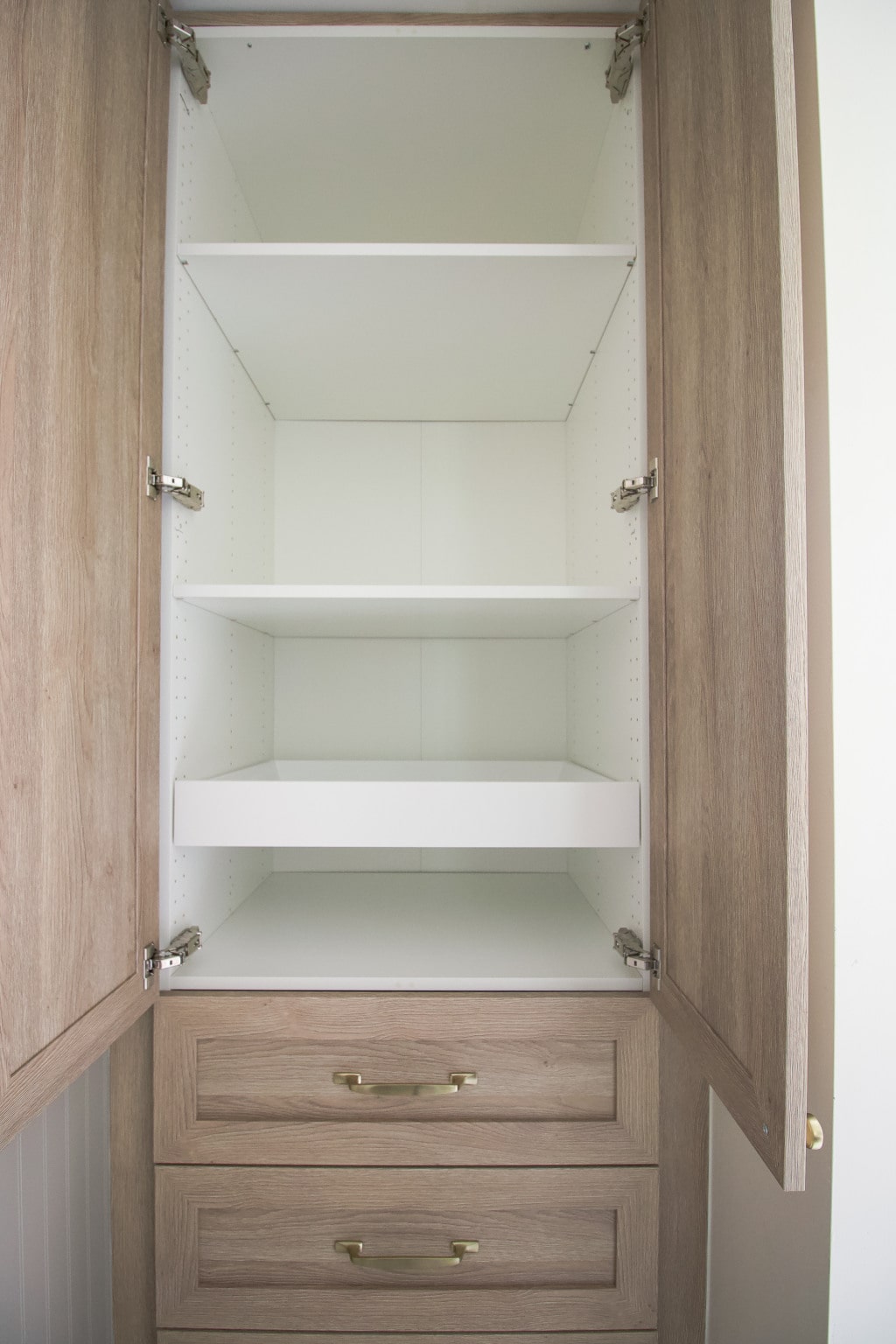
Start by measuring the inside width and depth of your cabinet. Cut shelf boards to fit these dimensions. Use plywood or solid wood for strong shelves. Drill holes along the cabinet sides for shelf pins. Space holes evenly for flexibility. Insert pins and place shelves on them. This lets you move shelves up or down. Adjustable shelves fit different linen sizes well.
Constructing Cabinet Doors
Choose wood that matches the cabinet frame. Cut two door panels to the cabinet height and width. Sand edges smooth for a clean look. Join stiles and rails with wood glue and clamps. Add a center panel if desired for style. Let glue dry completely. Check that doors fit the cabinet opening. Trim edges if doors are too big. Doors should open and close without sticking.
Attaching Hardware
Pick hinges that support the door size and weight. Mark hinge positions on the door and cabinet frame. Pre-drill screw holes to avoid splitting wood. Attach hinges to the door first. Then secure the door to the cabinet frame. Install handles or knobs at a comfortable height. Tighten all screws firmly. Test door movement and adjust if needed. Proper hardware makes doors easy to use and durable.
Credit: thediyplaybook.com
Finishing Touches
Finishing touches make your linen storage cabinet look complete and polished. These final steps protect the wood and add style. They also help the cabinet fit well in your space. Small details create a big impact.
Painting Or Staining
Choose paint or stain to match your room’s style. Paint offers bright colors and smooth finishes. Stain shows the wood grain and adds warmth. Apply thin, even coats for the best result. Let each coat dry fully before adding the next. Sand lightly between coats for a smooth surface.
Adding Handles And Knobs
Handles and knobs make the cabinet easy to open. Pick styles that match your décor and cabinet design. Measure carefully to place them evenly. Use a drill to make holes for screws. Attach the handles or knobs tightly. These small pieces add charm and function.
Installing The Cabinet
Find the perfect spot for your cabinet in the room. Use a level to keep it straight. Secure the cabinet to the wall with screws and anchors. This keeps it safe and steady. Check the doors open and close smoothly. Installation completes your project and makes it ready to use.
Maintaining Your Linen Storage
Maintaining your linen storage cabinet keeps it looking fresh and working well. Clean and organized storage helps protect your linens. Simple care steps extend the life of your cabinet and its contents.
Cleaning Tips
Dust your cabinet often using a soft cloth. Wipe spills quickly to avoid stains. Use mild soap and water for deeper cleaning. Avoid harsh chemicals that can damage the finish. Let the cabinet dry fully before placing linens back.
Organizing Ideas
Sort linens by type and size for easy access. Use baskets or bins to keep items neat. Label shelves or containers to find things fast. Fold linens uniformly to save space. Rotate items to use older linens first.
Preventing Wear And Tear
Keep the cabinet away from direct sunlight to avoid fading. Avoid overloading shelves to prevent sagging. Use drawer liners to protect surfaces from scratches. Check hinges and handles regularly for tightness. Repair small issues quickly to stop bigger problems.
Credit: jaimecostiglio.com

Credit: pineandpoplar.com
Frequently Asked Questions
What Materials Are Needed To Build A Linen Storage Cabinet?
You need plywood, screws, wood glue, hinges, handles, and paint or stain. A saw and drill are essential tools. Choose durable materials for lasting storage and a polished finish.
How Do I Design A Linen Storage Cabinet?
Measure your space and plan shelves based on linen sizes. Include adjustable shelves for versatility. Design doors for easy access and ventilation to keep linens fresh.
What Is The Best Wood For A Linen Storage Cabinet?
Plywood or hardwood like oak and maple are best. They offer durability and a smooth finish. Avoid softwoods that may dent or warp over time.
How Do I Finish And Protect A Linen Storage Cabinet?
Sand all surfaces smoothly. Apply primer, then paint or stain. Finish with a clear sealant for protection against moisture and wear, ensuring longevity.
Conclusion
Building a linen storage cabinet takes some planning and care. Choose the right materials and tools before you start. Follow each step slowly and carefully for best results. A sturdy cabinet keeps your linens neat and easy to find. This project adds useful storage and saves space.
Enjoy the pride of making something with your own hands. With patience, anyone can build a simple, strong cabinet. Give it a try and see how satisfying it feels. Your home will thank you for the extra order.


