Are you tired of your old bookshelf blending into the background? Changing its color can give your room a fresh, exciting look without the cost of a new piece.
Whether you want a bold splash of color or a subtle update, you’re just a few simple steps away from transforming your bookshelf into a statement piece. Keep reading, and you’ll discover easy tips and tricks that make the process fun and stress-free—so your bookshelf will stand out exactly the way you want it.

Credit: shereads.com
Choosing The Right Color
Choosing the right color for your bookshelf is important. It changes the whole look of your room. The right color can make your space feel warm, bright, or calm. Think about how the color will match your room and your style. This helps you pick a color that fits well and makes your bookshelf stand out or blend in.
Matching Your Room’s Style
Look at the colors already in your room. Choose a color that goes well with your walls, floor, and furniture. For a modern room, use cool tones like gray or blue. For a cozy room, warm colors like red or brown work best. You can also pick a color that matches your favorite items on the shelf. This keeps the room feeling balanced and nice.
Picking Paint Types
There are different paint types for wood furniture. Latex paint is easy to use and cleans up with water. It dries fast and has less smell. Oil-based paint is strong and smooth but takes longer to dry. Chalk paint gives a matte, vintage look. Choose a paint type that fits your skill level and the look you want.
Considering Finish Options
Finish changes how the paint looks and feels. Matte finish is soft and hides flaws well. Satin finish has a slight shine and is easy to clean. Glossy finish is shiny and shows every detail. Think about how much you will use the bookshelf. For high use, satin or glossy finishes last longer and clean easier.
Preparing The Bookshelf
Preparing the bookshelf is the first step to a fresh new look. It helps the paint stick well and last longer. Taking time to prepare saves effort later. Follow clear steps to get your bookshelf ready for painting.
Cleaning And Sanding
Start by cleaning the bookshelf. Use a damp cloth to remove dust and dirt. Make sure the surface is dry before sanding. Sand the wood gently with fine-grit sandpaper. This removes old paint and smooths rough spots. Sanding helps the new paint stick better.
Removing Hardware
Take off any knobs, handles, or other hardware. Use a screwdriver to remove screws carefully. Keep the hardware safe in a small container. Removing hardware prevents paint from sticking to it. It also makes painting easier and cleaner.
Protecting Surrounding Areas
Cover the floor and nearby furniture with a drop cloth. Use painter’s tape to protect edges and walls. This stops paint from splashing where you don’t want it. Protecting the area saves time cleaning up later.
Painting Techniques
Changing the color of a bookshelf with paint brings new life to old furniture. The right painting techniques make the finish smooth and long-lasting. Careful steps help paint stick well and look beautiful. Follow these simple methods for best results.
Priming The Surface
Start with a clean and dry bookshelf. Use sandpaper to smooth rough spots. Apply a primer to cover old paint or stains. Primer helps the new paint stick better. Let the primer dry completely before painting.
Applying Base Coats
Choose a high-quality paint for your base coat. Use a brush or roller for even coverage. Paint in thin, smooth layers to avoid drips. Cover all visible areas of the bookshelf. Allow the base coat to dry fully before adding more paint.
Adding Additional Coats
Apply extra coats for deeper color and better coverage. Let each coat dry before applying the next. Lightly sand between coats for a smooth finish. Two or three coats usually give the best look. Finish with a clear sealant for protection if needed.

Credit: www.youtube.com
Alternative Coloring Methods
Changing the color of a bookshelf does not always mean using paint. Alternative methods can give a unique look and feel. These options can highlight the wood grain or add texture. They often require less preparation and dry faster than traditional paint.
Explore different techniques to find one that suits your style. Each method can bring new life to your old bookshelf.
Using Stain Instead Of Paint
Stain soaks into the wood, showing its natural pattern. It enhances the grain and gives a rich, warm tone. Choose from light to dark shades for different effects. Staining is easy and fast to apply with a cloth or brush. It also protects the wood better than plain paint.
Applying Chalk Paint
Chalk paint creates a soft, matte finish. It sticks well to surfaces without much sanding. This paint covers imperfections and works great on old furniture. You can distress chalk paint for a vintage look. A top coat seals and protects the finish.
Decorative Finishes
Decorative finishes add texture and style to your bookshelf. Try techniques like sponging, rag rolling, or color washing. These create interesting patterns and depth. Metallic or pearl finishes add shine and elegance. Use clear wax or varnish to protect the surface.
Finishing Touches
After painting your bookshelf, the final steps make a big difference. These finishing touches protect your work and bring the piece together. They ensure the paint lasts long and looks great.
Careful attention now means your bookshelf stays beautiful for years. Small details like sealing and reattaching hardware complete the project perfectly.
Sealing The Paint
Apply a clear sealer over the painted surface. It protects the paint from scratches and moisture. Choose a sealer that matches your paint type, like water-based or oil-based. Use a brush or spray for even coverage. Allow the first coat to dry, then add a second coat for extra protection.
Reattaching Hardware
Remove any tape or coverings from handles and knobs. Check if screws or nails need tightening. Reattach the hardware carefully to avoid damaging the paint. Clean the hardware before putting it back. This step helps the bookshelf look neat and complete.
Curing Time And Care
Let the paint cure fully before using the bookshelf. This can take several days depending on the paint and sealer. Avoid heavy items or rough use during this time. Keep the shelf in a dry, well-ventilated area. Proper curing ensures the finish stays smooth and durable.
Maintaining Your Bookshelf
Maintaining your bookshelf keeps it looking fresh and new. Small efforts can extend its life and beauty. Regular care helps preserve the color and finish you worked hard to achieve. Simple steps prevent damage and keep your shelf sturdy for years.
Cleaning Tips
Dust your bookshelf often using a soft cloth. Avoid wetting it with water; use a dry or slightly damp cloth instead. Use mild soap and water for stubborn stains but dry the surface quickly. Avoid harsh chemicals that can strip the paint or finish. Clean gently to keep the color bright and smooth.
Touch-up Techniques
Keep a small amount of the paint or finish used. Use a fine brush to fix small scratches or chips. Apply thin layers and let each dry fully before adding more. Light sanding before touch-ups helps the paint stick better. Match the color closely to keep the repair invisible.
Preventing Damage
Place your bookshelf away from direct sunlight to avoid fading. Avoid placing heavy or sharp objects that can scratch the surface. Use coasters or mats under items that might cause stains. Keep the room humidity balanced to prevent wood warping. Handle the bookshelf gently when moving it to avoid cracks.
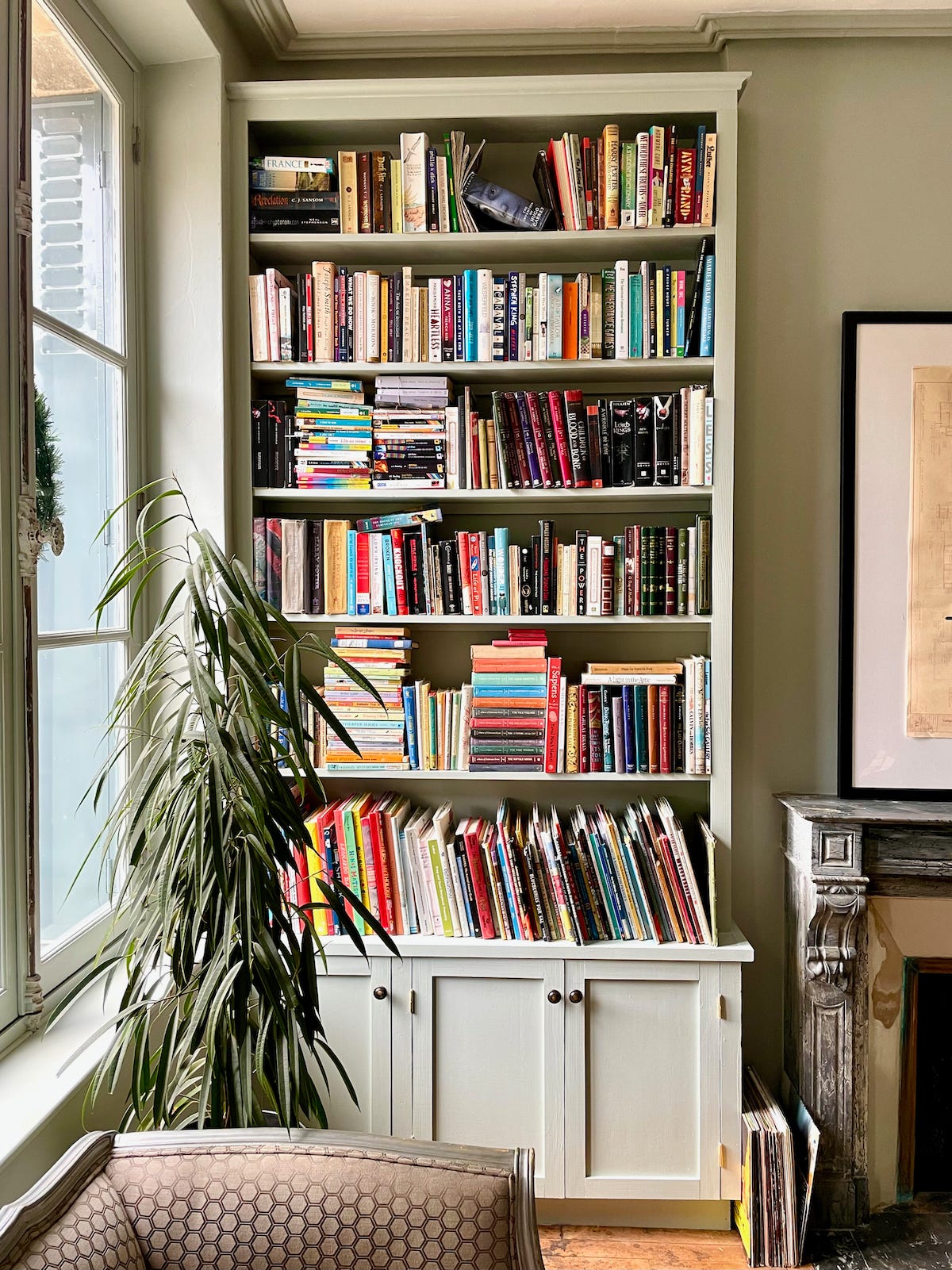
Credit: designmom.substack.com
Frequently Asked Questions
How Do I Prepare A Bookshelf For Painting?
Clean the surface thoroughly and remove dust or dirt. Sand the bookshelf lightly to smooth rough spots. Fill any holes or cracks with wood filler. Remove hardware like knobs or handles before painting. Proper preparation ensures better paint adhesion and a smooth finish.
What Type Of Paint Works Best For Bookshelves?
Use acrylic latex paint for durability and easy cleanup. Chalk paint is great for a matte, vintage look. Spray paint offers smooth, even coverage but requires ventilation. Choose paint suitable for wood and your desired finish, like glossy or matte.
Can I Change Bookshelf Color Without Sanding?
Yes, use a primer designed for glossy surfaces. Clean the bookshelf well before applying primer. Chalk paint can also adhere without sanding. However, light sanding improves paint adhesion and durability for long-lasting results.
How Long Should I Wait Between Paint Coats?
Wait at least 2-4 hours between coats for proper drying. Follow the paint manufacturer’s instructions for best results. Avoid rushing to prevent smudging or uneven texture. Multiple thin coats give a smoother, more durable finish.
Conclusion
Changing the color of a bookshelf is simple and fun. Choose a color that fits your room and style. Prepare the surface well to help the paint stick better. Use even strokes and let the paint dry fully. A fresh coat can brighten any space instantly.
Small changes make a big difference in home decor. Try this project to refresh your room today. Enjoy the new look and feel proud of your work.