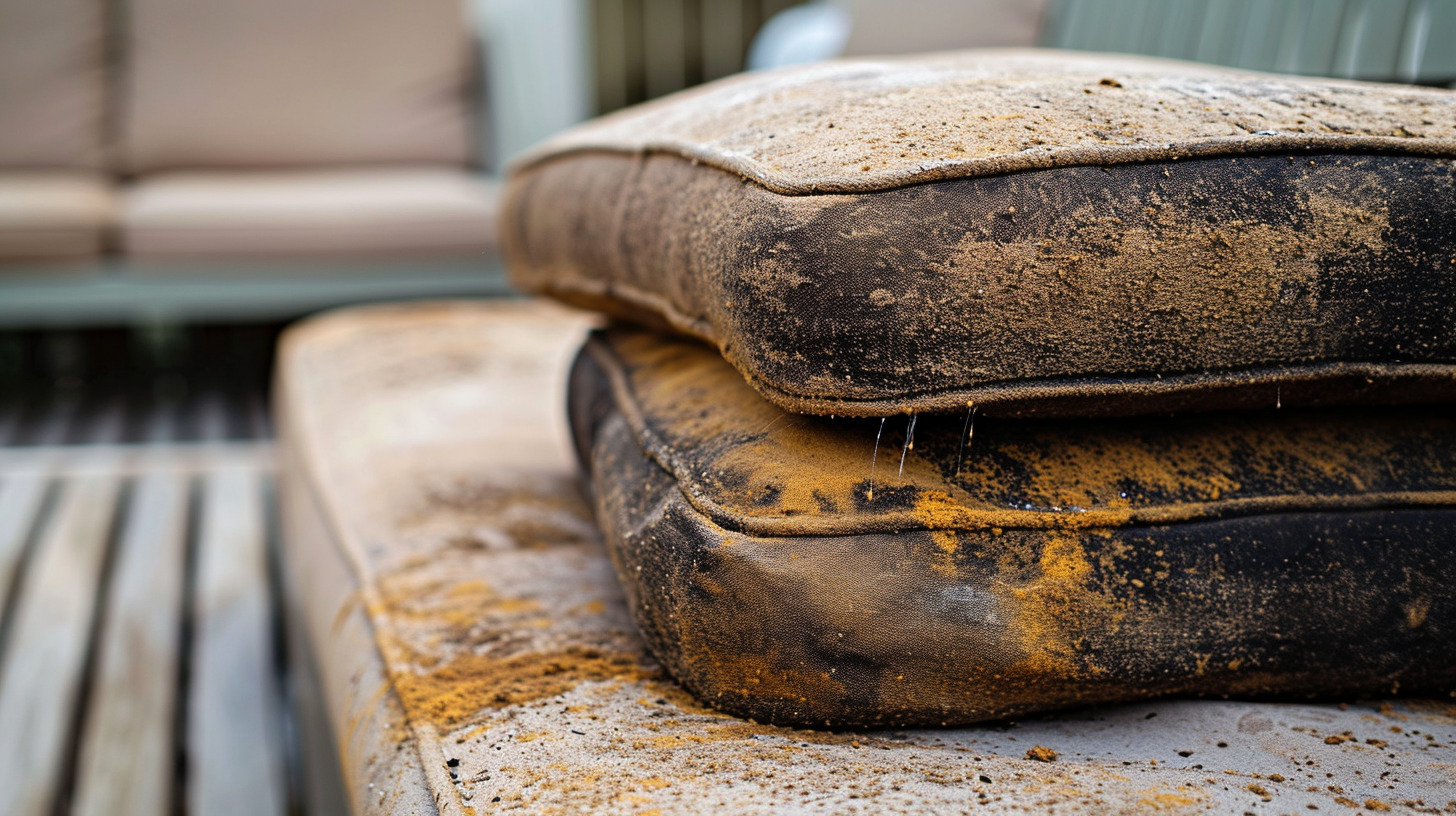
Are your outdoor furniture cushions looking moldy and unpleasant? Mold not only makes your cushions look bad but can also cause health issues if left untreated.
You might be wondering how to get rid of that stubborn mold without ruining your cushions. This guide will show you simple, effective steps to clean your moldy outdoor cushions and bring them back to life. Keep reading to learn how you can enjoy fresh, mold-free furniture again—your outdoor space deserves it!
Credit: www.furnituremaxi.com
Causes Of Mold On Outdoor Cushions
Mold grows on outdoor cushions for several reasons. Understanding these causes helps prevent future mold problems. Outdoor cushions face many conditions that encourage mold growth. Moisture, air flow, and fabric type all play roles in mold development.
Moisture And Humidity
Moisture is the main cause of mold on cushions. Rain, dew, or spills keep cushions wet. Humid weather keeps fabrics damp for long periods. Mold thrives in these wet, warm conditions. Cushions that do not dry quickly invite mold growth.
Poor Ventilation
Limited air flow traps moisture inside cushions. Cushions stored in closed spaces stay damp. Lack of sunlight also prevents drying. Without fresh air, mold spores find a perfect home. Good ventilation helps cushions stay dry and mold-free.
Material Types Prone To Mold
Some fabrics attract mold more than others. Natural fibers like cotton hold moisture longer. Foam fillings can trap water inside. Synthetic materials often dry faster but can still mold. Choosing the right cushion material reduces mold risk.
Tools And Supplies Needed
Cleaning moldy outdoor furniture cushions needs the right tools and supplies. Using proper items makes the job easier and safer. Prepare everything before you start. It saves time and ensures good results.
Cleaning Solutions
Choose a cleaning solution that fights mold well. A mix of water and mild detergent works well. You can also use white vinegar for natural cleaning. For tough mold, a diluted bleach solution helps. Always test the solution on a small cushion area first. This prevents damage to fabric.
Brushes And Cloths
Use soft-bristle brushes to scrub away mold gently. Hard brushes can harm the cushion fabric. Microfiber cloths help wipe and dry the cushions. Have a few cloths ready to switch when one gets dirty. A spray bottle can help apply cleaning solutions evenly.
Protective Gear
Wear gloves to protect your hands from mold and chemicals. A face mask stops you from breathing in mold spores. Use goggles to shield your eyes. Dress in old clothes that you can wash easily. Safety first keeps you healthy during cleaning.
Preparing Cushions For Cleaning
Preparing outdoor furniture cushions for cleaning is the first step to remove mold effectively. This stage helps protect the fabric and ensures a deeper clean. It involves clearing dirt, understanding the fabric type, and checking cleaning products. Taking time now saves effort later and keeps cushions looking fresh longer.
Removing Loose Dirt
Start by shaking the cushions outside. This removes loose dirt, dust, and debris. Use a soft brush to sweep off any remaining particles. Cleaning loose dirt first stops it from embedding into the fabric during washing. It also prevents the dirt from spreading to other areas.
Checking Care Labels
Look for care labels on the cushions. These labels show fabric type and cleaning instructions. Follow the recommended washing methods to avoid damage. Some cushions may only allow spot cleaning or hand washing. Knowing this helps choose the right cleaning products and tools.
Testing Cleaning Products
Test cleaning products on a small, hidden cushion area. This checks for color fading or fabric damage. Use a mild cleaner or soap mixed with water. Apply a small amount, wait a few minutes, then rinse. If no changes appear, the product is safe to use on the entire cushion.
Credit: www.patioproductions.com
Step-by-step Cleaning Process
Cleaning moldy outdoor furniture cushions is simple with the right steps. Follow this clear process to remove mold safely and effectively. These steps help protect your cushions and keep them fresh for outdoor use.
Vacuuming Mold Spores
Start by vacuuming the cushions outside. Use a vacuum with a HEPA filter if possible. This removes loose mold spores and dirt. Avoid shaking the cushions to prevent spreading spores in the air. Vacuum both sides thoroughly.
Applying Cleaning Solution
Mix a cleaning solution using mild detergent and water. You can add a cup of white vinegar for extra mold-fighting power. Spray or gently apply the solution over the moldy areas. Let it sit for 10 to 15 minutes. This softens the mold and stains.
Scrubbing And Rinsing
Use a soft brush to scrub the moldy spots gently. Avoid harsh scrubbing to protect fabric fibers. Rinse the cushions with clean water to remove all soap and mold residue. A garden hose works well for rinsing.
Drying Cushions Properly
Dry cushions completely in sunlight if possible. Sunlight kills mold spores and helps remove moisture. Place cushions on a clean surface with good air flow. Avoid indoor drying as it may cause mold to return. Flip cushions occasionally for even drying.
Natural Cleaning Alternatives
Natural cleaning alternatives offer a safe way to remove mold from outdoor furniture cushions. They use simple ingredients found in most homes. These methods avoid harsh chemicals and keep your cushions fresh and clean.
Vinegar And Baking Soda
White vinegar kills mold spores on contact. Spray vinegar on the moldy areas and let it sit for an hour. Then, sprinkle baking soda over the cushions. Use a soft brush to scrub the surface gently. Rinse with water and let the cushions dry in the sun. This method removes mold and neutralizes odors.
Lemon Juice Mixture
Lemon juice is a natural bleach and mold fighter. Mix lemon juice with a small amount of water. Apply the mixture to mold spots using a spray bottle or cloth. Let it sit for 30 minutes. Scrub lightly and rinse with clean water. Sun-dry the cushions for best results. This treatment leaves a fresh scent behind.
Essential Oils
Essential oils like tea tree or eucalyptus help kill mold and smell good. Add 10 drops of oil to a cup of water. Shake well and spray the cushions thoroughly. Leave the cushions to air dry in sunlight. Oils prevent mold from returning and keep cushions smelling nice. This method is gentle and eco-friendly.
Preventing Mold Growth
Mold grows fast on outdoor furniture cushions if they stay wet or dirty. Preventing mold is easier than cleaning it later. Keep cushions dry and clean to stop mold from spreading. Small steps can protect your cushions all year.
Proper Storage Tips
Store cushions in a dry place after use. Avoid leaving them on the wet ground. Use a storage box or shelf to keep air flowing. Do not cover cushions tightly with plastic. This traps moisture and helps mold grow. Let cushions dry completely before storing.
Regular Maintenance
Clean cushions often to remove dirt and moisture. Brush off debris like leaves and dust. Use mild soap and water for a quick wash. Dry cushions in the sun to kill mold spores. Check cushions regularly for signs of mold or mildew.
Using Mold-resistant Covers
Choose covers made from mold-resistant fabric for protection. These covers block moisture and stop mold growth. Use covers whenever cushions are not in use. Wash covers regularly to keep them clean and fresh. Mold-resistant covers extend the life of your cushions.
When To Replace Cushions
Knowing when to replace moldy outdoor furniture cushions is important. Some cushions can be cleaned, but others need to be thrown away. Replacing cushions at the right time keeps your outdoor space safe and fresh. It also helps prevent health problems from mold exposure.
Signs Of Irreversible Damage
Look closely at your cushions for damage. Deep stains that do not come out show serious mold growth. A strong, musty smell that stays after cleaning means mold is inside. Cushions that feel soft or crumbly inside also need replacement. Mold can weaken the fabric and padding. If cushions look worn out or smell bad, replacement is best.
Health Risks Of Mold Exposure
Mold can cause health problems. Breathing in mold spores may cause allergies or asthma attacks. Skin contact with mold can lead to irritation or rashes. Some people may feel tired or have headaches. Children, elderly, and people with weak immune systems are at higher risk. Removing moldy cushions reduces these health risks.
Credit: www.youtube.com
Frequently Asked Questions
How Do I Remove Mold From Outdoor Cushions?
Use a mix of water, mild detergent, and vinegar. Scrub cushions with a brush. Rinse thoroughly and air dry in sunlight.
Can Bleach Safely Clean Mold On Cushions?
Bleach can damage fabric and cause color fading. Use it only on white cushions and dilute properly for safety.
How Often Should I Clean Outdoor Furniture Cushions?
Clean cushions every few weeks during humid seasons. Regular cleaning prevents mold growth and keeps cushions fresh longer.
What Natural Remedies Remove Mold From Cushions?
White vinegar, baking soda, and lemon juice are effective. Apply, scrub gently, rinse, and dry cushions thoroughly in the sun.
Conclusion
Cleaning moldy outdoor furniture cushions is simple with the right steps. Act quickly to prevent mold from spreading. Use gentle cleaners and scrub carefully to protect fabric. Always dry cushions fully before use or storage. Regular cleaning keeps cushions fresh and safe.
Enjoy your outdoor space without worry. Keep cushions clean to extend their life. Mold doesn’t stand a chance with proper care. Your outdoor furniture will look great all season. Stay consistent, and your cushions will stay mold-free.