Are you struggling to see what’s really happening when your MySQL queries run? Imagine being able to watch your data flow in real-time, right inside a neat, organized table.
Logging MySQL activity directly into a table can give you that clear view, making debugging and monitoring much easier. You’ll discover simple, effective ways to console log MySQL into a table so you can track everything without guesswork. Keep reading, and you’ll learn how to take control of your database like never before.

Credit: docs.aws.amazon.com
Setting Up Your Environment
Setting up your environment is the first step to log MySQL data into a table through the console. You need the right tools installed and configured. This process helps you work smoothly without errors.
Each part plays a key role. MySQL stores your data, Node.js runs your code, and a logging library formats your output. Let’s start with installing MySQL.
Installing Mysql
Download MySQL from the official website. Choose the version that fits your operating system. Follow the setup instructions to install it on your computer. During installation, create a strong root password. This protects your database from unauthorized access.
After installation, open the MySQL command line to test your setup. Type mysql -u root -p and enter your password. If you see the MySQL prompt, your installation worked correctly.
Configuring Node.js
Node.js runs JavaScript on your machine outside the browser. Download it from the official Node.js site. Install the recommended version for most users.
Check if Node.js works by opening a terminal or command prompt. Type node -v. This shows the installed version. Next, create a new project folder and open it in your terminal. Run npm init -y to start a new Node.js project.
Choosing A Console Logging Library
A console logging library helps display MySQL data neatly. It formats tables and colors the output for better reading.
Popular libraries include console.table and winston. console.table is simple and built into Node.js. It shows arrays or objects in table form. winston is more advanced and supports file logging.
Install a library by running npm install console.table or npm install winston. Pick one that fits your needs and skill level.
Connecting To Mysql Database
Connecting to a MySQL database is the first step in logging data into a table. It allows your application to communicate with the database server. This connection must be set up properly for data to be sent and received securely and efficiently.
Understanding how to create and manage this connection helps avoid common errors. It also ensures your application runs smoothly when logging information into MySQL tables.
Creating A Database Connection
Start by choosing the right method to connect to MySQL. Most use libraries like mysqli or PDO in PHP. These tools provide functions to open a connection with the database server.
Use the server hostname, username, password, and database name. These details tell your script where to find the database and how to log in. For example, using mysqli_connect() you can establish a connection quickly.
Always keep your database credentials safe and avoid hardcoding them directly in your scripts. Store them in configuration files or environment variables.
Handling Connection Errors
Not all connection attempts succeed. Network issues, wrong credentials, or server downtime can cause failures. Your code must check for errors after trying to connect.
Use error-checking functions like mysqli_connect_error() to detect problems. If an error occurs, show a simple message or log the error for debugging.
Handling connection errors prevents your app from crashing. It also helps you fix issues faster by knowing exactly what went wrong.
Fetching Data From Mysql
Fetching data from MySQL is a key step in many web projects. It allows you to get information stored in your database and use it in your application. This process involves writing SQL queries, running those queries in your code, and handling the results properly. Understanding these steps makes your app smarter and more useful.
Writing Sql Queries
Start by creating a clear SQL query. Use SELECT to choose data from one or more tables. Specify columns you need, not all of them. This keeps your query fast and your results clean.
Use WHERE to filter data and get only what matters. Sort results with ORDER BY. Limit the number of rows with LIMIT. These commands help you control the data you fetch.
Executing Queries In Node.js
Use a MySQL library like mysql or mysql2 in Node.js. Connect to your database with proper credentials. Then send your SQL query using the library’s query method.
Queries run asynchronously, so handle them with callbacks or promises. This keeps your app responsive. Check for errors after running a query to catch problems early.
Processing Query Results
Query results come as objects or arrays. Loop through these results to access each row. Extract the data you need for your app’s logic or display.
Convert results into a format suitable for your front end. For example, create HTML tables or JSON objects. This step links your database to your user interface smoothly.
Logging Data To Console
Logging data to the console is a simple way to check your MySQL query results during development. It helps you see what data your app is working with. Console logging is quick and effective for debugging and verifying database output.
You can log data as plain text or format it for better readability. Using tables in the console makes it easier to scan rows and columns. This section explains how to log MySQL data clearly in the console.
Basic Console Logging Techniques
Start by running your MySQL query and getting the results. Use console.log() to print the data directly. This shows raw data as an array or object. It is useful for quick checks but can be hard to read.
Example:
connection.query('SELECT FROM users', (error, results) => { if (error) throw error; console.log(results); });Formatting Output As A Table
Raw console logs can be messy. Formatting the output as a table helps organize the data. You can manually create a table string or use built-in methods. Tables display data in columns and rows, making it easier to understand.
Example of formatting:
console.log( 'ID | Name | Email\n' + results.map(user => ${user.id} | ${user.name} | ${user.email}).join('\n') );Using Console.table For Better Visualization
console.table() is a powerful method to log data as a table. It automatically formats arrays or objects into a neat table. This method improves readability and speeds up debugging. It works well with MySQL results.
Example:
connection.query('SELECT FROM users', (error, results) => { if (error) throw error; console.table(results); });Automating Logs
Automating logs helps keep track of MySQL data without manual effort. It saves time and ensures data is always up to date. Setting up automation allows you to monitor your database easily and spot issues fast. Let’s explore how to automate logging MySQL data into the console in a structured way.
Scheduling Regular Data Fetches
Set up scripts to run at fixed times, like every hour or day. Use cron jobs or task schedulers to trigger these scripts automatically. This way, the latest data appears in your console logs regularly. Regular fetches prevent missing important updates or changes in your database.
Logging Query Performance
Track how long each query takes to run. Log this information with timestamps for better analysis. This helps spot slow queries that may affect your app’s speed. Keeping a log of query performance supports faster troubleshooting and optimization.
Handling Large Data Sets
Large data can slow down logging and clutter your console. Limit the number of rows fetched or log data in smaller chunks. Use filters to focus only on important records. This approach keeps your logs clear and easier to read, even with big databases.

Credit: www.youtube.com
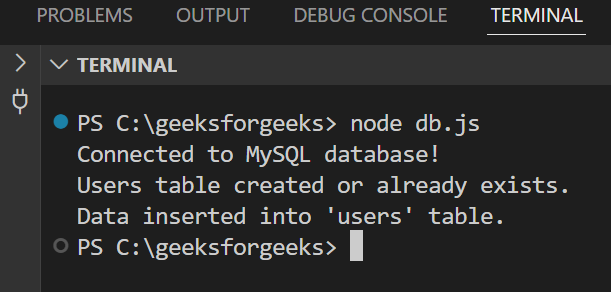
Credit: www.geeksforgeeks.org
Frequently Asked Questions
What Is Console Logging In Mysql?
Console logging in MySQL captures query execution details in the console. It helps track SQL commands and debug performance issues efficiently.
How To Enable Console Logging For Mysql Queries?
Enable console logging by configuring MySQL’s general_log variable. Set general_log = ON and define log_output = ‘TABLE’ to log queries into a table.
Can Mysql Log Queries Directly Into A Table?
Yes, MySQL supports logging queries directly into the mysql. general_log table for easier review and analysis.
Why Log Mysql Queries Into A Table Instead Of Files?
Logging into tables allows faster query filtering and searching using SQL commands. It simplifies log management compared to flat files.
Conclusion
Logging MySQL data to the console helps track queries and errors easily. It gives clear insight into database actions during development. This method saves time and reduces debugging confusion. Keep your code clean and organized for best results. Practice often to improve your skills.
Simple steps can make a big difference in managing data. Start using console logs to understand your MySQL processes better.
