Imagine stepping into a room where your favorite books are perfectly displayed, right from one wall to the other. A wall-to-wall bookshelf isn’t just about storage—it’s about creating a stunning focal point that reflects your style and personality.
If you’ve ever thought about designing one yourself, you’re in the right place. This guide will walk you through simple steps to turn your blank wall into a beautiful, functional bookshelf that fits your space and your needs. Ready to transform your room and showcase your collection like never before?
Let’s dive in!
Choosing The Right Location
Choosing the right location for your wall-to-wall bookshelf is very important. It affects how the shelf looks and how useful it will be. The location needs to fit your space and daily needs. Consider the wall size, the room’s purpose, and lighting. These factors help you get the best results.
Assessing Wall Space
Start by measuring the length and height of your wall. Check for doors, windows, and vents that could limit space. Look for a flat, sturdy wall for easy installation. Avoid walls with obstacles that block the shelf.
Think about the shelf size that fits your wall. A very large shelf might crowd the room. A smaller shelf might not hold all your books. Choose a wall that balances size and space well.
Considering Room Function
Think about what you do in the room. A bookshelf in a living room should be easy to reach and see. In a bedroom, it can be cozier and hold personal items. For an office, the shelf should store books and work tools.
Choose a wall that matches how you use the room. It should not block movement or furniture. The shelf should add value to the room’s purpose and style.
Lighting And Accessibility
Good lighting makes your books easy to find and read. Place the bookshelf near natural light or add lamps. Avoid dark corners where it is hard to see.
Make sure the shelf is easy to reach. You want to grab books without moving furniture. Leave space to walk and open shelves comfortably. Accessibility keeps your bookshelf practical and inviting.
Selecting Materials And Style
Selecting the right materials and style is key to designing a wall to wall bookshelf. The choice affects durability, look, and how well it fits your room. Picking materials that suit your needs helps create a beautiful and functional space.
Wood Types And Finishes
Wood is the most popular choice for bookshelves. It offers strength and a warm, natural look. Common types include oak, pine, and maple. Oak is strong and has a classic grain pattern. Pine is softer, lighter, and less expensive. Maple is smooth and offers a modern feel.
Finishes protect the wood and change its color. Clear finishes keep the wood’s natural beauty. Dark stains add richness and depth. Matte finishes give a subtle, modern look. Glossy finishes shine and feel polished. Choose a finish that fits your style and room lighting.
Incorporating Metal And Glass
Metal and glass can add a modern touch to your bookshelf. Metal frames or brackets bring strength and a sleek look. Black or silver metals work well in many designs. Glass shelves make the space feel open and light. They also highlight decorative items on display.
Combining wood with metal or glass creates a balanced, stylish design. This mix works well in both traditional and modern rooms. Consider metal or glass if you want a unique bookshelf that stands out.
Matching Existing Decor
Your bookshelf should fit with your room’s style. Match the wood color to your furniture for a seamless look. Choose finishes that blend with wall colors and flooring. For modern rooms, simple lines and minimal details work best.
In classic rooms, look for rich wood tones and decorative elements. Think about the room’s lighting and size. A well-matched bookshelf adds harmony and enhances the space’s feel.
Planning Shelf Layout
Planning the shelf layout is the first step in designing a wall to wall bookshelf. It helps organize your books and items neatly. A good plan makes the bookshelf look balanced and useful. Think about what you want to store. Books, decorations, or both? This will guide your design choices.
Consider the size and shape of your items. This affects shelf height and width. A well-planned layout saves space and looks great.
Adjustable Vs Fixed Shelves
Decide between adjustable and fixed shelves. Adjustable shelves offer flexibility. You can change shelf heights as needed. This is useful for books of different sizes.
Fixed shelves are strong and stable. They suit heavy items or a simple look. Choose fixed shelves for a permanent layout.
Incorporating Cabinets And Drawers
Add cabinets or drawers for extra storage. Cabinets hide clutter and protect fragile items. Drawers store small things like stationery or gadgets.
This mix keeps the space tidy. It adds variety to your design. Cabinets and drawers improve functionality and style.
Balancing Open And Closed Storage
Balance open shelves with closed storage. Open shelves display books and decor. Closed storage hides mess and less pretty items.
This balance creates visual interest. It keeps the room organized and inviting. Plan which items to show or hide carefully.
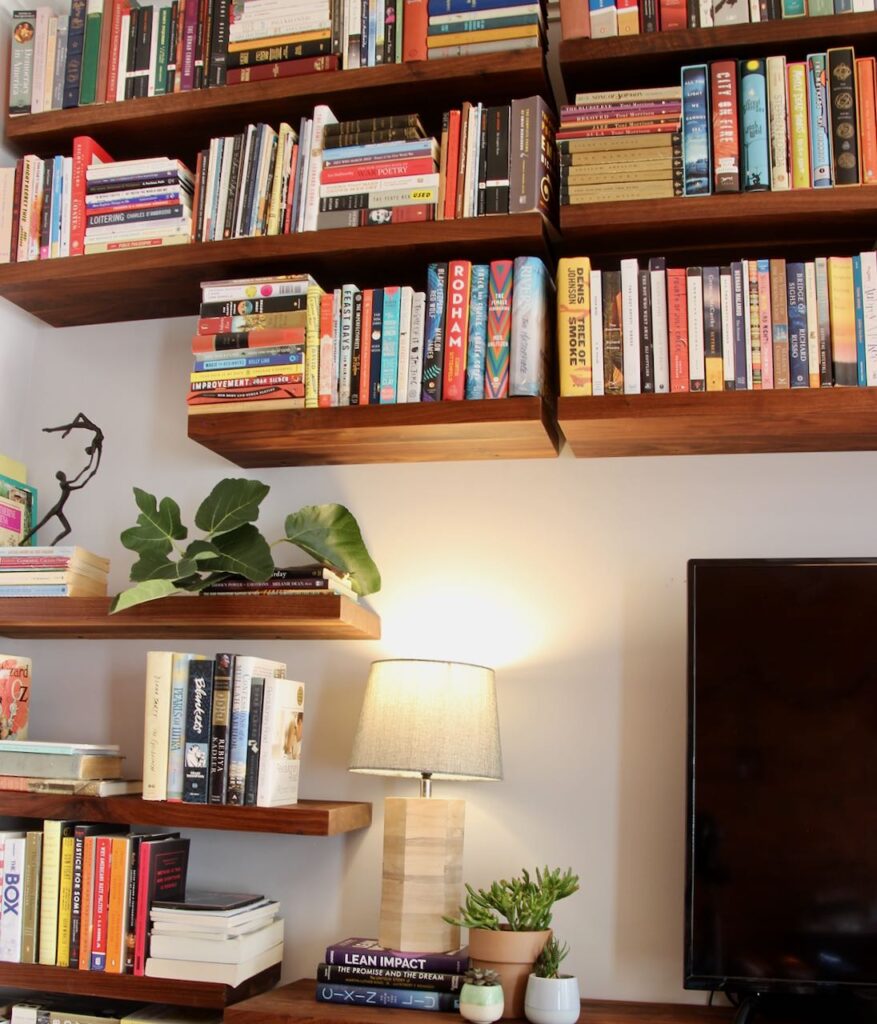
Credit: southhousedesigns.com
Maximizing Storage And Display
Maximizing storage and display is key for a wall to wall bookshelf. It helps keep your space tidy and stylish. A well-designed bookshelf holds many items without looking crowded. It also shows off your favorite books and decorations clearly.
Using Vertical Space Efficiently
Use the full height of your wall. Tall shelves give more room for books and decor. Place heavy or rarely used items on top shelves. Keep everyday items at eye level for easy reach. Vertical space saves floor area, making the room feel bigger.
Creating Display Zones
Divide your shelves into sections for different items. Group books by size or color for a neat look. Add plants or art pieces to break the rows of books. Use some shelves for small collections or souvenirs. Display zones make the bookshelf interesting and personal.
Integrating Seating Or Workspace
Combine seating or a desk with your bookshelf design. A built-in bench below shelves creates a cozy reading spot. A small desk area fits well in one section for work or study. This saves space and adds function to the room. Seating or workspace makes the bookshelf more useful.
Installation Tips And Tools
Installing a wall to wall bookshelf needs careful planning and the right tools. This step shapes the entire project’s success. Taking time for precise installation will make your bookshelf strong and long-lasting. Use tools that help you measure, secure, and support the shelves properly.
Measuring And Marking
Start by measuring the wall space accurately. Use a tape measure for exact length and height. Mark the spots where shelves will go with a pencil. Check that marks are level using a spirit level. Proper measuring avoids mistakes and uneven shelves.
Securing Shelves Safely
Use a drill to make holes in the wall for screws. Find the wall studs with a stud finder for strong support. Screw shelves into studs to hold heavy books safely. Avoid just drywall; it may not hold weight well. Tighten screws firmly but do not over-tighten to avoid damage.
Using Brackets And Supports
Choose brackets that fit the style and size of your shelves. Metal brackets offer strong support for heavy loads. Attach brackets under each shelf for even weight distribution. Use wall anchors if you cannot find studs. Brackets keep shelves stable and prevent sagging over time.

Credit: www.youtube.com
Styling And Decorating
Styling and decorating a wall to wall bookshelf can turn a simple storage space into a stunning room feature. Thoughtful arrangement and choice of items bring life and personality to the shelves. This process makes the bookshelf not only practical but also beautiful to look at.
Arranging Books Creatively
Place books both vertically and horizontally to create visual interest. Stack some books flat to form small platforms. Use books with colorful spines to add pops of color. Group books by size or theme for a neat look. Leave some empty space to avoid a crowded feel.
Adding Decorative Accents
Mix in decorative items like vases, candles, or small sculptures. Choose pieces that match your room’s style and color scheme. Use a few larger accents to draw attention. Balance smaller items throughout the shelves for harmony. Keep decorations simple to highlight your books.
Incorporating Plants And Lighting
Add small plants to bring freshness and a natural touch. Choose low-maintenance plants like succulents or ferns. Place plants where they get enough light but won’t block books. Use LED strip lights or small lamps to brighten the shelves. Soft lighting enhances the display and creates warmth.
Customizing For Different Rooms
Customizing a wall to wall bookshelf depends on the room it will live in. Each room has its own needs and style. Designing with these differences in mind creates a bookshelf that fits perfectly. The size, shape, and use of the bookshelf should match the room’s function and mood.
Smart design balances storage and display. It keeps the room organized and beautiful. Understanding how each room is used helps decide shelf height, depth, and style. This makes the bookshelf both useful and attractive.
Living Room Designs
The living room is often the heart of the home. A wall to wall bookshelf here shows off books, photos, and art. Use open shelves for easy access and display. Mix closed cabinets to hide clutter and keep things neat. Choose wood or paint colors that match the room’s decor. Add lighting inside shelves to highlight special items. Keep shelves at different heights to fit large and small objects.
Bedroom Solutions
Bedrooms need calm and cozy spaces. A wall to wall bookshelf here holds books, decor, and personal items. Use a mix of open and closed shelves for variety. Add a small desk or reading nook in the design for comfort. Keep shelf depth shallow to save space. Soft colors and simple designs create a relaxing feel. Include drawers or baskets for extra hidden storage.
Home Office Ideas
The home office needs a practical and efficient bookshelf. Use tall shelves to hold books, files, and office supplies. Include closed cabinets to keep paperwork out of sight. Open shelves allow quick access to daily items. Add adjustable shelves to fit different sized materials. Choose durable materials that resist wear. A clean and organized design helps boost focus and productivity.

Credit: www.etsy.com
Frequently Asked Questions
How Do I Measure Space For A Wall To Wall Bookshelf?
Measure the wall’s width and height accurately. Consider obstacles like windows or outlets. Ensure enough clearance for shelves and decoration.
What Materials Are Best For A Wall To Wall Bookshelf?
Use sturdy wood like plywood or MDF for durability. Choose finishes that match your room’s style. Consider eco-friendly or reclaimed wood options.
How Can I Design Adjustable Shelves For Flexibility?
Include shelf pins or brackets for height adjustment. This allows customization for books or decorative items. Adjustable shelves improve functionality and aesthetics.
What Tools Are Needed To Build A Wall To Wall Bookshelf?
Essential tools include a saw, drill, measuring tape, level, and screws. Safety gear like goggles and gloves is also important. Proper tools ensure precision and safety.
Conclusion
Designing a wall-to-wall bookshelf adds style and storage to any room. Start with measuring your space carefully for a perfect fit. Choose materials that match your room’s look and feel. Plan shelves for books and decorative items. Keep the design simple and functional.
A well-built bookshelf lasts for years and makes your space neat. Enjoy your new bookshelf and the extra room it creates. Small effort, big difference.

