Are you struggling with finding the best way to hang your bunk bed ladder on the wall? Getting it right is more important than you think.
A securely mounted ladder keeps you safe and saves space in your room. In this guide, you’ll discover simple steps to hang your ladder quickly and safely, even if you’re not an expert. Keep reading, and by the end, you’ll have the confidence to tackle this project on your own—and enjoy a neat, sturdy setup that lasts.

Credit: www.amazon.com
Choosing The Right Ladder
Choosing the right ladder for your bunk bed is very important. The ladder must be safe and fit well. It should match the style of the bunk bed and the room. This helps keep the space both useful and nice to look at. Picking the right ladder also makes climbing up and down easier for kids or adults.
Types Of Bunk Bed Ladders
Bunk bed ladders come in many types. The straight ladder is the most common. It leans against the bed frame and is easy to use. The angled ladder has steps that are less steep. This type is safer for small children. Some ladders are built into the bed frame. These save space and look neat. Choose a type that fits your room and needs.
Material Considerations
Ladders are made from wood, metal, or plastic. Wood looks warm and fits many room styles. It can be strong but might get worn over time. Metal ladders are very strong and last long. They often have a modern look. Plastic ladders are light but less common. Think about the room’s style and how strong the ladder must be.
Measuring For Fit
Measure the height from floor to top bunk first. Check the ladder length to make sure it fits well. The ladder should reach the floor and the bed safely. Also, measure the width of the ladder steps. Steps must be wide enough for easy climbing. Proper size keeps the ladder steady and safe to use.
Gathering Tools And Materials
Before you hang a bunk bed ladder on the wall, gather all the tools and materials. This step makes the process easier and safer. Having everything ready saves time and avoids frustration. It also helps ensure the ladder is secure and stable for use.
Essential Tools
First, collect the main tools. You will need a drill to make holes in the wall. A screwdriver is important for screws. A level helps keep the ladder straight. A tape measure measures the height and distance. A pencil marks the spots for drilling. A stud finder locates wall studs for strong support.
Safety Gear
Protect yourself with safety gear. Wear safety glasses to guard your eyes from dust. Use gloves to protect your hands from splinters and sharp edges. A dust mask keeps you safe from inhaling particles. Closed-toe shoes protect your feet during the work. Safety is a top priority at every step.
Additional Supplies
Besides tools and gear, gather extra supplies. Screws and wall anchors secure the ladder. Use heavy-duty anchors for drywall. Sandpaper smooths rough edges on the ladder. A helper can hold the ladder steady while you work. Keep a clean cloth nearby to wipe dust and dirt.
Preparing The Wall
Preparing the wall is the first important step to hang a bunk bed ladder safely. A strong and secure wall ensures the ladder holds well. This step prevents accidents and keeps the ladder steady for daily use.
Take time to check everything carefully. A well-prepared wall makes the installation smooth and safe.
Finding Studs
Studs are wooden beams behind the wall. They give strong support to hold heavy items.
Use a stud finder tool to locate them. Move the tool slowly across the wall. Mark the edges of each stud with a pencil.
Always attach the ladder bracket to the studs. Drywall alone cannot support the weight.
Marking Drill Points
After finding studs, mark where you will drill holes. Hold the ladder bracket on the wall.
Use a pencil to mark the screw holes on the wall through the bracket. Double-check these marks are level and aligned.
Clear and accurate marks help you drill in the right spots. This keeps the ladder stable and balanced.
Checking Wall Condition
Look for cracks, holes, or damp spots on the wall. These issues weaken the wall’s strength.
Fix any damage before drilling. Use filler or patch kits for small holes or cracks.
Ensure the wall is dry and clean. This prevents screws from loosening over time.
Attaching Ladder Brackets
Attaching ladder brackets to the wall is a key step for a safe bunk bed ladder. The brackets hold the ladder steady and prevent it from moving. Taking time to attach them correctly keeps the ladder secure and safe to use. Follow simple steps for a strong hold.
Positioning Brackets
Place the brackets where the ladder meets the wall. Check the height matches the bed’s ladder height. Mark spots with a pencil to guide drilling. Keep brackets level for even support. Measure twice for accuracy.
Drilling Pilot Holes
Use a drill bit smaller than screws for pilot holes. Drill straight into the marked spots on the wall. Pilot holes stop wood from splitting. They also make screwing easier and faster. Clean dust from holes before moving on.
Securing Brackets
Align brackets with pilot holes. Insert screws through bracket holes into the wall. Tighten screws firmly but avoid over-tightening. Check brackets do not wiggle. Test stability by gently pulling the ladder after attaching.
Mounting The Ladder
Safety is key when hanging a bunk bed ladder on the wall. Proper maintenance and care keep the ladder sturdy. This ensures safe use for children and adults alike. Follow these tips to keep the ladder strong and secure over time.
Regular Inspections
Check the ladder often for loose screws and bolts. Tighten any parts that feel wobbly or weak. Look for cracks or damage in the wood or metal. Fix problems quickly to avoid accidents. Regular checks help catch issues early before they get worse.
Weight Limits
Know the ladder’s weight limit and do not exceed it. Too much weight can cause the ladder to break or fall. Tell children and guests about the weight rules. Stick to limits to keep the ladder safe and stable.
Preventing Slips
Place non-slip pads on ladder steps to stop slipping. Keep the ladder clean and dry at all times. Avoid climbing with wet or slippery shoes. These small steps reduce the risk of falls and injuries.
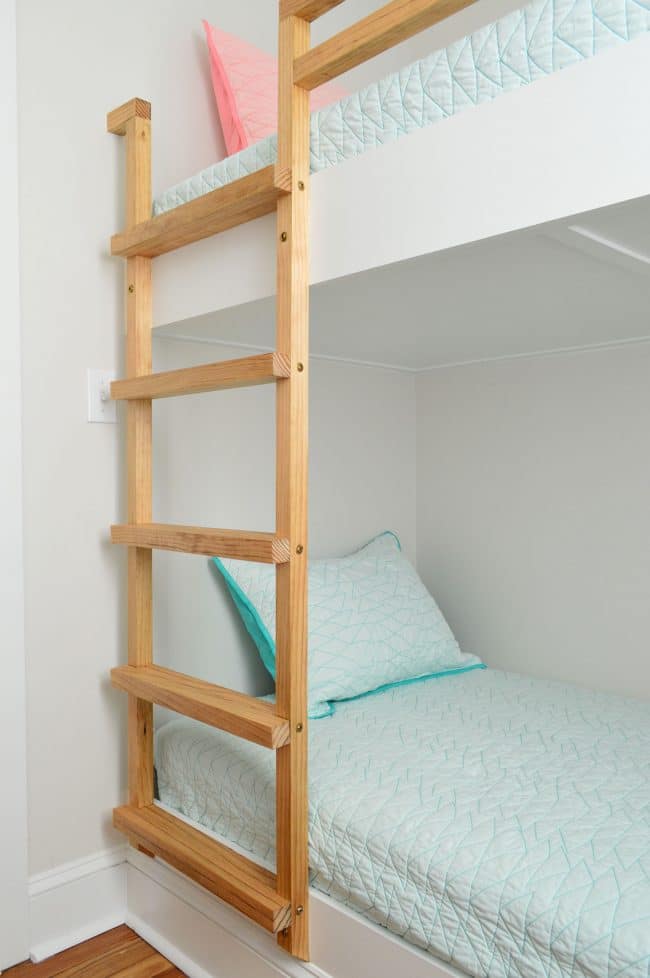
Credit: www.younghouselove.com

Credit: www.jennasuedesign.com
Frequently Asked Questions
How Do I Securely Hang A Bunk Bed Ladder On The Wall?
Use strong wall anchors and screws rated for heavy loads. Locate wall studs with a stud finder for maximum support. Ensure the ladder is level and stable before finalizing installation.
What Tools Are Needed To Hang A Bunk Bed Ladder?
You’ll need a drill, stud finder, screwdriver, level, measuring tape, and appropriate wall anchors or screws. These tools help ensure a safe and accurate ladder installation.
Can I Hang A Bunk Bed Ladder On Drywall Alone?
Drywall alone is not strong enough. Always secure the ladder to wall studs or use heavy-duty anchors designed for drywall. This prevents the ladder from pulling away or falling.
At What Height Should I Mount The Bunk Bed Ladder?
Mount the ladder so the bottom rests firmly on the floor. The top should align with the bunk bed’s upper frame for easy and safe climbing.
Conclusion
Hanging a bunk bed ladder on the wall is simple with the right steps. Secure the ladder firmly to keep it safe. Choose strong wall anchors to hold the weight. Measure twice to place the ladder correctly. Take your time to avoid mistakes.
A well-installed ladder makes climbing easier and safer. Enjoy the extra space and comfort it brings. Now, your bunk bed setup looks neat and works well. Try these tips for a sturdy ladder mount today.