Are you wondering if your outdoor furniture is made from real teak? Knowing the difference can save you money and help you take better care of your investment.
Teak is prized for its durability and natural beauty, but not all furniture that looks like teak actually is. You’ll learn simple and effective ways to tell if your outdoor furniture is genuine teak. By the end, you’ll feel confident making smart choices for your patio and know exactly how to protect your furniture for years to come.
Keep reading to discover the secrets that experts use to identify real teak!
Identifying Teak Wood
Identifying teak wood in outdoor furniture helps you know its quality and value. Teak is a popular choice because of its strength and weather resistance. This section explains how to spot real teak by its look, feel, and color.
Visual Characteristics
Teak wood has a smooth surface with natural oils. These oils give teak a slight shine without polish. The wood shows straight lines or gentle waves. You may see tiny dark spots, which are natural resin pockets. These spots help teak resist water and insects.
Texture And Grain Patterns
Teak has a medium texture, not too rough or too smooth. The grain is usually straight but can be wavy or interlocked. This creates a unique pattern on every piece. The wood feels dense and heavy, showing its strength. Press your finger lightly to sense its firmness.
Color Variations
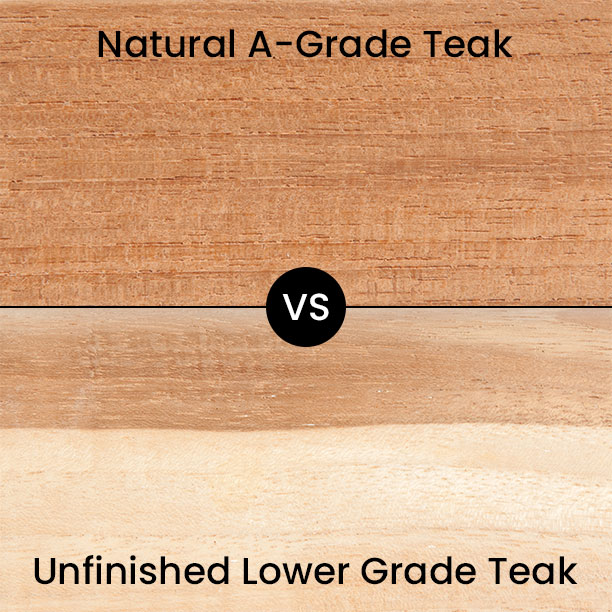
Fresh teak is golden brown to honey color. Over time, exposure to sun and air turns it silver gray. This natural aging does not harm teak’s durability. Some teak pieces may have darker streaks or patches. These variations make each furniture piece one of a kind.
Smell And Feel Tests
The smell and feel of wood provide clear hints about its type. Teak has unique traits that make it easy to identify. You can check teak furniture by using your nose and touch. These simple tests reveal natural signs of real teak.
Scent Of Fresh And Aged Teak
Fresh teak gives off a warm, woody scent. This smell is strong and pleasant. It is different from other woods, which often smell sharp or faint. Aged teak has a softer, milder aroma. It might smell a bit like honey or amber. The scent fades slowly over time but remains distinct.
Surface Temperature And Smoothness
Teak feels smooth and warm to the touch. Unlike metal or plastic, it does not feel cold. The surface is oily and slightly soft due to natural oils. These oils protect the wood and give it a silky feel. Run your hand over the wood. Real teak will feel smooth but not slippery or rough.
Durability And Weight
Durability and weight are key signs to identify teak outdoor furniture. Teak is famous for lasting many years outdoors. Its weight and strength set it apart from other woods. Knowing these traits helps you decide if your furniture is real teak.
Assessing Heaviness
Teak wood is dense and heavy. Pick up the furniture piece. It should feel solid and weighty. Lightweight furniture usually means it is not teak. Fake teak often uses lighter woods or plastic. Real teak furniture stays steady and does not move easily in the wind.
Resistance To Weather And Insects
Teak resists rain, sun, and cold better than most woods. It does not warp, crack, or rot quickly. The wood contains natural oils that protect it from bugs and termites. If your furniture shows little damage after a season outside, it might be teak. Lesser woods tend to break down faster under outdoor conditions.
Credit: wintonsteak.com
Common Teak Imitations
Teak is a popular choice for outdoor furniture because of its strength and beauty. Many furniture makers try to copy teak’s look using other woods or materials. These imitations can confuse buyers. Knowing how to spot common teak imitations helps you choose the right furniture.
Identifying Faux Teak Materials
Many faux teak pieces use rubberwood, eucalyptus, or acacia. These woods try to mimic teak’s color but lack the same grain pattern. Plastic and resin furniture sometimes imitate teak’s texture and color. They often feel lighter and less sturdy than real teak. Look closely at the wood’s surface for uneven or fake grain lines. Real teak has natural oils that give a smooth feel, unlike synthetic materials.
Differences In Quality And Appearance
Real teak has a rich golden-brown color that ages to a soft silver-gray. Faux teak tends to fade unevenly or lose color fast. The grain on real teak is tight and straight, with natural knots. Imitations often have blurry or repeating grain patterns. Quality teak is heavy and solid, while fake materials feel lighter or hollow. Also, genuine teak resists cracks and warping better than imitations.
Maintenance Clues
Maintenance clues provide useful hints to identify teak outdoor furniture. Teak ages and reacts differently than other woods. Observing these changes helps confirm if the furniture is genuine teak. Simple maintenance checks can reveal the wood’s true nature.
Patina Development Over Time
Teak develops a unique silver-gray patina as it ages outdoors. This natural change happens without any treatment. The color shift is smooth and even across the surface. Other woods often darken or fade unevenly. This soft gray look is a key teak sign. It also protects the wood from weather damage.
Reactions To Cleaning Products
Teak reacts gently to mild soap and water. It does not stain or lose color easily. Harsh chemicals may dull or damage other woods. Teak’s natural oils resist these effects. When cleaned, teak feels smooth and firm. Softer woods may swell or become rough. Testing cleaning reactions can help identify teak furniture.

Credit: www.wikihow.com
Expert Verification Methods
Expert verification methods help confirm if outdoor furniture is genuine teak. These methods use tools and professional skills. They provide accurate results beyond visual checks. This section explains two key expert methods.
Professional Testing Services
Professional testing services use lab tools to analyze wood samples. They check wood density, grain, and chemical makeup. Experts identify teak by its unique oil content and grain patterns. Sending a small sample to a lab gives precise results. This option suits those who want full confidence in their furniture’s material.
Using Moisture Meters And Uv Lights
Moisture meters measure the water content inside the wood. Teak has a specific moisture range due to its natural oils. Experts use this tool to spot fake teak or treated wood. UV lights reveal differences in wood color and texture. Teak glows a certain way under UV light. This method helps verify teak without damaging the furniture.

Credit: hcluxuryoutdoor.com
Frequently Asked Questions
How Can I Identify Teak Outdoor Furniture?
Teak furniture has a rich golden-brown color and a smooth texture. Look for tight grain patterns and natural oils that repel water. Over time, teak develops a silver-gray patina, which is a key sign of genuine teak wood.
What Makes Teak Furniture Durable Outdoors?
Teak contains natural oils and high silica content that resist water, insects, and decay. These properties make it highly durable and ideal for outdoor use. Properly maintained teak can last for decades without warping or cracking.
Does Teak Furniture Require Special Maintenance?
Teak needs minimal maintenance due to its natural oils. Cleaning with mild soap and water is enough. Applying teak oil is optional and mainly for preserving its golden color, but not necessary for durability.
How To Differentiate Teak From Other Woods?
Teak has a distinct oily feel and warm, golden color. Other woods may lack the natural oils and have rougher textures. The tight grain and resistance to water are unique to teak, helping distinguish it from alternatives.
Conclusion
Teak outdoor furniture stands out with its unique look and feel. Check the wood’s color, grain, and weight to tell if it is teak. Real teak feels smooth, has a golden-brown color, and a tight grain pattern. It also smells a bit like fresh wood.
These signs help you pick genuine teak furniture. Knowing how to spot teak saves money and ensures durability. Choose wisely for furniture that lasts and looks great outside. Simple steps make it easy to know what you have.