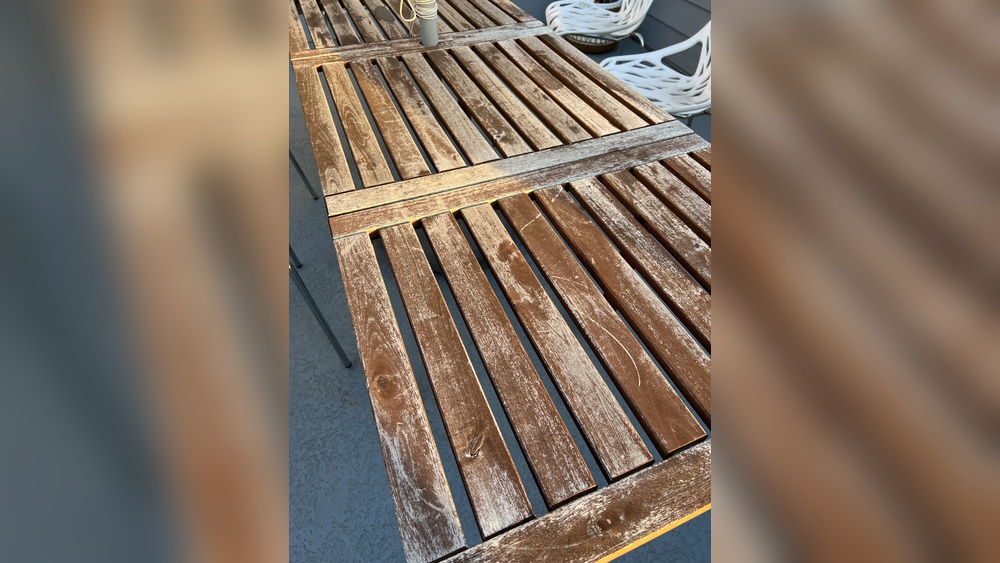
Is your outdoor wood furniture looking worn out or faded? You don’t have to replace it just yet.
Refinishing your wood furniture can bring back its natural beauty and protect it from the elements. Imagine enjoying your refreshed outdoor space with furniture that looks brand new. In this guide, you’ll learn simple, step-by-step methods to refinish your wood furniture yourself—no professional skills needed.
Keep reading, and discover how easy it is to transform your outdoor pieces and make your space shine again.

Credit: www.homestoriesatoz.com
Choosing The Right Wood
Choosing the right wood is key for outdoor furniture. The wood must handle weather changes. It should resist water, sun, and insects well. Picking good wood makes your furniture last longer. It also keeps the wood looking good through all seasons.
Hardwood Vs Softwood
Hardwood comes from trees like oak and teak. It is strong and lasts longer outside. Softwood comes from pine or cedar. It is lighter but less tough. Hardwood usually costs more but needs less care. Softwood can work if treated well.
Weather Resistance
Some woods handle rain and sun better. Teak, redwood, and cedar resist water and rot. These woods stay strong after rain and heat. They need less sealing or painting. Choose woods that do not swell or crack in wet weather.
Insect Resistance
Outdoor wood faces bugs like termites. Some woods have natural oils that keep bugs away. Teak and cedar are good at this. Avoid woods that attract pests easily. Using insect-resistant wood saves time and money on repairs.
Appearance And Texture
Wood grain and color affect furniture look. Teak has a smooth, golden tone. Cedar shows a reddish hue and rough texture. Pick wood that fits your style and garden design. Well-chosen wood adds beauty to your outdoor space.
Cost And Availability
Price matters for many buyers. Hardwoods usually cost more than softwoods. Some woods are rare and hard to find. Choose wood that fits your budget and local supply. This helps keep your project practical and timely.
Gathering Essential Tools
Gathering the right tools is the first step to refinish outdoor wood furniture well. Having the correct supplies makes the project easier and the results better. Preparing your workspace and tools before starting saves time and effort.
Safety Gear
Protect your skin, eyes, and lungs. Use gloves to avoid splinters and chemicals. Wear safety goggles to guard your eyes from dust and debris. A mask helps keep harmful dust and fumes away.
Sandpaper And Sanding Tools
Sandpaper removes old finish and smooths the wood. Use coarse grit to start and fine grit to finish. A sanding block or electric sander makes sanding faster and more even.
Paint Stripper And Scrapers
A paint stripper removes old paint or varnish. Choose a product safe for outdoor use. Use a scraper to lift the old finish after the stripper softens it.
Brushes And Applicators
Use brushes for applying stain, paint, or sealant. Select brushes with natural bristles for oil-based products. Foam applicators work well with water-based finishes.
Cleaning Supplies
Clean the furniture before refinishing. Use a mild detergent and water. Rinse well and let dry completely. Clean tools after use to keep them in good shape.
Preparing The Furniture
Preparing wood furniture for outdoor refinishing is an important first step. It sets the stage for a smooth and lasting finish. Proper preparation helps protect the wood from weather damage. It also makes the new finish stick better and last longer.
Start by cleaning the furniture carefully. Removing dirt and old finishes is key. Next, sanding smooths the surface and removes any remaining finish. This process opens the wood grain to accept the new finish well.
Cleaning And Removing Old Finish
Begin with a gentle wash using soap and water. Use a soft brush to scrub away dirt and grime. Let the furniture dry completely before moving to the next step.
Use a chemical stripper if the old finish is thick or peeling. Follow the product instructions carefully for safety. Apply the stripper with a brush and wait until the finish softens. Then, scrape off the softened finish with a plastic scraper.
After stripping, clean the surface again to remove residue. Use mineral spirits or a similar cleaner. Wipe the wood with a clean cloth and let it dry fully.
Sanding Techniques For Outdoors
Sand the furniture using medium-grit sandpaper first. This removes leftover finish and smooths rough spots. Move the sandpaper in the direction of the wood grain.
After the first sanding, switch to fine-grit sandpaper. This prepares the surface for the new finish. Sand evenly to avoid creating dips or scratches.
For corners and detailed areas, use sanding sponges or small sanding blocks. Remove all dust with a vacuum or tack cloth before applying any finish.
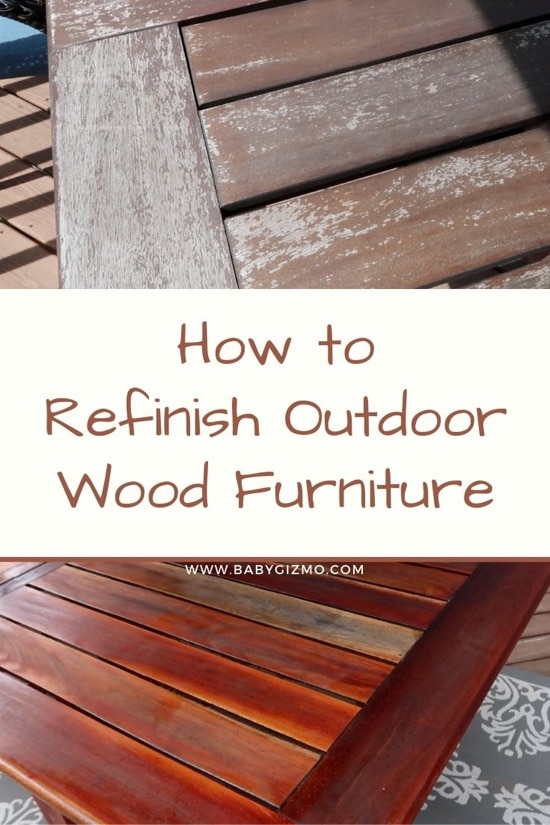
Credit: babygizmo.com
Repairing Damages
Repairing damages is a key step in refinishing wood furniture for outdoor use. It fixes the wear and tear caused by weather and time. Proper repair makes your furniture strong and ready for finishing. This step improves the look and helps protect the wood from further harm.
Filling Cracks And Holes
Start by cleaning the cracks and holes to remove dirt. Use a wood filler suitable for outdoor furniture. Press the filler into the cracks with a putty knife. Smooth the surface and remove excess filler. Let it dry completely before sanding it smooth. Filling cracks stops water from entering and damaging the wood.
Fixing Loose Joints
Check all joints for looseness or wobbling. Apply wood glue inside the joint to secure it. Clamp the pieces tightly and leave them to dry. For extra strength, use screws or nails if needed. Tight joints keep the furniture stable and safe to use outdoors. This repair prevents further damage caused by movement.
Selecting Outdoor Finishes
Selecting the right finish for outdoor wood furniture is very important. It protects the wood from sun, rain, and insects. A good finish keeps the furniture looking fresh and lasting longer. You must choose a finish that fits the wood type and the weather in your area.
Types Of Protective Coatings
Protective coatings create a barrier on wood surfaces. They stop water from soaking into the wood. Some coatings also protect against UV rays, which can cause fading. Common types include varnish, polyurethane, and spar urethane. Spar urethane is best for outdoor use because it flexes with wood changes. Oil finishes like tung or linseed oil soak into the wood and give a natural look. Oils need reapplying every year or so.
Choosing The Right Stain Or Paint
Stains add color and protect wood without hiding its texture. Semi-transparent stains highlight the wood grain while giving some color. Solid stains cover the wood completely and offer more protection. Paint covers the wood fully and hides its natural look. It offers strong protection but may peel over time. Pick a product made for outdoor use. Check the label for water resistance and UV protection. Choose colors that match your outdoor space and style.
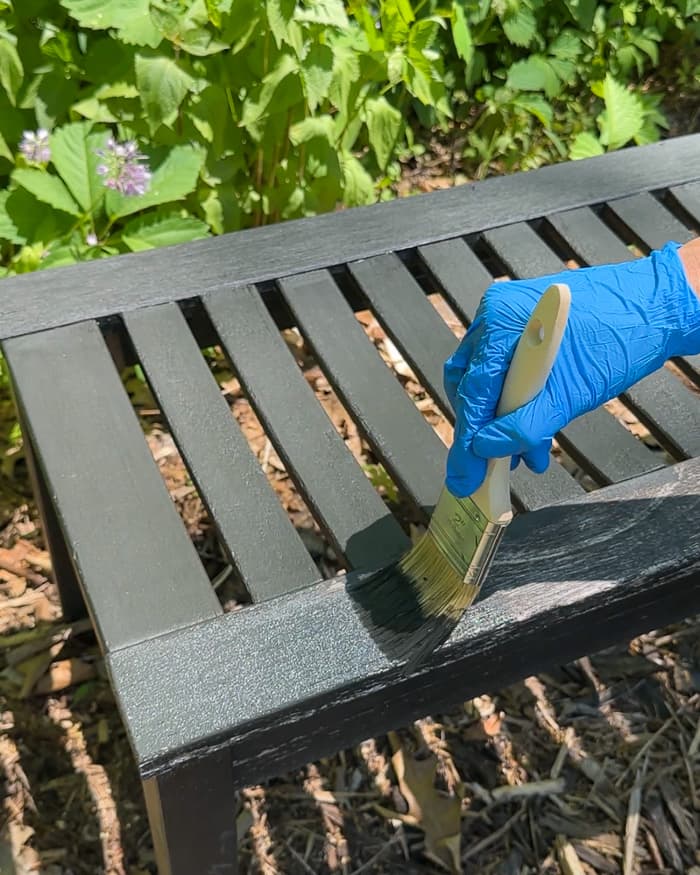
Credit: averageinspired.com
Applying Finish Properly
Applying finish properly protects outdoor wood furniture from weather and wear. It helps the wood last longer and look better. Using the right technique ensures smooth, even coverage. This section guides you through the best way to apply finish.
Step-by-step Application
Start by cleaning the wood surface. Remove dust and dirt with a soft cloth. Use sandpaper to smooth rough spots. Wipe away sanding dust before finishing.
Choose a brush or cloth for applying the finish. Dip it lightly into the finish, avoiding drips. Spread the finish evenly along the wood grain. Work in small sections for better control.
Apply thin coats. Thick layers can cause drips and uneven drying. Let each coat dry before adding the next one. Usually, two to three coats work well for outdoor furniture.
Drying And Curing Tips
Dry the finished furniture in a dust-free area. Keep it out of direct sunlight and rain. Allow enough time for the finish to harden fully. This process can take several days.
Avoid heavy use during drying. Touching the surface too soon can leave marks. Check the finish feels dry and firm before use.
Proper drying and curing improve protection and durability. Your outdoor furniture will look great and last longer.
Maintaining Outdoor Wood Furniture
Outdoor wood furniture faces sun, rain, and dirt every day. These elements can cause damage over time. Proper maintenance keeps the wood strong and looking good. It also helps protect your investment and extend the life of your furniture.
Regular care makes a big difference. Simple steps help maintain wood’s natural beauty. Let’s explore easy ways to keep your outdoor wood furniture in top shape.
Regular Cleaning
Clean wood furniture often to remove dust and dirt. Use a soft brush or cloth with mild soap and water. Avoid harsh chemicals that can harm the wood. Rinse with clean water and dry with a towel. Regular cleaning prevents mold and mildew buildup. It also stops dirt from wearing down the finish.
Reapplying Finish
The finish protects wood from moisture and sun damage. Check your furniture’s finish every year. Sand lightly before applying a new coat of finish. Use outdoor wood sealers, oils, or varnishes made for exterior use. Apply evenly and let it dry completely. Reapplying finish helps keep the wood safe and looking fresh. It prevents cracks, peeling, and fading.
Frequently Asked Questions
How Do I Prepare Wood Furniture For Outdoor Refinishing?
Start by cleaning the furniture with mild soap and water. Remove dirt and old finishes using sandpaper or a stripper. Ensure the surface is smooth and dry before applying any new finish for better adhesion.
What Type Of Finish Is Best For Outdoor Wood Furniture?
Use exterior-grade finishes like spar varnish, polyurethane, or exterior wood oil. These finishes protect against moisture, UV rays, and temperature changes. Choose one that suits your desired look and offers long-lasting durability.
How Often Should Outdoor Wood Furniture Be Refinished?
Refinish outdoor wood furniture every 1 to 3 years. Exposure to weather causes wear and fading over time. Regular maintenance keeps the wood protected and looking fresh.
Can I Refinish Outdoor Wood Furniture Without Sanding?
Light sanding is recommended to remove old finishes and create a smooth surface. Skipping sanding can result in poor finish adhesion and uneven appearance. Use fine-grit sandpaper for best results.
Conclusion
Refinishing outdoor wood furniture takes time and care. Start with cleaning and sanding for a smooth surface. Choose the right paint or stain to protect from weather. Apply sealant to keep furniture safe from rain and sun. Regular maintenance will help your furniture last longer.
Enjoy your refreshed pieces in your garden or patio. Simple steps lead to beautiful, durable outdoor wood furniture. Try these tips to bring life back to old wood. You can do this with patience and attention.

