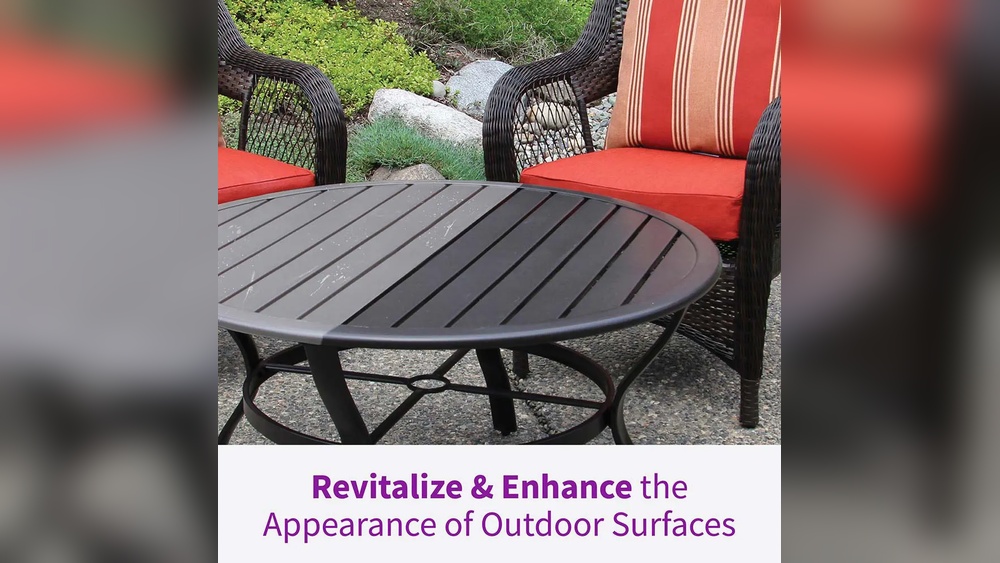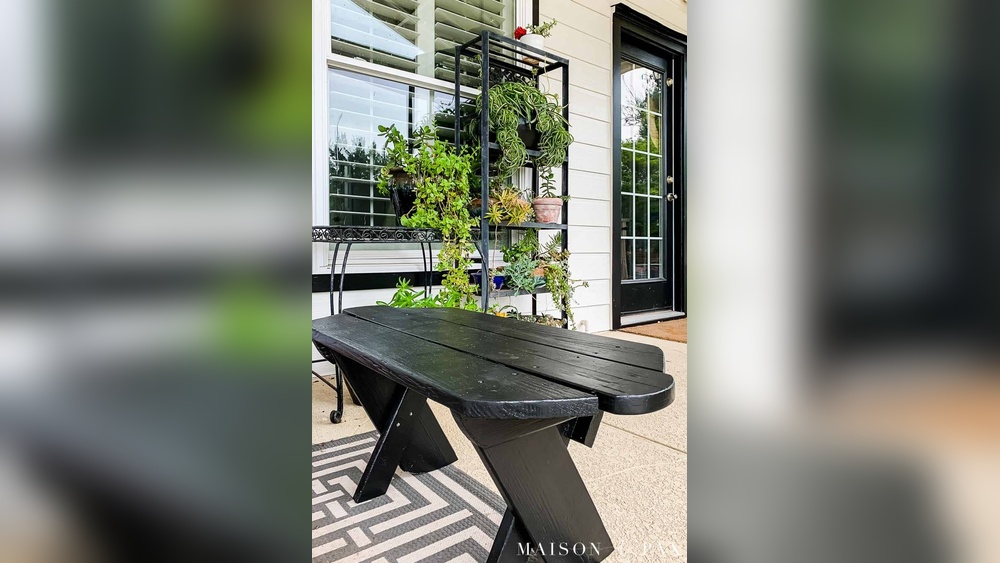
Are your outdoor wooden furniture pieces looking tired and worn out? You can bring them back to life with a fresh coat of paint—but to get the best results, priming is key.
Knowing how to properly prime and paint your wooden furniture will protect it from the weather, prevent peeling, and make your outdoor space look stunning. In this guide, you’ll discover simple steps that anyone can follow to transform your furniture into a vibrant, long-lasting showpiece.
Ready to give your outdoor wood a fresh new look? Let’s dive in.

Credit: coatpaints.com
Choosing The Right Wood
Choosing the right wood is the first step to painting outdoor wooden furniture. The wood you pick will affect how well the paint sticks and how long the furniture lasts. Some woods handle weather better and need less maintenance. Others may need more care but can still look beautiful with the right finish.
Good wood choice helps protect your furniture from rain, sun, and bugs. It also makes your painting process easier. Knowing the types of wood and how to prepare them will save time and effort.
Types Of Outdoor Wood
Cedar is popular for outdoor furniture. It resists rot and insects naturally. Pine is cheaper but needs sealant to protect from moisture. Teak is strong and oily, which helps it last long without paint. Redwood looks great and handles weather well but costs more. Pressure-treated wood is common and affordable, but it must dry completely before painting.
Wood Preparation Tips
Start by cleaning the wood surface. Remove dirt and old paint with a brush or sandpaper. Sanding smooths rough spots and opens the wood grain. This helps primer and paint stick better. Fill any cracks or holes with wood filler. Let the wood dry fully before applying primer. Dry wood absorbs paint evenly and lasts longer outside.
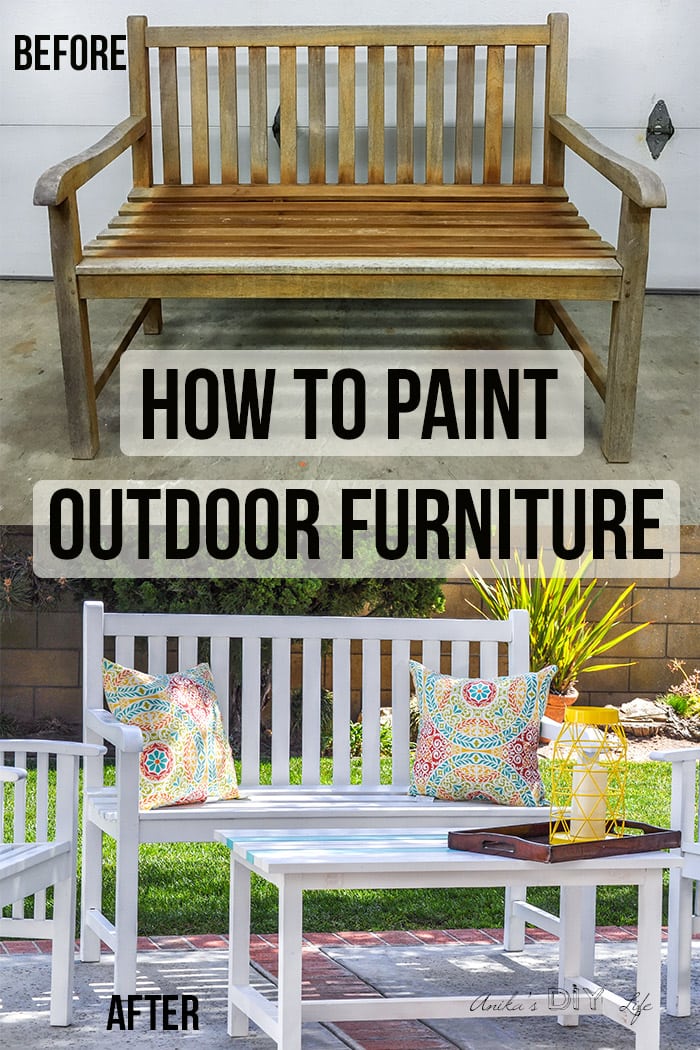
Credit: www.anikasdiylife.com
Selecting Primer And Paint
Selecting the right primer and paint is key for wooden outdoor furniture. These choices protect the wood from weather damage and keep the color fresh. Using the correct primer and paint extends the life of your furniture. It also makes the finish smooth and even. Understanding your options helps you pick the best products for your project.
Primer Options For Wood
Choose a primer made for wood surfaces. Oil-based primers work well on outdoor wood. They seal the wood and block stains. Water-based primers dry faster and clean up easily. They also resist cracking and peeling. Some primers include mildew inhibitors. These protect wood in damp conditions. Select a primer that matches your paint type.
Best Paint Types For Outdoors
Acrylic latex paint is popular for outdoor wood. It holds color well and resists fading. This paint is flexible and resists cracking. Oil-based paint offers a hard, durable finish. It works well on furniture that gets heavy use. Use paint that resists water and UV rays. This keeps the wood safe from sun and rain. Choose a satin or semi-gloss finish for easy cleaning.
Surface Preparation
Preparing the surface is the first step in painting wooden outdoor furniture. It helps the paint stick better and last longer. A clean, smooth surface prevents peeling and uneven color. This step takes time but improves the final look.
Cleaning The Furniture
Remove dirt, dust, and old paint chips from the wood. Use a soft brush or cloth for loose debris. Wash the furniture with mild soap and water. Rinse well and let it dry fully. Clean wood allows primer and paint to stick properly.
Sanding Techniques
Sand the wood to smooth rough spots and remove old finishes. Use medium-grit sandpaper first for tough areas. Then, use fine-grit sandpaper for a smooth surface. Sand along the wood grain, not against it. Wipe off dust after sanding before priming.
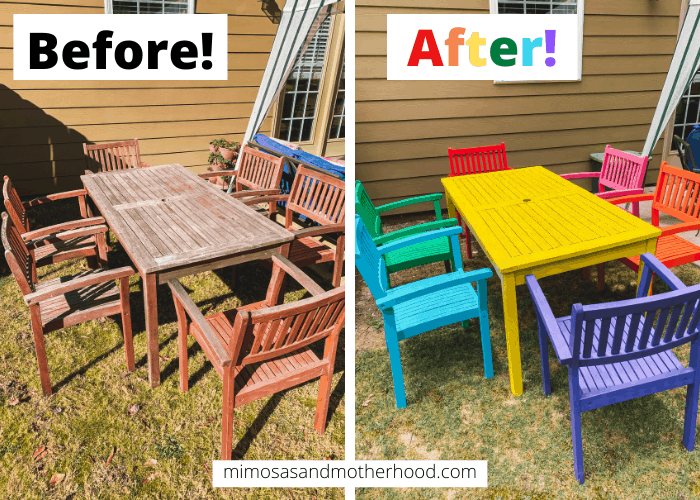
Credit: www.mimosasandmotherhood.com
Applying Primer
Applying primer is a key step before painting wooden outdoor furniture. It helps the paint stick better and protects the wood from weather damage. Primer seals the surface and fills small cracks. This makes the paint last longer and look smooth. Take your time to apply primer evenly for the best results.
Primer Application Methods
Use a brush to reach corners and detailed areas. A roller works well on flat surfaces for quick coverage. Spray primers offer even coats but need good ventilation outdoors. Choose the method that fits your furniture shape and size. Apply thin layers to avoid drips and uneven spots. Let each coat dry before adding another layer.
Drying Time Guidelines
Primer drying time depends on temperature and humidity. Usually, it takes 1 to 4 hours to dry. Check the label on your primer for exact times. Avoid touching the surface until it feels dry. Wait at least 24 hours before painting for best adhesion. Rushing can cause peeling or bubbling in paint.
Painting The Furniture
Painting wooden outdoor furniture protects it from weather and enhances its look. The right paint job helps the wood last longer. Proper steps and care ensure a smooth, even finish. This section guides you through painting the furniture well.
Choosing Brushes And Tools
Select brushes with soft, natural bristles for smooth paint application. Use a wide brush for flat surfaces and a small one for corners. Foam rollers work great for large, flat areas. Keep brushes clean and dry before use. Avoid cheap brushes that shed bristles. Good tools give a neat, professional finish.
Applying Paint Layers
Apply paint in thin, even layers. Start with a light coat and let it dry fully. Add a second coat for better coverage and durability. Avoid thick layers that drip or peel easily. Sand lightly between coats to remove rough spots. Multiple thin layers create a strong, lasting finish.
Avoiding Common Painting Mistakes
Do not paint in direct sunlight or high humidity. Paint may dry too fast or not stick well. Avoid rushing; let each layer dry completely. Do not overload the brush to prevent drips. Skip painting over dirt or old peeling paint. Clean and smooth surfaces ensure paint sticks well.
Finishing Touches
Finishing touches give your wooden outdoor furniture a strong, lasting look. These steps protect the paint and wood from weather and wear. Proper finishing ensures your furniture stays beautiful for years.
Sealing For Protection
Sealing is the last step to guard your paint job. Use a clear, outdoor sealer made for wood. This layer stops water, dirt, and sun damage. Apply the sealer evenly with a brush. Let it dry completely before using the furniture. Sealers also keep the color bright and fresh.
Maintaining Painted Furniture
Clean your painted furniture regularly with mild soap and water. Avoid harsh chemicals that can wear down the paint. Check for chips or cracks in the paint. Touch up these areas to stop wood damage. Store furniture indoors or cover it in bad weather. Small care steps extend the life of your paint job.
Frequently Asked Questions
How Do I Prepare Wooden Furniture Before Priming?
Clean the surface thoroughly to remove dirt and dust. Sand the wood lightly to ensure smoothness. Repair any cracks or holes using wood filler. Allow the wood to dry completely before applying primer. Proper preparation improves paint adhesion and durability.
What Type Of Primer Is Best For Outdoor Wood?
Use an exterior-grade, oil-based or latex primer. These primers resist moisture and prevent peeling. They also block stains and tannins from bleeding through paint. Choose a primer compatible with your paint type for best results.
How Many Coats Of Primer Should I Apply?
Apply one to two coats of primer for optimal coverage. Allow each coat to dry fully before adding the next. Multiple coats ensure better paint adhesion and protection against weather damage.
Can I Paint Outdoor Wood Without Priming?
Priming is highly recommended to protect wood and enhance paint longevity. Skipping primer may cause paint to peel or chip quickly. Primer seals the wood and prevents moisture absorption, extending furniture life.
Conclusion
Priming and painting wooden outdoor furniture protects it from weather damage. A good primer helps paint stick better and last longer. Choose paint made for outdoor use to ensure durability. Clean and dry the furniture before starting any work. Take your time to apply thin, even coats for best results.
Proper care keeps your furniture looking nice season after season. Enjoy your refreshed outdoor space with furniture that stands strong. Simple steps make a big difference in maintenance and appearance. Your efforts will pay off with lasting beauty and protection.