Are you looking to add a unique and stylish touch to your home? Making a bookshelf with copper pipes is easier than you think, and it can completely transform your space.
Imagine a sturdy, modern shelf that not only holds your favorite books but also becomes a conversation starter. In this guide, you’ll discover simple steps to build your own copper pipe bookshelf that fits your style and needs. Ready to create something both functional and eye-catching?
Keep reading, and you’ll see how straightforward and rewarding this project can be.

Credit: osmphotovoice.wordpress.com
Materials And Tools Needed
Building a bookshelf with copper pipes is a fun and practical project. The right materials and tools make the process easy. Knowing what you need before starting saves time and effort. Here is a list of key items for your copper pipe bookshelf.
Selecting The Right Copper Pipes
Choose pipes made of real copper for strength and style. Pipes come in different diameters; ½ inch or ¾ inch works best. Pick lengths that fit your bookshelf design. Avoid pipes with dents or bends for a clean look. Smooth pipes ensure easy assembly and good support.
Essential Tools For Assembly
Use a pipe cutter to get clean, straight cuts on copper pipes. A measuring tape helps with precise pipe lengths. A pipe wrench or adjustable wrench is useful for tightening fittings. Sandpaper or a metal file smooths pipe edges after cutting. A level keeps your bookshelf straight during assembly.
Additional Supplies
Get copper pipe fittings like elbows, tees, and flanges to connect pipes. Thread seal tape helps secure joints and prevent loosening. Wood boards act as shelves and add stability. Screws and wall anchors keep the bookshelf mounted safely. Protective gloves guard your hands during cutting and assembly.

Credit: www.reddit.com
Planning Your Bookshelf Design
Planning your bookshelf design is the first step to create a sturdy and attractive piece. It helps to organize your thoughts and materials. Careful planning saves time and money. Think about where the bookshelf will go and how you want it to look.
Start by understanding the space available. This makes sure the bookshelf fits well without crowding the room. Next, decide on the size of each shelf for the books and items you want to store. Finally, sketch your ideas on paper. This gives a clear picture of the final project.
Measuring Your Space
Measure the wall or corner where the bookshelf will stand. Use a tape measure for accuracy. Note the height, width, and depth of the space. Check for any obstacles like switches or vents. Write down all measurements clearly. This step ensures your bookshelf fits perfectly.
Choosing Shelf Dimensions
Decide how tall and wide each shelf should be. Think about the size of your books or decorations. Shelves that are too narrow may not hold large books. Too wide shelves might sag over time. Pick a depth that fits your items comfortably. Balance between storage and room space.
Sketching The Layout
Draw a simple plan of your bookshelf on paper. Mark the position of each shelf and pipe support. Use your measurements to keep proportions correct. This helps visualize the final look. Make changes on the sketch before you start building. A clear plan reduces mistakes during assembly.
Cutting And Preparing Copper Pipes
Cutting and preparing copper pipes is a key step for building a sturdy bookshelf. Pipes must be the right length and smooth to fit perfectly. Careful handling makes assembly easier and safer. This section guides you through marking, cutting, and cleaning pipes.
Marking Pipe Lengths
Measure the desired length for each pipe piece. Use a tape measure and pencil to mark clear lines. Mark twice to avoid mistakes. Make sure marks are straight around the pipe. This helps you cut evenly for a neat finish.
Safe Pipe Cutting Techniques
Use a pipe cutter or hacksaw for cutting. Secure the pipe firmly in a vise or clamp. Turn the cutter slowly around the pipe for a clean cut. Avoid rushing to prevent jagged edges. Always wear gloves and eye protection during cutting.
Cleaning And Smoothing Edges
After cutting, check the pipe ends for sharp edges. Use a metal file or sandpaper to smooth rough spots. Clean the pipe surface to remove dirt and oil. Smooth edges prevent injury and help pipes fit well. Proper cleaning also improves the shelf’s look.
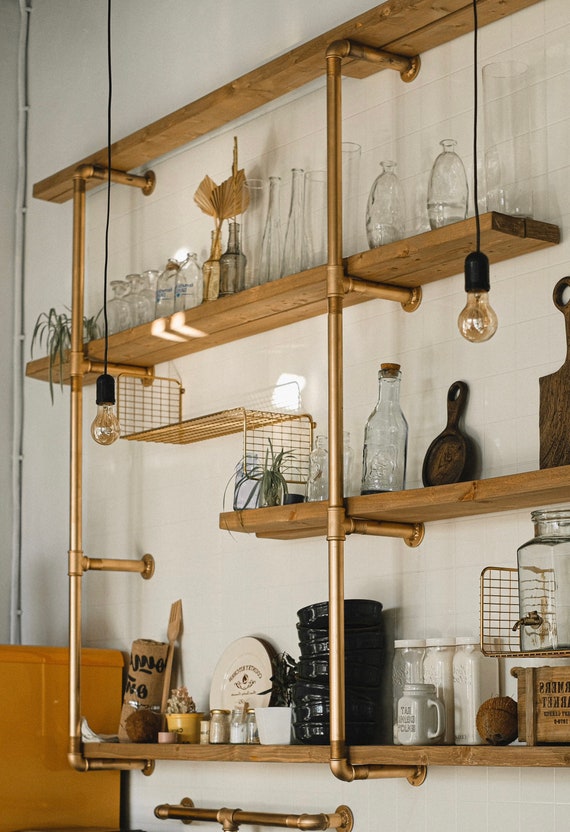
Credit: www.etsy.com
Assembling The Frame
Assembling the frame is the key step to build your copper pipe bookshelf. It forms the strong base that holds everything together. Careful work here ensures your shelf is sturdy and looks great. Take your time and follow each step closely.
Connecting Pipes And Fittings
Start by arranging the copper pipes and fittings as planned. Insert pipes into the fittings gently but firmly. Make sure each piece fits snugly. Check that all corners meet at right angles. This creates a clean and even frame shape.
Ensuring Stability And Alignment
Keep the frame on a flat surface to check its balance. Adjust pipes to make sure all sides are even. Use a level tool to confirm the frame is straight. Stability here prevents wobbling once the shelf stands. A well-aligned frame looks professional and holds weight better.
Securing Joints
Secure each joint with pipe glue or screws for strength. Apply glue inside fittings before joining pipes. Hold pieces together until the glue sets. Tighten screws if your fittings have them. Strong joints stop the frame from wobbling or falling apart.
Adding Shelves
Adding shelves is a key step in building your copper pipe bookshelf. This step brings the structure to life and makes it useful. Shelves hold your books, decorations, and more. Choose the right materials and attach them firmly for a strong shelf. A few finishing touches make the shelf look neat and complete.
Choosing Shelf Materials
Pick materials that match your style and budget. Wood is popular for its warmth and strength. Plywood is affordable and easy to cut. Solid wood offers durability and a natural look. Consider thickness; thicker shelves hold more weight. Smooth surfaces help prevent damage to items. Paint or stain the wood for a polished finish. Choose colors that fit your room’s decor.
Attaching Shelves To Frame
Measure the frame carefully to fit shelves exactly. Use a level to keep shelves straight. Secure shelves with screws or brackets for stability. Copper pipe frames can support shelves using pipe clamps. Drill pilot holes to avoid wood splitting. Tighten screws firmly but avoid cracking the wood. Check each shelf for firmness before adding weight.
Finishing Touches
Sand edges of shelves to remove rough spots. Apply a clear coat or sealant for protection. Check all screws and fittings for tightness. Clean the copper pipes to keep the shine. Add rubber pads under shelves to avoid slipping. Arrange your books and items neatly. Step back and admire your new bookshelf.
Finishing And Styling Tips
Finishing and styling your copper pipe bookshelf is key to making it look great and last long. The right finish protects the copper and keeps it shiny. Styling helps the shelf fit your room’s look. Simple steps can improve both.
Protecting Copper Surfaces
Apply a clear lacquer to stop copper from tarnishing. Use a soft cloth to clean the pipes before coating. Let the lacquer dry fully for the best protection. Avoid harsh cleaners that can damage the finish. Regular dusting keeps the copper bright and fresh.
Decor Ideas For Your Bookshelf
Mix books with small plants to add color and life. Use baskets or boxes to organize loose items neatly. Place candles or small art pieces for a cozy feel. Match decor colors with copper tones for a balanced look. Keep the arrangement simple to avoid clutter.
Maintenance Advice
Wipe down the pipes weekly with a dry cloth. Polish occasionally with a gentle copper cleaner for extra shine. Check for any loose joints and tighten if needed. Avoid water spills to prevent stains and rust. Proper care extends the shelf’s beauty and strength.
Frequently Asked Questions
What Materials Are Needed To Make A Copper Pipe Bookshelf?
You need copper pipes, pipe fittings, wooden boards, screws, and mounting brackets. These materials create a sturdy and stylish bookshelf. Copper pipes add a modern industrial look. Wood provides a solid surface for books. Proper tools like a drill and wrench are essential.
How Do You Assemble A Bookshelf Using Copper Pipes?
First, design your shelf layout and measure dimensions. Cut copper pipes to size and connect with fittings. Secure wooden boards onto the pipe frame with screws. Attach brackets to mount the shelf on the wall. Ensure everything is level and stable before use.
Is Copper Pipe Bookshelf Durable And Weight-bearing?
Yes, copper pipe bookshelves are durable and can hold significant weight. Copper pipes provide strong structural support. Using thick wooden boards increases load capacity. Proper assembly with secure fittings ensures stability. Ideal for holding books, decor, and small appliances.
Can I Customize The Size Of A Copper Pipe Bookshelf?
Absolutely! Copper pipe bookshelves are highly customizable. You can adjust pipe lengths and shelf dimensions. This flexibility fits any room size or design preference. Modular fittings allow easy reconfiguration later. Custom sizes help maximize space and enhance decor.
Conclusion
Building a bookshelf with copper pipes is simple and fun. You only need a few tools and materials. Follow the steps carefully, and you will create a sturdy shelf. Copper pipes add a unique look to any room. You can customize the size to fit your space.
This project saves money compared to buying furniture. It also gives you a sense of pride and achievement. Try making one yourself and enjoy a stylish, practical shelf. Easy to build, stylish to own.